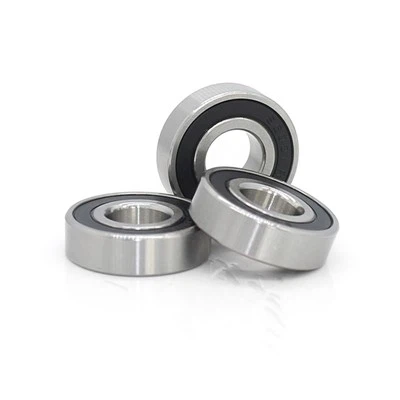
As a supplier of bearing motor fan radiators, I've had the privilege of delving deep into the world of motors and their applications in fan radiators. One of the most common questions I encounter is about the difference between DC motors and AC motors in fan radiators. In this blog, I'll explore the key distinctions between these two types of motors, their advantages and disadvantages, and how they impact the performance of fan radiators.
Basic Principles of DC and AC Motors
Let's start with the basics. A DC (Direct Current) motor operates on direct current, which means the flow of electric charge is in one direction. DC motors typically consist of a stator (the stationary part) and a rotor (the rotating part). The stator generates a magnetic field, and the rotor, which is connected to the power source, experiences a force due to the interaction between the magnetic field and the current flowing through the rotor windings. This force causes the rotor to rotate.
On the other hand, an AC (Alternating Current) motor runs on alternating current, where the direction of the electric charge flow changes periodically. AC motors can be further classified into induction motors and synchronous motors. In an induction motor, the rotating magnetic field is created by the stator windings, and this field induces an electric current in the rotor, causing it to rotate. Synchronous motors, as the name suggests, rotate at a speed that is synchronized with the frequency of the AC power supply.
Performance Characteristics in Fan Radiators
Speed Control
One of the most significant differences between DC and AC motors in fan radiators is their speed control capabilities. DC motors offer excellent speed control. By adjusting the voltage supplied to the motor, the speed of the fan can be easily regulated. This is particularly useful in applications where precise control of the cooling rate is required. For example, in electronic devices, the fan speed can be adjusted based on the temperature of the components, ensuring efficient cooling without unnecessary noise.
In contrast, AC motors are more difficult to control in terms of speed. Traditional AC induction motors operate at a fixed speed determined by the frequency of the power supply. While variable frequency drives (VFDs) can be used to adjust the speed of AC motors, they add complexity and cost to the system. However, for applications where a constant speed is sufficient, such as in large industrial cooling systems, AC motors are a reliable choice.
Efficiency
Efficiency is another crucial factor to consider when choosing between DC and AC motors for fan radiators. DC motors are generally more efficient than AC motors, especially at low speeds. This is because DC motors do not have the losses associated with the alternating current, such as eddy current losses and hysteresis losses. Additionally, DC motors can be designed to operate at a higher power factor, which means they consume less energy for the same amount of work.
AC motors, on the other hand, are more efficient at high speeds and under full load conditions. In large-scale industrial applications, where the fan radiators operate continuously at high speeds, AC motors can provide better overall efficiency. However, in applications where the fan operates at variable speeds or low loads, DC motors are the more energy-efficient option.
Starting Torque
Starting torque is the torque required to start the rotation of the motor. DC motors have a high starting torque, which means they can quickly reach their operating speed. This is beneficial in applications where the fan needs to start and stop frequently, such as in computer cooling systems. The high starting torque ensures that the fan can respond quickly to changes in temperature.
AC induction motors, on the other hand, have a relatively low starting torque. In some cases, additional measures may be required to increase the starting torque, such as using a capacitor or a soft starter. However, once the motor is running, AC induction motors can provide a stable and reliable performance.
Noise and Vibration
Noise and vibration are important considerations in fan radiator applications, especially in environments where quiet operation is required. DC motors generally produce less noise and vibration compared to AC motors. This is because DC motors have a simpler design and fewer moving parts, which reduces the chances of mechanical noise. Additionally, the smooth operation of DC motors results in less vibration.
AC motors, particularly induction motors, can produce more noise and vibration due to the interaction between the magnetic fields and the rotor. However, advancements in motor design and the use of high-quality bearings can help reduce the noise and vibration levels of AC motors. For example, using Bearing 697ZZ 7 * 17 * 5 can improve the smoothness of the motor operation and reduce noise.
Application Considerations
The choice between DC and AC motors in fan radiators depends on the specific application requirements. Here are some factors to consider:
Power Source
The availability of the power source is an important factor. If the application is powered by a battery or a DC power supply, a DC motor is the obvious choice. DC motors are commonly used in portable devices, such as laptops and handheld fans, where the power source is limited.
If the application is connected to the AC power grid, an AC motor may be more suitable. AC motors are widely used in industrial and commercial applications, where the power supply is readily available.
Cost
Cost is another important consideration. DC motors are generally more expensive than AC motors, especially for high-power applications. This is because DC motors require more complex control systems and components. However, in applications where energy efficiency and precise speed control are critical, the higher cost of DC motors may be justified.
AC motors, on the other hand, are more cost-effective, especially for large-scale applications. The simplicity of the design and the availability of standard components make AC motors a popular choice for industrial cooling systems.
Environmental Conditions
The environmental conditions also play a role in the choice of motor. DC motors are more sensitive to dust and moisture compared to AC motors. In harsh environments, such as industrial settings or outdoor applications, AC motors may be more reliable. However, if the application requires a high level of protection against dust and moisture, special enclosures and seals can be used for DC motors.
Our Product Offerings
As a bearing motor fan radiator supplier, we offer a wide range of products to meet the diverse needs of our customers. Our products include both DC and AC motor fan radiators, as well as high-quality bearings. For example, our Cooling Fan Bearings MR52ZZ are designed to provide smooth and reliable operation in fan radiators. These bearings are made of high-quality materials and have excellent heat resistance and durability.
We also offer Washing Machinery Application Bearings S698RS, which are suitable for applications where high speed and high precision are required. These bearings are designed to withstand the harsh conditions of washing machinery and provide long-lasting performance.
In addition, our S606-2RS Stainless Steel Bearing: A High-Speed, Quiet Bearing For Miniature Motors is a great choice for small fan radiators. This bearing is made of stainless steel, which provides excellent corrosion resistance and ensures quiet operation.
Finally, our 698ZZ Industrial Deep Groove Ball Bearing | High Speed, High Precision, Heat & Corrosion Resistant, Full OEM ODM Custom Service | BLH is a versatile bearing that can be used in a variety of applications, including fan radiators. This bearing offers high speed, high precision, and excellent heat and corrosion resistance.
Conclusion
In conclusion, the choice between a DC motor and an AC motor in a fan radiator depends on several factors, including speed control, efficiency, starting torque, noise and vibration, power source, cost, and environmental conditions. DC motors offer excellent speed control, high efficiency at low speeds, and high starting torque, but they are generally more expensive and more sensitive to environmental conditions. AC motors, on the other hand, are more cost-effective, efficient at high speeds, and more reliable in harsh environments, but they are more difficult to control in terms of speed.


As a bearing motor fan radiator supplier, we understand the importance of choosing the right motor and bearings for your application. We offer a wide range of products to meet your specific needs and provide high-quality customer service. If you have any questions or need assistance in choosing the right motor and bearings for your fan radiator, please feel free to contact us for a procurement discussion.
References
- Electric Machinery Fundamentals, Stephen J. Chapman
- Motors and Drives: A Practical Technology Guide, Austin Hughes