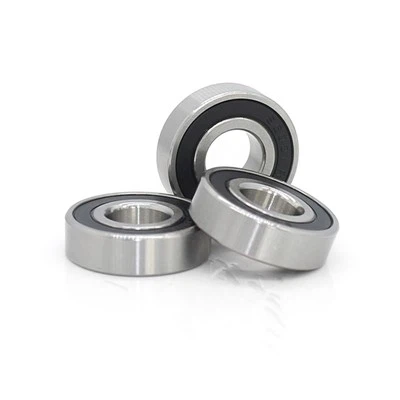
As a supplier of custom bearings, I've witnessed firsthand how the design of these components can significantly impact their noise generation. In this blog post, I'll explore the various design factors that influence bearing noise and discuss how we, as a custom bearing supplier, can optimize designs to minimize unwanted sound.
1. Bearing Geometry and Noise
The geometry of a bearing plays a crucial role in determining its noise characteristics. One of the key aspects is the curvature of the raceways. In a well - designed bearing, the raceways should have a smooth and precise curvature. Any irregularities in the raceway, such as waviness or roughness, can cause the rolling elements (balls or rollers) to vibrate as they roll. These vibrations are then transmitted through the bearing and can result in audible noise.
For example, in our S6900ZZ Water Pump Bearings, the raceway design is carefully engineered to ensure a smooth rolling motion of the balls. The precise curvature reduces the likelihood of the balls bouncing or skidding, which in turn minimizes noise.
Another geometric factor is the clearance between the rolling elements and the raceways. If the clearance is too large, the rolling elements can move freely within the bearing, leading to increased vibration and noise. On the other hand, if the clearance is too small, it can cause excessive friction, which also generates noise. Our custom bearing design process takes into account the specific application requirements to determine the optimal clearance. For instance, in high - speed applications, a smaller clearance may be required to maintain stability and reduce noise.
2. Material Selection and Noise
The materials used in bearing construction can also have a significant impact on noise generation. High - quality materials with good mechanical properties are essential for reducing noise. For example, stainless steel is a popular choice for custom bearings due to its corrosion resistance and high strength.
In our Custom SUS304 High Temperature Bearings, the SUS304 stainless steel material not only provides excellent resistance to high temperatures but also has a smooth surface finish. This smooth surface reduces the friction between the rolling elements and the raceways, resulting in less noise.
The hardness of the bearing materials is another important factor. Harder materials can withstand higher loads and are less likely to deform under stress. This reduces the chances of the rolling elements creating uneven contact with the raceways, which can lead to noise. However, extremely hard materials may also increase the brittleness of the bearing, so a balance must be struck during the material selection process.


3. Lubrication and Noise
Lubrication is a critical factor in reducing bearing noise. A proper lubricant forms a thin film between the rolling elements and the raceways, which reduces friction and wear. This film also helps to dampen vibrations, thereby reducing noise.
There are different types of lubricants available, such as grease and oil. Grease is commonly used in many bearing applications because it is easy to apply and provides long - term lubrication. However, the consistency and quality of the grease can affect its noise - reducing properties. In our custom bearing designs, we select the appropriate grease based on the application requirements, such as temperature, speed, and load.
For high - speed applications, oil lubrication may be more suitable. Oil can provide better cooling and lubrication at high speeds, which helps to reduce noise. In some of our custom designs, like the Customized S628ZZ Double Row Steel Ball U Shaped Roller Bearing, we may recommend oil lubrication to ensure optimal performance and minimal noise.
4. Cage Design and Noise
The cage in a bearing serves to separate the rolling elements and maintain their proper spacing. The design of the cage can have a significant impact on bearing noise. A well - designed cage should allow for smooth movement of the rolling elements without causing any interference.
If the cage is too loose, the rolling elements can move freely and collide with each other or the cage, generating noise. On the other hand, if the cage is too tight, it can restrict the movement of the rolling elements, leading to increased friction and noise.
In our custom bearing designs, we pay close attention to the cage design. We use advanced manufacturing techniques to ensure that the cage has the right dimensions and fit. For example, in our Non Standard Stainless Steel Bearing S626ZZ, the cage is designed to provide a stable and smooth environment for the rolling elements, reducing noise.
5. Assembly and Noise
The assembly process of a bearing can also affect its noise generation. During assembly, it is important to ensure that all components are properly aligned and installed. Any misalignment can cause uneven loading on the rolling elements, which leads to increased vibration and noise.
Our custom bearing assembly process is highly precise. We use specialized equipment and techniques to ensure that each bearing is assembled to the highest standards. For example, in the assembly of our S605 Stainless Steel Deep Groove Ball Bearing, we carefully align the raceways and the rolling elements to minimize any potential for noise.
Conclusion
In conclusion, the design of custom bearings has a profound impact on their noise generation. From the geometry of the raceways and the selection of materials to the lubrication, cage design, and assembly process, every aspect of the design must be carefully considered to minimize noise.
As a custom bearing supplier, we are committed to providing high - quality bearings with low noise levels. Our team of experts uses the latest technology and techniques to optimize bearing designs for each specific application. If you are in need of custom bearings with low noise requirements, we would be more than happy to discuss your needs and provide you with a solution that meets your expectations. Contact us today to start the procurement and negotiation process.
References
- Harris, T. A., & Kotzalas, M. N. (2007). Rolling Bearing Analysis. Wiley.
- SKF. (2010). SKF Bearing Handbook. SKF Group.
- Schaeffler Group. (2015). FAG Rolling Bearings - Basics. Schaeffler Group.