


What is the coefficient of friction of plastic bearings?
As a supplier of plastic bearings, I often get asked about the coefficient of friction of these components. The coefficient of friction is a crucial parameter that determines how well a bearing can perform in various applications. In this blog post, I'll delve into what the coefficient of friction is, how it affects plastic bearings, and the typical values for different types of plastic bearings.
Understanding the Coefficient of Friction
The coefficient of friction (μ) is a dimensionless quantity that represents the ratio of the force of friction between two surfaces to the normal force pressing them together. In the context of bearings, it describes the resistance to motion between the bearing surfaces. A lower coefficient of friction means less energy is lost to friction, resulting in smoother operation, reduced wear, and lower heat generation.
There are two main types of coefficients of friction: static and kinetic. The static coefficient of friction (μs) is the force required to start an object moving from rest, while the kinetic coefficient of friction (μk) is the force required to keep an object moving at a constant speed. In most bearing applications, the kinetic coefficient of friction is of greater interest as it directly affects the performance during operation.
Factors Affecting the Coefficient of Friction in Plastic Bearings
Several factors can influence the coefficient of friction of plastic bearings:
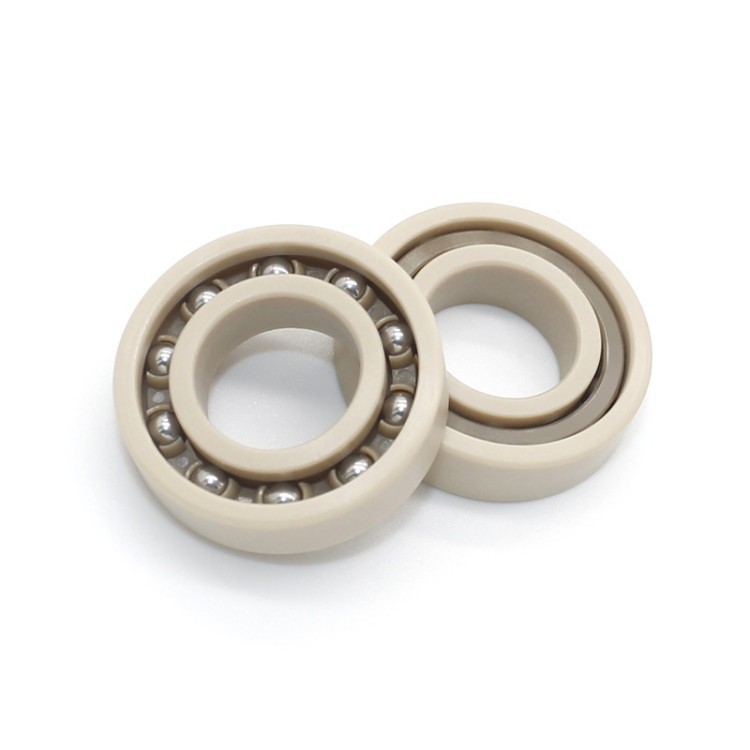
- Material Properties: Different plastic materials have different inherent friction characteristics. For example, PEEK (Polyetheretherketone) is known for its low friction and high wear resistance, making it suitable for high - performance applications. On the other hand, nylon has good self - lubricating properties but may have a slightly higher coefficient of friction compared to PEEK. You can learn more about Peek Bearings and Nylon Bearings on our website.
- Surface Finish: A smoother surface finish generally results in a lower coefficient of friction. During the manufacturing process of plastic bearings, precise machining and polishing can reduce surface roughness, minimizing the contact area between the bearing surfaces and thus reducing friction.
- Load: The amount of load applied to the bearing can affect the coefficient of friction. Higher loads can increase the contact pressure between the bearing surfaces, which may lead to an increase in friction. However, some plastic materials are designed to maintain relatively low friction coefficients even under high loads.
- Lubrication: While many plastic bearings are self - lubricating, external lubrication can further reduce the coefficient of friction. Lubricants can form a thin film between the bearing surfaces, separating them and reducing direct contact. The choice of lubricant depends on the application and the type of plastic material used.
- Temperature: Temperature can have a significant impact on the coefficient of friction of plastic bearings. As the temperature increases, the physical properties of the plastic material may change, affecting its friction characteristics. Some plastics may become softer at higher temperatures, leading to an increase in friction.
Coefficient of Friction for Different Types of Plastic Bearings
Let's take a look at the typical coefficients of friction for some common types of plastic bearings:
- PEEK Bearings: PEEK is a high - performance thermoplastic with excellent mechanical and chemical properties. The kinetic coefficient of friction for PEEK bearings is typically in the range of 0.1 - 0.3, depending on the operating conditions. This low friction coefficient makes PEEK bearings suitable for applications where high - speed operation and low wear are required, such as in aerospace and automotive industries.
- Nylon Bearings: Nylon is a widely used plastic material in bearing applications due to its good self - lubricating properties and relatively low cost. The kinetic coefficient of friction for nylon bearings is usually around 0.2 - 0.4. Nylon bearings are commonly used in light - to medium - load applications, such as in household appliances and office equipment.
- POM Plastic Bearings: POM (Polyoxymethylene) is a engineering plastic known for its high stiffness, low friction, and good dimensional stability. The kinetic coefficient of friction for POM plastic bearings is approximately 0.15 - 0.3. POM bearings are often used in precision machinery and automation equipment. You can find more information about POM Plastic Bearings on our website.
Importance of the Coefficient of Friction in Plastic Bearing Applications
The coefficient of friction plays a vital role in the performance and reliability of plastic bearings in various applications:

- Energy Efficiency: A lower coefficient of friction means less energy is wasted in overcoming friction. This is particularly important in applications where energy consumption is a concern, such as in electric vehicles and industrial machinery. By using plastic bearings with low friction coefficients, the overall energy efficiency of the system can be improved.
- Wear Resistance: Reduced friction leads to less wear on the bearing surfaces. This extends the service life of the bearings, reducing the need for frequent replacements and maintenance. In applications where downtime is costly, such as in manufacturing plants, the wear resistance provided by low - friction plastic bearings can significantly improve productivity.
- Noise and Vibration: Friction can cause noise and vibration in bearing systems. By minimizing the coefficient of friction, the noise and vibration levels can be reduced, resulting in a quieter and more stable operation. This is important in applications where noise reduction is a requirement, such as in medical equipment and consumer electronics.
- Temperature Control: Friction generates heat, and excessive heat can damage the bearing and surrounding components. Plastic bearings with low friction coefficients produce less heat, which helps in maintaining a stable operating temperature. This is crucial in high - speed and high - load applications where heat dissipation is a challenge.
Conclusion
The coefficient of friction is a key factor in determining the performance of plastic bearings. Different plastic materials have different friction characteristics, and factors such as surface finish, load, lubrication, and temperature can also affect the coefficient of friction. As a plastic bearings supplier, we offer a wide range of plastic bearings with varying coefficients of friction to meet the diverse needs of our customers.
If you are looking for high - quality plastic bearings for your application, we can provide you with the right solutions. Our team of experts can help you select the most suitable plastic bearing based on your specific requirements, including the desired coefficient of friction. Contact us to start a procurement discussion and find the best plastic bearings for your project.
References
- "Plastic Materials for Bearing Applications" - Journal of Tribology
- "Friction and Wear of Engineering Plastics" - ASTM International
- Manufacturer's data sheets for PEEK, Nylon, and POM plastic bearings


