


As a cam follower supplier, I've had the privilege of witnessing the wide - ranging applications and benefits of cam followers in various industries. However, like any mechanical component, cam followers also come with their fair share of disadvantages. In this blog, I'll delve into these drawbacks to provide a comprehensive understanding for those considering using cam followers in their projects.
1. Wear and Tear
One of the most prominent disadvantages of cam followers is the issue of wear and tear. Cam followers are constantly in contact with the cam surface, and the repeated motion and high - pressure interactions can lead to significant abrasion over time. The type of material used in the cam and the cam follower plays a crucial role in determining the rate of wear.

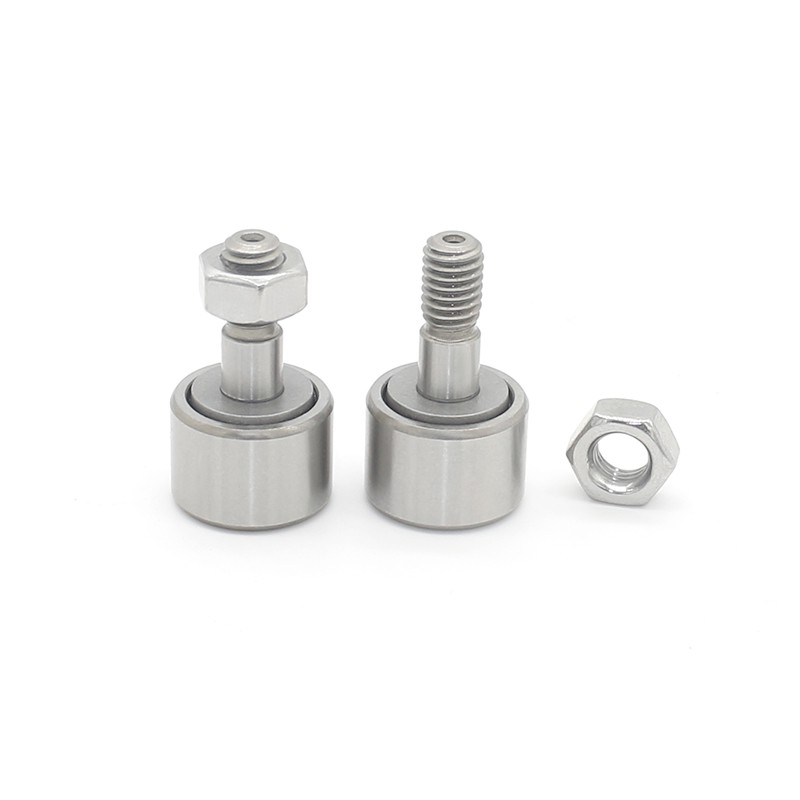
For instance, if the cam is made of a hard material and the cam follower has a relatively softer surface, the follower will wear out more quickly. This wear can lead to a decrease in the precision of the cam - follower system. As the follower wears, the clearance between the cam and the follower may increase, which can cause inaccurate motion transmission. This is particularly problematic in applications where precise positioning and timing are critical, such as in automated manufacturing processes or in high - speed machinery.
The wear can also affect the smoothness of the operation. A worn cam follower may start to produce vibrations or noises during its movement, which can not only be a nuisance but also potentially damage other components in the system. To mitigate this issue, regular maintenance and replacement of cam followers are often required, which adds to the overall cost of the system.
2. Limited Load - Bearing Capacity
Cam followers have a finite load - bearing capacity. This limitation is determined by factors such as the size of the follower, the material it is made of, and the design of the internal components. In applications where high loads are involved, cam followers may not be the best choice.
When a cam follower is subjected to loads beyond its capacity, it can lead to premature failure. This can manifest as cracking, deformation, or even complete breakdown of the follower. For example, in heavy - duty industrial applications like construction equipment or large - scale manufacturing machinery, the high forces exerted on the cam - follower system may exceed the capabilities of standard cam followers.
To handle higher loads, more robust and larger cam followers may be required. However, these larger components can be more expensive and may also take up more space, which can be a constraint in systems with limited space availability. Moreover, increasing the size of the cam follower may also increase the inertia of the system, which can affect the dynamic performance of the machinery.
3. Sensitivity to Contamination
Cam followers are highly sensitive to contamination. Dust, dirt, and other foreign particles can easily find their way into the internal components of the cam follower, such as the bearings. Once inside, these contaminants can cause a variety of problems.
Contamination can accelerate the wear of the bearings, as the particles act as abrasives between the moving parts. This can lead to a decrease in the lifespan of the cam follower and an increase in the frequency of maintenance and replacement. In addition, contaminants can also cause the bearings to seize up, which can result in a complete failure of the cam - follower system.
In environments where there is a high level of dust or debris, such as in mining or agricultural applications, special measures need to be taken to protect the cam followers. This may include the use of seals or shields to prevent the entry of contaminants. However, these additional protective measures can add to the cost and complexity of the system.
4. Noise and Vibration
Cam followers can generate noise and vibration during operation. The nature of the cam - follower interaction, which involves rapid changes in motion and force, can cause vibrations that are transmitted throughout the system. These vibrations can not only be a source of annoyance but also have a negative impact on the performance and reliability of the machinery.
Excessive vibration can cause fatigue in the components of the system, leading to premature failure. It can also affect the accuracy of the motion, especially in applications where precise positioning is required. The noise generated by cam followers can be a problem in environments where noise levels need to be kept to a minimum, such as in office buildings or hospitals.
To reduce noise and vibration, various techniques can be employed. These include the use of dampers, proper lubrication, and optimized cam profiles. However, implementing these solutions can add to the cost and complexity of the system.
5. Cost
The cost of cam followers can be a significant disadvantage, especially for large - scale applications. High - quality cam followers made of advanced materials and with precision engineering can be quite expensive. In addition to the initial purchase cost, there are also ongoing costs associated with maintenance, replacement, and any additional measures taken to address the disadvantages mentioned above.
For example, if a system requires regular replacement of cam followers due to wear and tear, the cumulative cost over time can be substantial. The cost of implementing protective measures against contamination or reducing noise and vibration can also add up. This can make cam followers less attractive for budget - conscious projects or applications where cost - effectiveness is a key consideration.
6. Design and Compatibility Challenges
Designing a cam - follower system can be complex, and there are often compatibility issues to consider. The cam profile, the speed of operation, the load requirements, and the environmental conditions all need to be carefully taken into account when selecting and designing a cam - follower system.
If the cam and the cam follower are not properly matched, it can lead to sub - optimal performance. For example, if the cam profile is too aggressive for the cam follower, it can cause excessive wear and stress on the follower. Compatibility issues can also arise when integrating cam followers into existing systems. The size, mounting requirements, and motion characteristics of the cam follower need to be compatible with the other components in the system.
This complexity in design and compatibility can require the expertise of mechanical engineers, which can add to the cost and time required for the project.
Conclusion
Despite these disadvantages, cam followers still have their place in many industries due to their unique ability to convert rotary motion into linear motion. At our company, we understand the challenges associated with cam followers, and we strive to provide high - quality products that minimize these drawbacks.
We offer a wide range of cam followers, including Polyurethane Cam Follower, Stainless Steel Camshaft, and Stainless Steel Cam Followers. These products are designed to withstand various operating conditions and provide reliable performance.
If you are considering using cam followers in your project and want to discuss how to overcome the potential disadvantages, we encourage you to reach out to us for a detailed consultation. Our team of experts is ready to assist you in selecting the right cam followers for your specific needs and ensuring a successful implementation.
References
- Norton, R. L. (2006). Design of Machinery: An Introduction to the Synthesis and Analysis of Mechanisms and Machines. McGraw - Hill.
- Shigley, J. E., & Mischke, C. R. (2001). Mechanical Engineering Design. McGraw - Hill.


