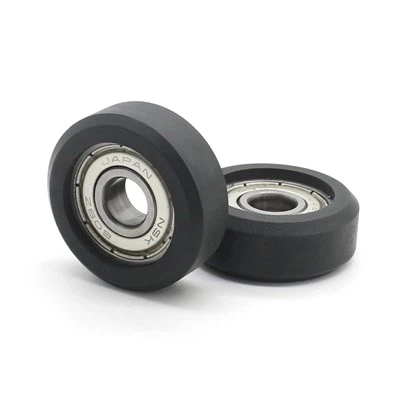
Aircraft bearings are critical components in the aviation industry, playing a pivotal role in ensuring the smooth and safe operation of aircraft. As a leading aircraft bearings supplier, we understand the importance of not only providing high - quality bearings but also being well - informed about the associated maintenance costs. In this blog, we will delve into the various factors that contribute to the maintenance costs of aircraft bearings.
1. Types of Aircraft Bearings and Their Maintenance Requirements
There is a wide range of aircraft bearings, each with its own set of maintenance needs. For instance, deep - groove ball bearings are commonly used in aircraft due to their ability to handle both radial and axial loads. Our Thin - walled Deep Groove Ball Bearings6904ZZ are designed to offer precise performance in limited spaces. However, their thin - walled design requires careful maintenance to prevent deformation and damage.
These bearings need regular inspection of the inner and outer raceways for signs of wear, pitting, or cracking. The lubrication needs to be monitored and replenished as per the manufacturer's specifications. Any deviation in the lubrication level can cause increased friction, heat generation, and ultimately lead to premature bearing failure.
Another type is the single - row deep - groove ball bearing. Our Single Row Deep Groove Ball Bearing S689 is known for its ability to operate at high speeds and handle moderate radial loads. Maintenance of these bearings involves checking the ball - rolling surfaces for smoothness and proper alignment. The seals also need to be inspected regularly to prevent contaminants from entering the bearing, as dirt and debris can accelerate wear and damage.
Wheel bearings, such as our Wheel Bearings 6202RS, are subject to heavy loads during takeoff, landing, and taxiing. They are designed to withstand both radial and axial forces and need more frequent maintenance compared to other types of bearings. The grease in wheel bearings needs to be replaced at specified intervals to maintain its lubricating properties and prevent corrosion.
2. Lubrication Costs
Lubrication is a crucial aspect of aircraft bearing maintenance. The right lubricant not only reduces friction but also protects the bearing from corrosion and wear. However, lubrication comes with its own costs.
Firstly, the cost of purchasing the lubricant itself. Specialty lubricants for aircraft bearings are formulated to work under extreme conditions such as high temperatures and pressures. These lubricants are often more expensive than standard industrial lubricants. The type of lubricant required depends on the bearing type and the operating conditions of the aircraft.
Secondly, there are labor costs associated with lubrication. Skilled technicians are needed to apply the lubricant correctly. Incorrect lubrication can lead to bearing failure, so it is essential that the lubrication process is carried out with precision. This may involve disassembling parts of the aircraft to access the bearings, which further adds to the labor time and cost.
In addition, there are disposal costs for used lubricants. Aircraft lubricants are often classified as hazardous waste, and proper disposal methods need to be followed to comply with environmental regulations. This includes the cost of collecting, transporting, and disposing of the used lubricants in an environmentally friendly manner.
3. Inspection and Testing Costs
Regular inspection and testing of aircraft bearings are necessary to detect any potential issues before they lead to catastrophic failures. These processes incur significant costs.
Non - destructive testing methods, such as ultrasonic testing and magnetic particle inspection, are commonly used to detect internal flaws in the bearings. The equipment required for these tests is expensive to purchase and maintain. Additionally, trained personnel are needed to operate the testing equipment accurately and interpret the results.
Visual inspections are also an important part of the maintenance process. Technicians need to carefully examine the bearings for signs of wear, damage, or contamination. This requires time and attention to detail. To facilitate visual inspections, access ports may need to be opened, and in some cases, parts of the aircraft may need to be disassembled, adding to the labor costs.
Periodic performance testing of the bearings is also carried out to ensure they are operating within the specified parameters. This may involve running the aircraft's systems under controlled conditions and monitoring the bearing's performance. The cost of setting up and conducting these tests, including the use of specialized testing facilities, can be substantial.
4. Replacement Costs
Despite regular maintenance, aircraft bearings will eventually need to be replaced. The cost of replacement includes the price of the new bearing itself, as well as the labor costs associated with the installation.
The price of aircraft bearings can vary significantly depending on their type, size, and the materials used in their construction. High - performance bearings made from advanced materials such as ceramics or high - strength steel can be quite expensive.
Replacing a bearing is a complex task that requires skilled technicians. The process may involve disassembling and reassembling various components of the aircraft, which can be time - consuming and labor - intensive. Additionally, after the replacement, the bearing needs to be properly adjusted and calibrated to ensure optimal performance.
5. Training and Certification Costs
To carry out maintenance on aircraft bearings, technicians need to have the necessary training and certifications. Training programs for aircraft maintenance technicians are comprehensive and cover a wide range of topics, including bearing technology, maintenance procedures, and safety regulations.
The cost of these training programs can be substantial, including tuition fees, training materials, and the cost of practical training. Additionally, technicians need to obtain and maintain relevant certifications, which often require periodic renewal through further training and examinations.
6. Impact of Maintenance Costs on the Aviation Industry
The high maintenance costs associated with aircraft bearings have a significant impact on the aviation industry. Airlines and aircraft operators need to factor in these costs when budgeting for aircraft operations. Higher maintenance costs can lead to increased ticket prices for passengers, as airlines try to cover their expenses.
For aircraft manufacturers, the cost of bearing maintenance can influence their design decisions. They may strive to develop more durable and maintenance - friendly bearings to reduce the overall life - cycle cost of their aircraft.
Conclusion
As an aircraft bearings supplier, we are committed to helping our customers understand the maintenance costs associated with our products. By providing high - quality bearings and offering technical support, we aim to minimize these costs without compromising on safety and performance.


If you are in the market for aircraft bearings or want to discuss the maintenance requirements and costs further, we invite you to contact us for procurement and in - depth consultations. We are here to offer you the best solutions for your aircraft bearing needs.
References
- "Aerospace Bearing Technology," Aviation Maintenance Magazine, 20XX.
- Smith, J. "Maintenance Practices for Aircraft Components," Wiley Publications, 20XX.
- "Guidelines for Bearing Lubrication in Aviation," International Aviation Standards Committee, 20XX.