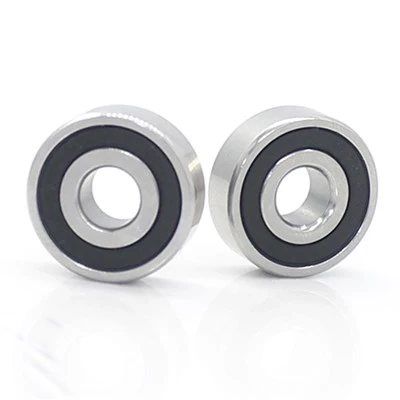
Aircraft bearings play a crucial role in the aviation industry, ensuring the smooth operation of various aircraft components. As a leading supplier of aircraft bearings, we understand the significance of quality control in this field. In this blog post, we will explore the quality control measures for aircraft bearings, highlighting the steps we take to guarantee the highest level of performance and safety.
1. Raw Material Inspection
The quality of aircraft bearings starts with the selection of raw materials. We source high - grade steel and other materials from reputable suppliers. Before the manufacturing process begins, a comprehensive inspection of the raw materials is carried out. This includes checking the chemical composition, mechanical properties, and surface quality.
Chemical analysis is performed to ensure that the steel meets the required standards. The percentage of elements such as carbon, manganese, and chromium can significantly affect the bearing's hardness, toughness, and corrosion resistance. For example, an appropriate carbon content is essential for achieving the right balance between hardness and ductility.
Mechanical property tests, such as tensile strength and hardness tests, are also conducted. The raw material must have the necessary strength to withstand the high loads and stresses experienced in aircraft applications. Any deviation from the specified mechanical properties can lead to premature bearing failure.
Surface quality inspection is equally important. The raw material should be free from defects such as cracks, inclusions, and surface roughness. Even a small surface defect can act as a stress concentrator, increasing the risk of fatigue failure.
2. Manufacturing Process Control
The manufacturing process of aircraft bearings is highly complex and requires strict control. We use advanced machining techniques and state - of - the - art equipment to ensure precision and consistency.
During the machining process, parameters such as cutting speed, feed rate, and depth of cut are carefully monitored and adjusted. These parameters can affect the dimensional accuracy and surface finish of the bearing components. For instance, an incorrect cutting speed can lead to overheating, which may change the material's properties and cause dimensional inaccuracies.
Heat treatment is another critical step in the manufacturing process. It is used to improve the hardness, strength, and wear resistance of the bearings. We follow precise heat treatment procedures, including quenching and tempering, to achieve the desired material properties. The temperature and time during heat treatment are strictly controlled to ensure uniformity across all bearing components.
After machining and heat treatment, the bearing components undergo a series of finishing operations, such as grinding and polishing. These operations are designed to achieve the required surface finish and dimensional tolerance. The surface finish of the bearing can have a significant impact on its friction and wear characteristics. A smooth surface reduces friction, which in turn improves the bearing's efficiency and longevity.
3. Dimensional and Geometric Inspection
Dimensional and geometric accuracy is of utmost importance for aircraft bearings. We use advanced measurement tools, such as coordinate measuring machines (CMMs), to ensure that the bearing components meet the specified dimensions and geometric tolerances.
The outer diameter, inner diameter, width, and other critical dimensions of the bearing are measured with high precision. Even a small deviation from the specified dimensions can affect the bearing's fit and performance. For example, an oversized inner diameter may cause the bearing to slip on the shaft, while an undersized outer diameter may lead to improper mounting in the housing.
Geometric tolerances, such as roundness, cylindricity, and flatness, are also carefully inspected. These tolerances ensure that the bearing components have the correct shape and form. A non - round bearing can cause uneven loading and vibration, which can lead to premature failure.
4. Non - Destructive Testing (NDT)
Non - destructive testing is an essential part of our quality control process. It allows us to detect internal defects in the bearing components without damaging them.
Ultrasonic testing is used to detect internal flaws such as cracks and inclusions. High - frequency ultrasonic waves are sent through the bearing component, and any reflections from internal defects are detected. This method is highly sensitive and can detect even small defects that may not be visible on the surface.
Magnetic particle testing is another NDT method used for ferromagnetic materials. A magnetic field is applied to the bearing component, and magnetic particles are sprayed on the surface. Any surface or near - surface defects will cause the magnetic particles to accumulate, making the defects visible.
Eddy current testing is used to detect surface and near - surface defects in conductive materials. An alternating current is passed through a coil, creating an eddy current in the bearing component. Any changes in the eddy current caused by defects are detected, allowing us to identify potential problems.
5. Performance Testing
Before the aircraft bearings are shipped to our customers, they undergo rigorous performance testing. These tests simulate the actual operating conditions of the bearings in aircraft applications.
Fatigue testing is one of the most important performance tests. The bearings are subjected to repeated loading cycles to evaluate their fatigue life. This test helps us to ensure that the bearings can withstand the long - term stresses and loads experienced in aircraft operation.
Friction and wear testing are also conducted. The bearings are run under specific conditions to measure the friction coefficient and wear rate. This information is used to optimize the bearing design and material selection, ensuring that the bearings have low friction and high wear resistance.


Noise and vibration testing are performed to ensure that the bearings operate quietly and smoothly. Excessive noise and vibration can indicate problems with the bearing's internal components or mounting. By detecting and addressing these issues during testing, we can prevent potential failures in the field.
6. Traceability and Documentation
We maintain a comprehensive traceability system for all our aircraft bearings. Each bearing is assigned a unique identification number, and detailed records are kept throughout the manufacturing process. These records include information about the raw materials, manufacturing processes, inspection results, and performance testing data.
This traceability system allows us to track the history of each bearing, making it easier to identify and address any quality issues that may arise. In the event of a problem, we can quickly determine the root cause and take appropriate corrective actions.
Documentation is also an important part of our quality control process. We provide our customers with detailed product documentation, including technical specifications, inspection reports, and test certificates. This documentation gives our customers confidence in the quality and performance of our aircraft bearings.
Our Product Range
We offer a wide range of aircraft bearings, as well as other high - quality bearings for various applications. For example, we have the Freewheel Bearing 623UG, which is suitable for applications that require one - way rotation. Our 6805W6.5 - 2Z Bicycle Bearing 25377 mm Bicycle Hub Ball Bearing is designed for high - performance bicycles. And our Thin - walled Deep Groove Ball Bearings6904ZZ are ideal for applications where space is limited.
Contact Us for Procurement
If you are in the market for high - quality aircraft bearings or any of our other bearing products, we invite you to contact us for procurement. Our team of experts is ready to assist you in selecting the right bearings for your specific needs. We are committed to providing you with the best products and services, ensuring the success of your projects.
References
- ASM Handbook Volume 5: Surface Engineering. ASM International.
- Aircraft Design: A Conceptual Approach. Daniel P. Raymer.
- Handbook of Bearings: Selection, Application, and Maintenance. John A. Black.