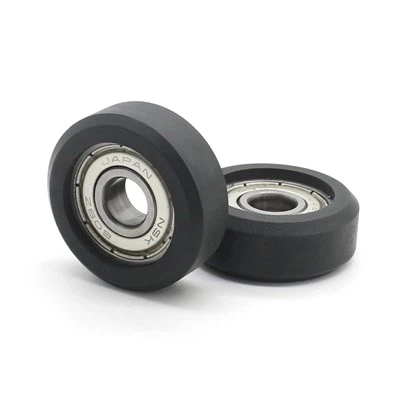
What is the application range of pulley bearings?
Pulley bearings are essential components in various mechanical systems, providing support and reducing friction for rotating shafts. As a leading pulley bearing supplier, I have witnessed firsthand the diverse applications of these remarkable devices across multiple industries. In this blog post, I will explore the wide range of applications where pulley bearings play a crucial role, highlighting their importance and benefits.
Industrial Machinery
One of the primary application areas for pulley bearings is in industrial machinery. These bearings are used in a variety of equipment, including conveyor systems, manufacturing machinery, and power transmission systems. In conveyor systems, pulley bearings support the pulleys that drive the conveyor belts, ensuring smooth and efficient movement of materials. They help to reduce friction and wear, extending the lifespan of the conveyor system and minimizing downtime.
In manufacturing machinery, pulley bearings are used in motors, pumps, and other rotating components. They provide support for the shafts, allowing them to rotate freely and transmit power efficiently. By reducing friction, pulley bearings help to improve the performance and reliability of the machinery, resulting in higher productivity and lower maintenance costs.
Power transmission systems also rely heavily on pulley bearings. These bearings are used in belts, chains, and gears to transfer power from one component to another. They help to maintain the alignment of the shafts and ensure smooth power transfer, reducing energy losses and improving the overall efficiency of the system.
Automotive Industry
The automotive industry is another major consumer of pulley bearings. These bearings are used in various applications, including engines, transmissions, and suspension systems. In engines, pulley bearings are used in the crankshaft, camshaft, and other rotating components. They provide support for the shafts and help to reduce friction, improving the performance and fuel efficiency of the engine.


Transmissions also rely on pulley bearings to transfer power from the engine to the wheels. These bearings are used in the clutch, gearbox, and differential, ensuring smooth and efficient power transfer. By reducing friction and wear, pulley bearings help to extend the lifespan of the transmission and improve its reliability.
Suspension systems use pulley bearings in the shock absorbers, struts, and other components. These bearings help to support the weight of the vehicle and provide a smooth ride by reducing friction and vibrations. They also help to maintain the alignment of the wheels, improving the handling and stability of the vehicle.
Construction Equipment
Construction equipment, such as cranes, excavators, and forklifts, also make extensive use of pulley bearings. These bearings are used in the lifting mechanisms, hydraulic systems, and other rotating components. In lifting mechanisms, pulley bearings support the pulleys that are used to hoist heavy loads. They help to reduce friction and ensure smooth and efficient operation of the lifting equipment, improving safety and productivity on construction sites.
Hydraulic systems in construction equipment rely on pulley bearings to transfer power from the hydraulic pump to the various actuators. These bearings help to maintain the alignment of the shafts and ensure smooth power transfer, improving the performance and reliability of the hydraulic system.
Forklifts use pulley bearings in the mast, which is the vertical structure that supports the forks. These bearings help to support the weight of the load and provide smooth vertical movement of the mast, allowing the forklift to lift and transport heavy materials with ease.
Home Appliances
Pulley bearings are also found in many home appliances, such as washing machines, dryers, and refrigerators. In washing machines and dryers, pulley bearings are used in the drum drive system. They support the pulleys that drive the drum, ensuring smooth and efficient rotation. By reducing friction, pulley bearings help to reduce energy consumption and noise levels, making the appliances more efficient and quieter to operate.
Refrigerators use pulley bearings in the compressor, which is the heart of the cooling system. These bearings help to support the shaft of the compressor and ensure smooth operation, improving the efficiency and reliability of the refrigerator.
Sliding Door and Window Systems
Sliding door and window systems are another area where pulley bearings are widely used. These bearings are used in the wheels and pulleys that allow the doors and windows to slide smoothly along their tracks. For example, the Sliding Door Wheels 608zz are designed to provide low-friction movement, making it easy to open and close sliding doors. The Window Pulley 6000ZZ is specifically engineered for window applications, ensuring smooth and reliable operation.
In addition, specialized bearings like the Polyurethane Coated Wheel 6205RS, EPDM Roller Bearing 6200-2RS/ZZ, and EPDM Coated Bearing 608ZZ offer enhanced durability and performance in sliding door and window systems. The polyurethane or EPDM coating provides additional protection against wear and tear, as well as noise reduction.
Benefits of Using Pulley Bearings
The use of pulley bearings offers several benefits in these and other applications. Firstly, they reduce friction, which in turn reduces energy consumption and wear on the components. This results in lower operating costs and longer service life for the equipment. Secondly, pulley bearings help to maintain the alignment of the shafts, ensuring smooth and efficient operation. This improves the performance and reliability of the system, reducing the likelihood of breakdowns and costly repairs. Thirdly, they provide support for the rotating shafts, helping to distribute the load evenly and prevent premature failure.
Conclusion
In conclusion, pulley bearings have a wide range of applications in various industries and fields. From industrial machinery and automotive systems to construction equipment, home appliances, and sliding door and window systems, these bearings play a crucial role in ensuring smooth and efficient operation. Their ability to reduce friction, maintain alignment, and support rotating shafts makes them essential components in many mechanical systems.
As a pulley bearing supplier, I am committed to providing high-quality products that meet the diverse needs of our customers. Whether you are looking for bearings for industrial machinery, automotive applications, or home appliances, we have the expertise and experience to help you find the right solution. If you are interested in learning more about our pulley bearings or would like to discuss your specific requirements, please do not hesitate to contact us. We look forward to the opportunity to work with you and provide you with the best products and services in the industry.
References
- "Mechanical Engineering Design," J.E. Shigley and C.R. Mischke.
- "Automotive Engineering: Principles and Practice," G. Gillespie.
- "Construction Equipment Handbook," C.A. Langer.
- "Home Appliance Technology," R.E. Billmeyer.