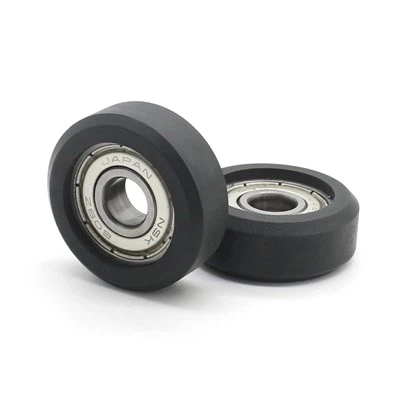
As a seasoned supplier of pulley bearings, I've witnessed firsthand the challenges that come with ensuring these vital components have a long and reliable service life. The fatigue life of a pulley bearing is a critical factor, impacting overall system performance and reducing costly downtime. In this blog, I'll share some proven strategies that can help you increase the fatigue life of pulley bearings.
Understanding Pulley Bearing Fatigue
Before delving into solutions, it's crucial to understand what causes pulley bearing fatigue. Essentially, fatigue in bearings occurs due to repeated cyclic loading. Over time, the constant stress from rotating elements, such as shafts and pulleys, leads to the development of small cracks in the bearing material. These cracks gradually grow, eventually causing the bearing to fail. Factors such as improper lubrication, excessive loading, misalignment, and contamination can significantly accelerate this fatigue process.
1. Select the Right Bearing
One of the most fundamental steps in increasing the fatigue life of a pulley bearing is choosing the appropriate type for your application. Different bearings are designed to handle specific loads, speeds, and environmental conditions.
For example, the 605ZZ Polyurethane Bearing is an excellent choice for applications where noise reduction and smooth operation are required. Its polyurethane coating provides additional protection against wear and tear. The Sliding Door Wheels 608zz are well - suited for sliding door systems, offering high - precision and reliable performance.
When selecting a bearing, consider factors such as the radial and axial loads, the rotational speed, and the operating temperature. Make sure to consult the bearing manufacturer's technical documentation to ensure the bearing can handle the specific requirements of your application.
2. Ensure Proper Lubrication
Lubrication plays a vital role in reducing friction and wear in pulley bearings. A well - lubricated bearing can operate more efficiently and experience less fatigue. There are two main types of lubrication: oil and grease.
Oil lubrication is generally preferred for high - speed applications. It provides better heat dissipation and can carry away contaminants more effectively. However, it requires a more complex lubrication system. Grease lubrication, on the other hand, is simpler and more commonly used. It forms a protective film on the bearing surfaces, reducing friction and preventing corrosion.
When choosing a lubricant, consider the bearing's operating conditions. For example, if the bearing operates in a high - temperature environment, a high - temperature grease or oil should be used. Regularly monitor the lubricant level and quality, and replace it at the recommended intervals to maintain optimal performance.
3. Control Environmental Conditions
The environment in which the pulley bearing operates can have a significant impact on its fatigue life. Contamination from dust, dirt, and moisture can cause abrasion and corrosion, leading to premature bearing failure.
Sealing is an important way to protect bearings from environmental contaminants. Bearings with effective seals, such as the EPDM Coated Pulley 696RS, can prevent the ingress of dust and moisture. Additionally, proper ventilation and filtration systems can be installed in the operating environment to reduce the presence of contaminants.
Temperature is another critical factor. High temperatures can degrade the lubricant and reduce the material strength of the bearing. In high - temperature applications, use bearings with heat - resistant materials and lubricants. Consider installing cooling systems if necessary to maintain the bearing at an appropriate operating temperature.
4. Install Bearings Correctly
Proper installation is essential for maximizing the fatigue life of pulley bearings. Incorrect installation can cause misalignment, excessive preloading, or damage to the bearing surfaces, all of which can lead to premature failure.
Before installation, make sure that all mating surfaces are clean, smooth, and free of burrs. Use the appropriate tools and techniques for mounting and dismounting the bearings. Follow the manufacturer's installation instructions carefully, including the recommended torque values for bolts and nuts.
Alignment is also crucial. Misaligned bearings can cause uneven loading, leading to increased stress and fatigue. Use alignment tools to ensure that the shaft and the housing are properly aligned.
5. Monitor and Maintain Regularly
Regular monitoring and maintenance are key to detecting early signs of bearing fatigue. By identifying potential problems early, you can take corrective actions before the bearing fails.


Vibration analysis is a commonly used method for monitoring bearing condition. An increase in vibration levels can indicate problems such as misalignment, wear, or damage. Temperature monitoring can also provide valuable information. A sudden increase in bearing temperature may suggest a lubrication problem or excessive loading.
In addition to monitoring, perform regular maintenance tasks such as cleaning, lubrication replacement, and inspection of bearing components. Replace worn or damaged parts promptly to prevent further damage to the bearing.
6. Consider Bearing Design and Material Improvements
Advances in bearing design and material technology can also contribute to increased fatigue life. For example, the Bearing 6304RS Yellow Polyurethane Pulley and EPDM Roller Bearing 6200 - 2RS/ZZ incorporate innovative designs and high - performance materials.
New bearing materials, such as advanced steels and ceramics, can offer better wear resistance and fatigue strength. Some bearings are also designed with improved internal geometries to distribute loads more evenly, reducing stress concentrations and extending fatigue life.
Conclusion
Increasing the fatigue life of a pulley bearing requires a comprehensive approach that includes proper selection, installation, lubrication, environmental control, monitoring, and maintenance. By implementing these strategies, you can significantly extend the service life of your pulley bearings, reduce downtime, and improve the overall efficiency of your systems.
If you are in the market for high - quality pulley bearings or need more technical advice on bearing selection and maintenance, feel free to reach out to us. We are committed to providing the best solutions to meet your specific needs.
References
- Harris, T. A., & Kotzalas, M. N. (2007). Rolling Bearing Analysis. Wiley.
- Zorzi, C., & Giacopini, L. (2013). Rolling Bearing Fatigue Life Prediction: A Review. Journal of Tribology, 135(3).
- SKF. (2019). SKF Rolling Bearing Handbook. SKF Group.