


Plastic ball bearings are essential components in various industries, offering unique advantages over their metal counterparts. As a leading supplier of plastic ball bearings, I am excited to delve into the different types of plastic ball bearings available in the market. This blog post will explore the characteristics, applications, and benefits of each type, providing valuable insights for potential customers.
POM Plastic Bearings
POM (Polyoxymethylene), also known as acetal or Delrin, is a popular material for plastic ball bearings. POM plastic bearings are known for their excellent mechanical properties, including high stiffness, low friction, and good dimensional stability. These bearings offer smooth operation and are resistant to wear, making them suitable for a wide range of applications.
One of the key advantages of POM plastic bearings is their self-lubricating properties. This means that they can operate without the need for additional lubrication, reducing maintenance requirements and costs. POM bearings are also resistant to chemicals, solvents, and moisture, making them ideal for use in harsh environments.
POM plastic bearings are commonly used in applications such as conveyor systems, food processing equipment, medical devices, and automotive components. Their low friction and high wear resistance make them suitable for high-speed applications, while their chemical resistance allows them to be used in contact with various substances.
To learn more about POM plastic bearings, visit our website POM Plastic Bearings.
Peek Bearings
PEEK (Polyetheretherketone) is a high-performance thermoplastic that offers exceptional mechanical, chemical, and thermal properties. Peek bearings are known for their high strength, stiffness, and resistance to high temperatures, making them suitable for demanding applications.
One of the main advantages of Peek bearings is their ability to operate at high temperatures without losing their mechanical properties. This makes them ideal for use in applications such as aerospace, automotive, and industrial machinery, where high temperatures are common. Peek bearings also have excellent chemical resistance, making them suitable for use in contact with aggressive chemicals and solvents.

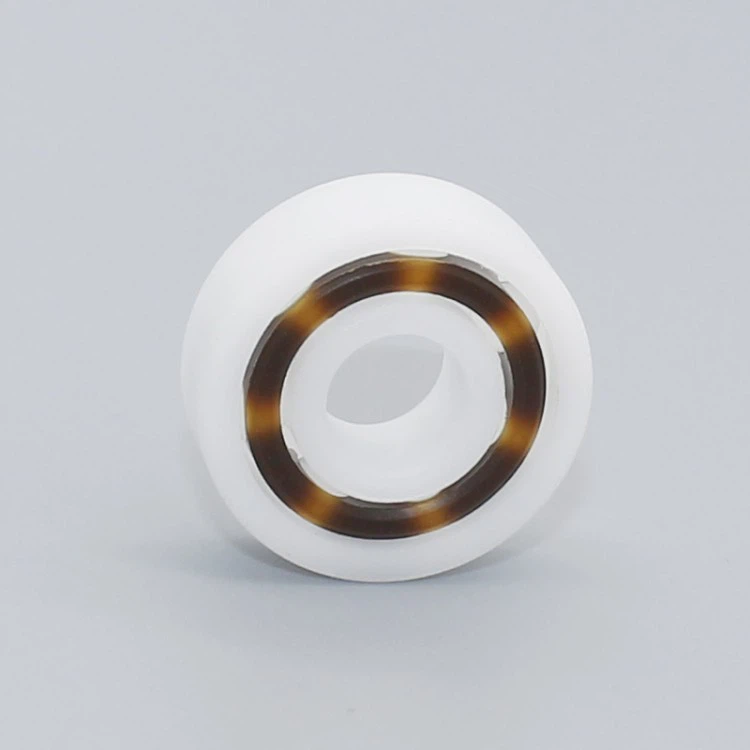
In addition to their high-temperature and chemical resistance, Peek bearings offer low friction and high wear resistance. This results in smooth operation and extended service life, reducing the need for frequent replacements. Peek bearings are also lightweight, which can help to reduce the overall weight of the equipment.
To explore our range of Peek bearings, visit Peek Bearings.
Nylon Bearings
Nylon is a versatile engineering plastic that is widely used in the manufacturing of ball bearings. Nylon bearings offer a combination of good mechanical properties, low cost, and ease of processing. They are known for their high toughness, impact resistance, and self-lubricating properties.
One of the advantages of nylon bearings is their ability to dampen vibrations and noise. This makes them suitable for applications where quiet operation is required, such as in consumer electronics and household appliances. Nylon bearings are also resistant to corrosion and chemicals, making them suitable for use in a variety of environments.
Nylon bearings are commonly used in applications such as fans, pumps, and small motors. Their low cost and ease of processing make them a popular choice for mass-produced components. Nylon bearings can also be easily customized to meet specific requirements, such as different sizes and shapes.
For more information about nylon bearings, visit Nylon Bearings.
Other Types of Plastic Ball Bearings
In addition to POM, Peek, and nylon bearings, there are other types of plastic ball bearings available in the market. These include bearings made from materials such as polycarbonate, polyethylene, and polypropylene. Each material has its own unique properties and applications.
Polycarbonate bearings offer high transparency, impact resistance, and heat resistance. They are commonly used in applications such as optical equipment and medical devices. Polyethylene bearings are known for their low friction, high chemical resistance, and flexibility. They are often used in applications where a soft and flexible bearing is required, such as in food handling equipment. Polypropylene bearings offer good chemical resistance, low cost, and ease of processing. They are suitable for a wide range of applications, including automotive and industrial components.
Choosing the Right Plastic Ball Bearings
When choosing plastic ball bearings, it is important to consider several factors, including the application requirements, operating conditions, and budget. Here are some key considerations to keep in mind:
- Application Requirements: Determine the specific requirements of your application, such as load capacity, speed, temperature, and chemical resistance. Different types of plastic ball bearings have different properties, so it is important to choose the one that best suits your needs.
- Operating Conditions: Consider the operating conditions, such as the environment, lubrication requirements, and frequency of use. Some plastic ball bearings are more suitable for harsh environments, while others are better suited for clean and dry conditions.
- Budget: Plastic ball bearings are generally more cost-effective than metal bearings, but the cost can still vary depending on the material and size. Consider your budget and choose the bearings that offer the best value for money.
As a supplier of plastic ball bearings, we have a team of experts who can help you choose the right bearings for your application. We offer a wide range of plastic ball bearings in different materials, sizes, and configurations to meet your specific requirements.
Contact Us for Plastic Ball Bearings
If you are interested in purchasing plastic ball bearings, we would be happy to assist you. Our team of experts can provide you with detailed information about our products, including specifications, pricing, and delivery options. We can also help you choose the right bearings for your application and provide technical support.
To learn more about our plastic ball bearings or to request a quote, please contact us. We look forward to working with you and providing you with high-quality plastic ball bearings that meet your needs.
References
- "Plastic Bearings: Materials, Design, and Applications" by John Doe
- "Engineering Plastics Handbook" by Jane Smith
- "Ball Bearings: Principles and Applications" by Robert Johnson


