


Plastic bearings have been steadily gaining traction in various industries over the past few years. As a supplier of plastic bearings, I often get asked if these nifty little components are suitable for low-speed applications. Well, let's dive right in and explore this topic.
First off, what exactly are low-speed applications? Generally, low-speed refers to operations where the rotational speed is relatively slow, often measured in a few revolutions per minute (RPM) up to maybe a couple of hundred RPM. These applications can be found in many places, like conveyor systems moving heavy loads at a leisurely pace, small machinery used in workshops for precision tasks, or even in some household appliances that don't require high-speed operation.
Now, why would someone consider using plastic bearings in low-speed applications? There are several compelling reasons. One of the biggest advantages is their cost. Plastic bearings are typically much cheaper to produce compared to their metal counterparts. This cost - effectiveness makes them an attractive option for projects with tight budgets.
Another key benefit is their corrosion resistance. Metals, especially those used in traditional bearings, can rust and corrode over time, especially when exposed to moisture or certain chemicals. Plastic bearings, on the other hand, are made from materials like POM (Polyoxymethylene), nylon, and PEEK (Polyetheretherketone) which are highly resistant to corrosion. This makes them ideal for low - speed applications in environments where corrosion could be a problem, such as in food processing plants or marine settings.
For instance, POM Plastic Bearings are known for their excellent dimensional stability and low coefficient of friction. They can work well in low - speed applications where smooth and consistent movement is required. POM has a high stiffness and can handle moderate loads, which is great for those low - speed machinery that need to support a certain amount of weight.
Nylon Bearings are also a popular choice. Nylon is a tough and flexible material. It can absorb shocks and vibrations, which is beneficial in low - speed applications where sudden jolts might occur. For example, in some small conveyor systems that move fragile items, nylon bearings can help prevent damage by cushioning the movement.
Peek Bearings are a bit more high - end. PEEK is a high - performance thermoplastic with excellent mechanical properties, high temperature resistance, and chemical resistance. In low - speed applications where the environment is harsh, such as in chemical processing plants or high - temperature industrial settings, PEEK bearings can provide reliable performance.
But it's not all sunshine and rainbows. There are some limitations to using plastic bearings in low - speed applications. One of the main concerns is their load - bearing capacity. While they can handle moderate loads, they are generally not as strong as metal bearings. So, in applications where extremely heavy loads are involved, plastic bearings might not be the best choice.
Another aspect is their temperature tolerance. Although some plastics like PEEK have good high - temperature resistance, most plastic bearings have a lower maximum operating temperature compared to metal bearings. In low - speed applications where heat is generated, even if it's not a large amount, it's important to consider whether the plastic bearing can withstand the temperature.
In addition, plastic bearings can be more susceptible to wear in some situations. If the application involves abrasive particles or rough surfaces, the plastic can wear down more quickly than metal. However, this can often be mitigated by using proper lubrication or by choosing the right type of plastic bearing for the specific environment.
So, can plastic bearings be used in low - speed applications? The answer is a resounding yes, in many cases. They offer a great combination of cost - effectiveness, corrosion resistance, and other useful properties that make them a viable option for a wide range of low - speed operations.
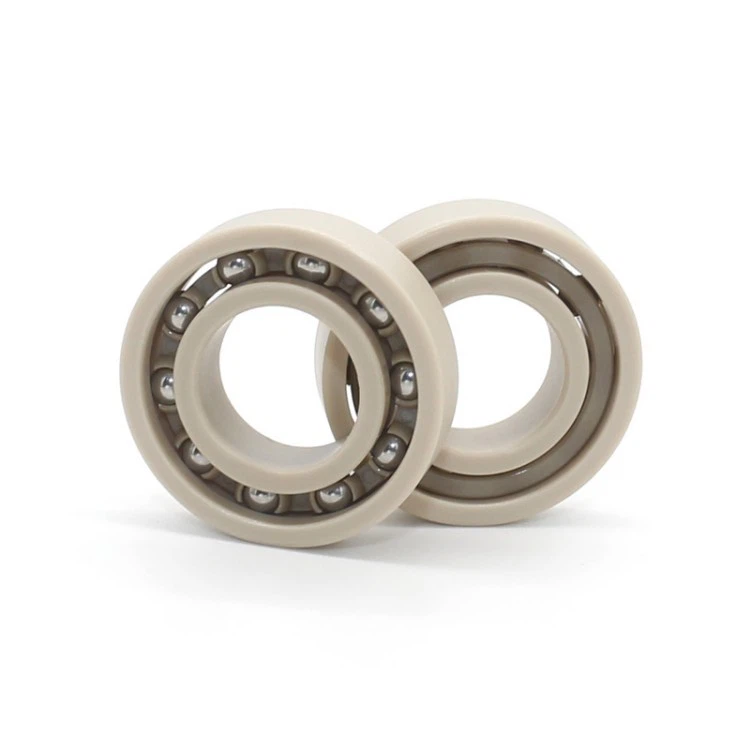

If you're involved in a project with low - speed requirements and are considering using plastic bearings, I'd love to have a chat with you. I can provide more detailed information about the different types of plastic bearings we offer, help you choose the right one for your specific application, and discuss any technical aspects you might be concerned about. Whether it's a small DIY project or a large - scale industrial application, we've got the knowledge and the products to meet your needs. Contact us to start the procurement process and let's get your project rolling smoothly with our high - quality plastic bearings!
References
- Engineering Plastics Handbook: Provides in - depth knowledge about different plastic materials used in bearings.
- Industry reports on bearing applications: Cover trends and case - studies related to using plastic bearings in various industries.


