Aircraft bearings play a crucial role in the smooth operation of various aircraft components. One of the significant challenges they face is thermal expansion. In this blog, we, as an aircraft bearings supplier, will delve into how aircraft bearings handle thermal expansion and the implications for their performance.
Understanding Thermal Expansion in Aircraft Bearings
Thermal expansion is a natural phenomenon where materials expand or contract in response to changes in temperature. In an aircraft, the operating environment can vary widely, from the frigid temperatures at high altitudes to the heat generated by engines and other components. This temperature variation can cause the materials in aircraft bearings to expand or contract, which, if not properly managed, can lead to premature wear, reduced performance, and even catastrophic failure.
The expansion or contraction of a material due to temperature change is governed by its coefficient of thermal expansion (CTE). Different materials have different CTE values, and this is an important consideration when selecting bearings for aircraft applications. For example, metals generally have higher CTE values compared to ceramics. When designing aircraft bearings, engineers must take into account the CTE of the bearing materials as well as the materials of the surrounding components.
Design Strategies to Handle Thermal Expansion
Material Selection
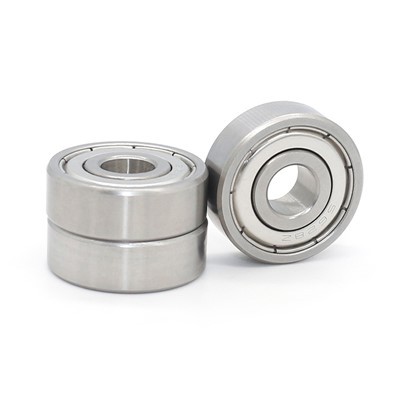
Choosing the right materials is the first step in handling thermal expansion. We offer a range of bearing materials, each with its own set of properties. For instance, stainless steel bearings are a popular choice due to their corrosion resistance and relatively stable thermal properties. Our Stainless Steel Bearing Model: S685ZZ is designed to withstand a wide range of temperatures while maintaining its structural integrity. Stainless steel has a moderate CTE, which helps to minimize the effects of thermal expansion.


Another option is ceramic bearings. Ceramics have a lower CTE compared to metals, which means they expand and contract less with temperature changes. This makes them ideal for high - temperature applications in aircraft engines. However, ceramics are more brittle than metals, so careful design and handling are required.
Clearance Design
Proper clearance design is essential to accommodate thermal expansion. Bearings are designed with a specific amount of internal clearance, which is the space between the rolling elements and the raceways. This clearance allows for the expansion of the bearing components as the temperature rises. If the clearance is too small, the bearing may become over - constrained as it expands, leading to increased friction, heat generation, and potential damage. On the other hand, if the clearance is too large, the bearing may experience excessive vibration and reduced accuracy.
Our engineers carefully calculate the optimal clearance based on the expected temperature range, the materials used, and the operating conditions. For example, in applications where the temperature variation is significant, a larger clearance may be specified. Our S605 - 2rs Stainless Steel Bearings are designed with appropriate clearances to handle thermal expansion in a variety of aircraft applications.
Preloading
Preloading is another technique used to manage thermal expansion. Preloading involves applying a specific amount of force to the bearing to eliminate internal clearance. This can improve the bearing's stiffness, accuracy, and resistance to vibration. However, preloading must be carefully controlled, especially in applications with significant temperature changes. As the bearing expands due to heat, the preload force can increase, potentially leading to excessive stress and premature failure.
Our bearing design takes into account the effects of thermal expansion on preload. We use advanced simulation techniques to predict how the preload will change with temperature and adjust the design accordingly. This ensures that the bearing maintains its performance over a wide range of operating conditions.
Lubrication and Thermal Expansion
Lubrication plays a vital role in handling thermal expansion in aircraft bearings. A good lubricant can help to reduce friction and heat generation, which in turn can minimize the effects of thermal expansion. It also provides a protective film between the rolling elements and the raceways, preventing wear and corrosion.
When selecting a lubricant for aircraft bearings, factors such as temperature range, load, and speed must be considered. High - temperature lubricants are often used in applications where the bearing is exposed to extreme heat, such as in aircraft engines. These lubricants have a high viscosity index, which means they maintain their lubricating properties over a wide range of temperatures.
Our Miniature Ball Bearing 683ZZ is typically lubricated with a high - quality lubricant that is specifically formulated to handle the thermal challenges of aircraft applications. The lubricant helps to keep the bearing operating smoothly, even when the temperature fluctuates.
Monitoring and Maintenance
Regular monitoring and maintenance are essential to ensure that aircraft bearings continue to handle thermal expansion effectively. This includes checking the bearing's temperature, vibration, and lubrication levels. Temperature sensors can be installed to monitor the bearing's operating temperature, and any abnormal temperature increases can be an indication of a problem.
Vibration analysis can also be used to detect early signs of bearing wear or damage. If the bearing is not handling thermal expansion properly, it may start to vibrate excessively. By detecting these issues early, maintenance can be performed before a more serious problem occurs.
In addition, regular lubricant changes are necessary to ensure that the bearing is properly lubricated. Over time, the lubricant can break down due to heat and contaminants, reducing its effectiveness. By replacing the lubricant at regular intervals, the bearing's performance can be maintained.
Conclusion
Handling thermal expansion is a critical aspect of aircraft bearing design and operation. As an aircraft bearings supplier, we understand the challenges posed by thermal expansion and have developed a range of solutions to address them. From material selection and clearance design to lubrication and maintenance, every aspect of our bearing design is optimized to ensure reliable performance in the demanding environment of aircraft applications.
If you are in the market for high - quality aircraft bearings that can handle thermal expansion effectively, we invite you to contact us for a detailed discussion. Our team of experts is ready to assist you in selecting the right bearings for your specific needs.
References
- Harris, T. A., & Kotzalas, M. N. (2007). Rolling Bearing Analysis. Wiley.
- Townsend, D. P. (1992). Basic Design of Rolling Bearings. CRC Press.