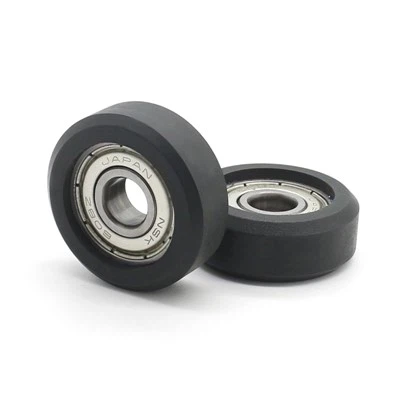
When it comes to the operation of screw pulleys, one crucial aspect that often requires careful consideration is the temperature rise during operation. As a dedicated screw pulley supplier, I've witnessed firsthand the significance of understanding this phenomenon in ensuring the optimal performance and longevity of these vital mechanical components.
Factors Contributing to Temperature Rise
-
Friction
- Friction is perhaps the most prominent factor leading to temperature rise in screw pulleys. When the screw pulley rotates, there is friction between different contact surfaces. For example, the contact between the screw and the nut generates sliding friction. This frictional force converts mechanical energy into heat energy, causing the temperature of the pulley to increase. The magnitude of this frictional force depends on factors such as the surface roughness of the contact parts, the load applied, and the lubrication conditions. A high - surface roughness usually results in greater frictional force, thus leading to more heat generation.
- In addition, the rolling friction within the bearings of the screw pulley also contributes to the temperature rise. The rolling elements like balls or rollers move against the raceways, and any irregularities in the bearing surface or improper pre - loading can increase the frictional resistance and subsequent heat production.
-
Load


- The load carried by the screw pulley has a direct impact on its temperature rise. Higher loads often lead to increased contact stresses between the various components of the pulley. For instance, when a heavy load is applied to the pulley, the pressure between the screw and the nut increases, which in turn raises the frictional force and heat generation. As more weight is placed on the system, the internal forces acting on the pulley components increase, causing more mechanical energy to be dissipated as heat.
-
Speed of Rotation
- The rotational speed of the screw pulley is another critical factor. As the speed increases, the frequency of contact and relative motion between the components also rises. This means that the frictional forces act more frequently, generating heat at a faster rate. For example, in high - speed applications, the temperature of the screw pulley can rise rapidly due to the continuous and intense friction caused by the high - speed rotation.
-
Lubrication
- Proper lubrication is essential for reducing the temperature rise in screw pulleys. A good lubricant forms a thin film between the contact surfaces, which reduces friction and wear. It can also carry away the heat generated during operation. However, if the lubrication is insufficient or the lubricant has degraded over time, the frictional forces will increase significantly, leading to a sharp rise in temperature. For example, in a poorly lubricated screw pulley, the metal - to - metal contact can cause excessive heat, which may even lead to damage of the components.
Measuring Temperature Rise
To accurately understand the temperature rise of a screw pulley during operation, appropriate measuring methods are required. One common method is to use thermocouples. Thermocouples are temperature sensors that can be attached to the surface of the screw pulley or its critical components. They work based on the principle of the Seebeck effect, where a voltage is generated proportional to the temperature difference between two junctions. By measuring this voltage, the temperature can be accurately determined.
Infrared thermometers are also widely used. These devices can measure the temperature of an object without direct contact. They detect the infrared radiation emitted by the object and convert it into a temperature reading. This method is convenient, especially for measuring the temperature of rotating components where direct contact may be difficult or dangerous.
Impact of Temperature Rise on Screw Pulleys
-
Material Properties
- High temperatures can significantly affect the material properties of the screw pulley. For example, most metals used in screw pulleys experience a decrease in strength and hardness as the temperature rises. This can lead to deformation of the screw or nut, reducing the accuracy and precision of the pulley's operation. In extreme cases, the material may even reach its melting point, causing catastrophic failure of the component.
-
Lubrication Performance
- Temperature rise can also have a negative impact on the lubricant. As the temperature increases, the viscosity of the lubricant decreases. A lubricant with low viscosity may not be able to form an effective lubricating film, which in turn increases friction and wear. Moreover, high temperatures can cause the lubricant to oxidize and degrade more quickly, reducing its service life and effectiveness.
-
Clearance and Fit
- Thermal expansion occurs when the temperature of the screw pulley rises. Different components of the pulley may expand at different rates, depending on their material and shape. This can change the clearances between the components, such as the clearance between the screw and the nut or between the bearing and its housing. If the clearances become too small, it can lead to jamming or excessive wear; if they become too large, it can affect the stability and accuracy of the pulley's operation.
Our Solutions as a Screw Pulley Supplier
As a screw pulley supplier, we are committed to providing high - quality products that can withstand the challenges of temperature rise.
We offer a wide range of screw pulleys with different designs and materials to meet the specific requirements of different applications. For example, our External Thread Sliding Pulley 6000RS is designed with high - quality materials and precision manufacturing processes to ensure low friction and stable performance even under high - load and high - speed conditions.
In addition, we pay great attention to the lubrication of our products. We provide detailed lubrication instructions and can recommend suitable lubricants based on the application environment and operating conditions. Our S698ZZ Rubber Coated Bearing with M810Screw and S696ZZ Rubber Coated Bearing with M6 Screw are designed to work well with proper lubrication, which helps to reduce the temperature rise and extend the service life of the pulleys.
Contact for Purchase and Negotiation
If you are interested in our screw pulleys or have any questions about temperature rise and its impact on screw pulley operation, please feel free to contact us for purchase and negotiation. We have a professional team that can provide you with detailed product information and technical support.
References
- Smith, J. (2018). Mechanical Design Handbook. New York: McGraw - Hill.
- Johnson, R. (2019). Tribology: Friction, Lubrication, and Wear. London: Elsevier.
- Brown, A. (2020). Thermal Management of Mechanical Systems. Chicago: Wiley.