


As a supplier of plastic ball bearings, I've witnessed firsthand the diverse applications and unique characteristics of these components. One aspect that often comes under scrutiny is the surface finish of plastic ball bearings. In this blog, I'll delve into what surface finish means for plastic ball bearings, its importance, and how it varies across different materials.
Understanding Surface Finish
Surface finish refers to the texture of a surface, which is determined by the machining or manufacturing process used to create it. For plastic ball bearings, the surface finish can have a significant impact on their performance, durability, and overall quality. It encompasses several parameters, including roughness, waviness, and lay.
Roughness is the most commonly discussed aspect of surface finish. It represents the fine irregularities on the surface, measured in terms of average roughness (Ra) or root mean square roughness (Rq). A smoother surface finish, with lower roughness values, generally leads to reduced friction, less wear, and improved performance.
Waviness, on the other hand, refers to the more widely spaced irregularities on the surface. While not as critical as roughness, excessive waviness can still affect the bearing's performance, particularly in high - speed applications.
Lay describes the direction of the predominant surface pattern. In plastic ball bearings, the lay can influence how the bearing interacts with other components, such as shafts or housings.
Importance of Surface Finish in Plastic Ball Bearings
The surface finish of plastic ball bearings plays a crucial role in several key areas:
Friction and Wear
A smooth surface finish reduces the contact area between the bearing balls and the raceways, which in turn decreases friction. Lower friction means less energy is wasted as heat, leading to improved efficiency. Additionally, reduced friction results in less wear on the bearing components, extending the bearing's service life.
Noise and Vibration
In applications where quiet operation is essential, such as in consumer electronics or medical devices, the surface finish of plastic ball bearings can have a significant impact. A smooth surface finish helps to minimize noise and vibration, providing a more comfortable and reliable user experience.
Corrosion Resistance
Some plastic materials used in ball bearings are susceptible to environmental factors, such as moisture and chemicals. A proper surface finish can enhance the bearing's resistance to corrosion by providing a more uniform and dense surface that is less likely to allow corrosive agents to penetrate.
Lubrication
The surface finish can also affect the way lubricants interact with the bearing. A smooth surface can better retain lubricants, ensuring consistent lubrication and reducing the risk of dry - running, which can lead to premature failure.
Surface Finish in Different Plastic Materials
Different plastic materials used in ball bearings have unique characteristics that can influence the achievable surface finish.
Peek Bearings
Peek (Polyetheretherketone) is a high - performance thermoplastic known for its excellent mechanical properties, chemical resistance, and high - temperature stability. Peek Bearings can achieve a very smooth surface finish, which is beneficial for applications where low friction and high precision are required. The machining process for Peek bearings can be carefully controlled to produce a surface with minimal roughness and waviness, making them suitable for use in aerospace, automotive, and medical industries.
POM Plastic Bearings
POM (Polyoxymethylene), also known as acetal, is a widely used engineering plastic. POM Plastic Bearings offer good stiffness, low friction, and excellent dimensional stability. The surface finish of POM bearings can be optimized through injection molding or machining processes. Injection - molded POM bearings typically have a relatively smooth surface, but additional machining may be required to achieve a higher level of precision in some applications.
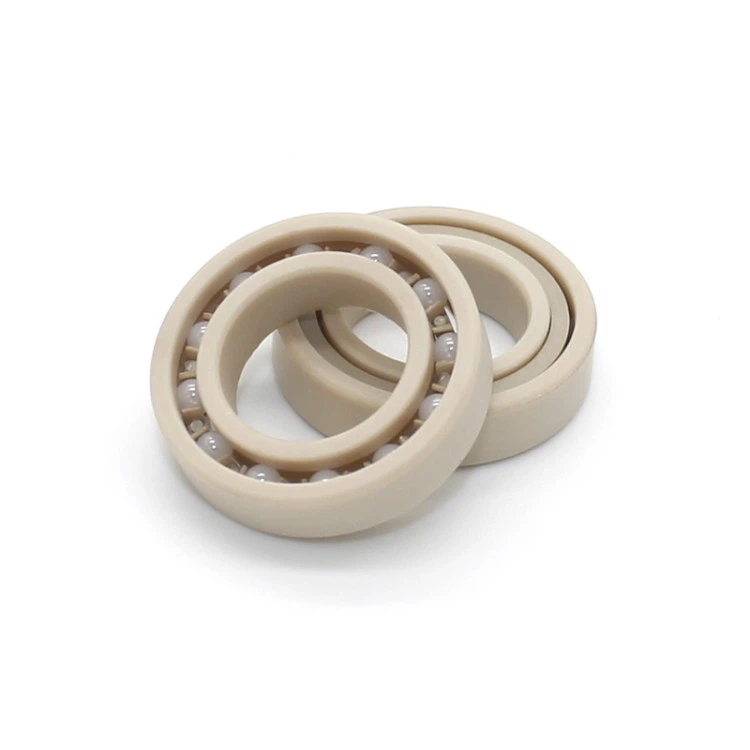

Nylon Bearings
Nylon is a versatile and cost - effective plastic material. Nylon Bearings are known for their self - lubricating properties and good impact resistance. The surface finish of nylon bearings can vary depending on the manufacturing method. Extruded nylon bearings may have a slightly rougher surface compared to injection - molded ones. However, post - processing techniques, such as polishing, can be used to improve the surface finish and enhance the bearing's performance.
Manufacturing Processes for Achieving Desired Surface Finish
Several manufacturing processes can be employed to achieve the desired surface finish in plastic ball bearings:
Injection Molding
Injection molding is a widely used process for manufacturing plastic ball bearings. It allows for the production of complex shapes with high precision. By carefully controlling the mold design, temperature, and injection parameters, a relatively smooth surface finish can be achieved. However, the surface finish may still require some post - processing, especially for applications with strict requirements.
Machining
Machining processes, such as turning, milling, and grinding, can be used to improve the surface finish of plastic ball bearings. These processes can remove any surface irregularities left by the initial manufacturing process and achieve a very high level of precision. However, machining plastic materials requires special considerations, such as using appropriate cutting tools and coolant to avoid melting or deforming the plastic.
Polishing
Polishing is a post - processing technique that can be used to further improve the surface finish of plastic ball bearings. It involves using abrasive materials to remove small amounts of material from the surface, resulting in a smoother and more reflective finish. Polishing can be particularly effective for achieving a very low roughness value and enhancing the bearing's aesthetic appearance.
Quality Control of Surface Finish
Ensuring the proper surface finish of plastic ball bearings is essential for maintaining high - quality products. Quality control measures typically involve using surface profilometers to measure the roughness and waviness of the bearing surfaces. These instruments can provide accurate and detailed information about the surface texture, allowing manufacturers to verify that the bearings meet the specified requirements.
In addition to surface profilometry, visual inspection can also be used to detect any obvious surface defects, such as scratches or pits. Any bearings that do not meet the quality standards should be rejected or re - worked to ensure that only high - quality products are delivered to customers.
Conclusion
The surface finish of plastic ball bearings is a critical factor that can significantly impact their performance, durability, and overall quality. As a supplier, we understand the importance of providing bearings with the right surface finish for different applications. Whether it's a high - precision Peek bearing for aerospace use or a cost - effective nylon bearing for consumer products, we are committed to delivering products that meet or exceed our customers' expectations.
If you are in the market for plastic ball bearings and want to discuss your specific requirements regarding surface finish or any other aspect of our products, we invite you to contact us for a detailed discussion. Our team of experts is ready to assist you in finding the best solutions for your applications.
References
- "Plastic Materials in Engineering Applications" - A comprehensive textbook on the properties and applications of plastic materials.
- "Bearing Design and Application Handbook" - A guidebook that covers various aspects of bearing design, including surface finish considerations.
- Industry research papers on the performance of plastic ball bearings in different environments.


