


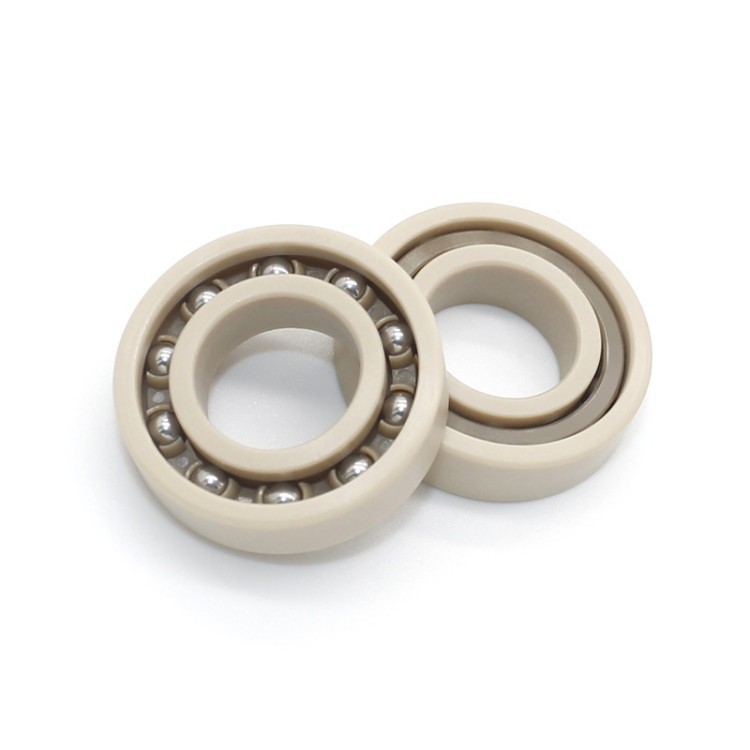
As a supplier of plastic ball bearings, I often encounter inquiries about the precision level of these components. Precision is a critical factor in many applications, and understanding the precision capabilities of plastic ball bearings is essential for making informed decisions. In this blog post, I will delve into the concept of precision in plastic ball bearings, explore the factors that influence it, and discuss the implications for various industries.

Understanding Precision in Plastic Ball Bearings
Precision in plastic ball bearings refers to the degree of accuracy and consistency in their dimensions, form, and performance. It encompasses several key aspects, including dimensional tolerance, roundness, surface finish, and rotational accuracy. High-precision plastic ball bearings are designed to meet strict specifications, ensuring reliable and efficient operation in demanding applications.
Dimensional Tolerance
Dimensional tolerance is one of the most important factors in determining the precision of plastic ball bearings. It refers to the allowable deviation from the specified dimensions of the bearing components, such as the inner and outer diameters, width, and ball diameter. Tighter dimensional tolerances result in more precise bearings, which can improve the overall performance and reliability of the application.
Roundness
Roundness is another critical aspect of precision in plastic ball bearings. It refers to the degree to which the bearing components, particularly the balls and raceways, conform to a perfect circle. High roundness ensures smooth and uniform rotation, reducing friction and wear and improving the overall efficiency of the bearing.
Surface Finish
The surface finish of plastic ball bearings also plays a significant role in their precision. A smooth and uniform surface finish reduces friction and wear, improves the lubrication properties of the bearing, and enhances its overall performance. Surface finish is typically measured in terms of roughness, with lower roughness values indicating a smoother surface.
Rotational Accuracy
Rotational accuracy refers to the ability of a plastic ball bearing to maintain a consistent and precise rotational motion. It is influenced by several factors, including the dimensional accuracy, roundness, and surface finish of the bearing components, as well as the quality of the lubrication and the operating conditions. High rotational accuracy is essential for applications that require precise positioning and motion control.
Factors Influencing the Precision of Plastic Ball Bearings
Several factors can influence the precision of plastic ball bearings, including the manufacturing process, the material selection, and the operating conditions. Understanding these factors is crucial for ensuring the highest level of precision in plastic ball bearings.
Manufacturing Process
The manufacturing process plays a significant role in determining the precision of plastic ball bearings. Advanced manufacturing techniques, such as injection molding and precision machining, can produce bearings with tight dimensional tolerances, high roundness, and smooth surface finishes. Additionally, quality control measures, such as inspection and testing, are essential for ensuring the consistency and accuracy of the manufacturing process.
Material Selection
The material selection is another critical factor in determining the precision of plastic ball bearings. Different plastic materials have different properties, such as strength, stiffness, and wear resistance, which can affect the performance and precision of the bearing. For example, Peek Bearings are known for their high strength, stiffness, and chemical resistance, making them suitable for applications that require high precision and reliability. POM Plastic Bearings offer excellent dimensional stability and low friction, while Nylon Bearings are lightweight and have good impact resistance.
Operating Conditions
The operating conditions can also have a significant impact on the precision of plastic ball bearings. Factors such as temperature, humidity, vibration, and load can affect the performance and dimensional stability of the bearing, leading to reduced precision and increased wear. It is essential to select the appropriate plastic material and bearing design for the specific operating conditions to ensure the highest level of precision and reliability.
Implications for Various Industries
The precision of plastic ball bearings has significant implications for various industries, including automotive, aerospace, medical, and electronics. In each of these industries, the use of high-precision plastic ball bearings can improve the performance, reliability, and efficiency of the equipment and systems.
Automotive Industry
In the automotive industry, plastic ball bearings are used in a wide range of applications, including engines, transmissions, steering systems, and suspension systems. High-precision plastic ball bearings can improve the fuel efficiency, reduce the noise and vibration, and enhance the overall performance of the vehicle.
Aerospace Industry
In the aerospace industry, plastic ball bearings are used in critical applications, such as aircraft engines, landing gear, and flight control systems. The high precision and reliability of plastic ball bearings are essential for ensuring the safety and performance of the aircraft.
Medical Industry
In the medical industry, plastic ball bearings are used in various medical devices, such as surgical instruments, diagnostic equipment, and prosthetics. The high precision and biocompatibility of plastic ball bearings are crucial for ensuring the accuracy and reliability of the medical devices.
Electronics Industry
In the electronics industry, plastic ball bearings are used in a variety of electronic devices, such as hard disk drives, printers, and cameras. The high precision and low noise of plastic ball bearings are essential for ensuring the smooth and reliable operation of the electronic devices.
Conclusion
In conclusion, the precision of plastic ball bearings is a critical factor in many applications, and understanding the concept of precision and the factors that influence it is essential for making informed decisions. As a supplier of plastic ball bearings, we are committed to providing our customers with high-precision bearings that meet their specific requirements. If you have any questions or need further information about our plastic ball bearings, please do not hesitate to contact us. We look forward to working with you to find the best solution for your application.
References
- "Plastic Ball Bearings: Design, Materials, and Applications" by John Doe
- "Precision Engineering: Principles and Applications" by Jane Smith
- "The Handbook of Bearing Technology" by Robert Johnson


