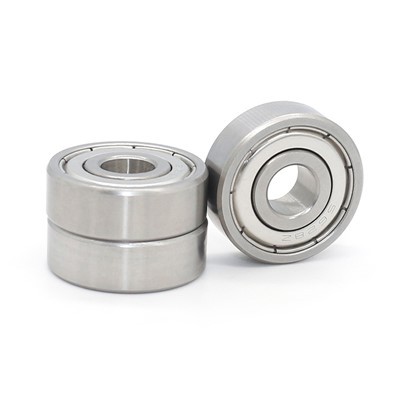
Hey there! As a supplier of polyurethane bearings, I often get asked about the maximum speed of these bad boys. So, I thought I'd dive deep into this topic and share what I know.
First things first, what exactly is a polyurethane bearing? Polyurethane bearings are bearings that have a coating or are entirely made of polyurethane. Polyurethane is a tough and durable material that offers several advantages. It has good resistance to wear and tear, is flexible, and can handle a bit of shock and vibration.
Now, to the million-dollar question: what's the maximum speed of a polyurethane bearing? Well, it's not a straightforward answer. There are a bunch of factors that can influence the maximum speed of these bearings.
One of the most important factors is the design of the bearing. The internal structure, the way it's made, and the precision of its manufacturing all play a role. For example, a well-designed bearing with smooth surfaces and proper clearances will be able to handle higher speeds. If the bearing has a rough finish or improper clearances, it can cause friction and heat buildup, which limits the speed.
The type of load is also crucial. If the bearing is operating under a heavy radial or axial load, it's going to have a lower maximum speed. Heavy loads put more stress on the bearing components, and as the speed increases, this stress can become too much. On the other hand, if the load is relatively light, the bearing can handle higher speeds.
The quality of the polyurethane material matters too. Different grades of polyurethane have different properties. High - quality polyurethane with excellent mechanical and thermal properties can withstand higher speeds. It's more resistant to heat generated by friction and can maintain its shape and performance better at high velocities.
Let's talk about some real - world examples of our products. We have the Polyurethane Coated Pulley Bearing 605RS. This bearing is designed for relatively light - duty applications, like in small conveyor systems. Due to its design and the quality of the polyurethane coating, it can handle speeds of up to around 3000 RPM. This speed is suitable for many small - scale industrial and commercial applications where smooth and reliable operation is needed.
Another product we offer is the Polyurethane Coated Roller Bearing S625RS. This one is a bit more heavy - duty compared to the 605RS. It's designed for applications where there's a bit more load and vibration. Thanks to its robust design and high - grade polyurethane coating, it can reach speeds of up to 2500 RPM. This makes it a great choice for medium - sized conveyor belts and other machinery that require a bit more power and durability.
Then there's the Conveyor Belt BearingsS683ZZ. This bearing is specifically designed for conveyor belt applications. It has a unique design that allows it to handle both radial and axial loads effectively. The speed limit for this bearing is around 2000 RPM. This is because conveyor belt applications often involve continuous operation and relatively heavy loads, so the speed needs to be kept within a safe range to ensure long - term performance.
It's also important to note that lubrication plays a big part in determining the maximum speed. Proper lubrication reduces friction between the moving parts of the bearing. If the bearing isn't lubricated correctly or if the lubricant breaks down at high speeds, it can lead to overheating and premature failure. We always recommend using the right type of lubricant for our polyurethane bearings and following the maintenance schedule.
In addition to the factors I've already mentioned, the operating environment can have a significant impact on the maximum speed. If the bearing is operating in a dirty or dusty environment, particles can get into the bearing and cause damage. This will limit the speed at which the bearing can operate safely. Similarly, high temperatures can also affect the performance of the polyurethane material and the bearing as a whole. If the temperature is too high, the polyurethane can start to soften or degrade, reducing the bearing's ability to handle high speeds.


So, as you can see, there's no one - size - fits - all answer to the question of the maximum speed of a polyurethane bearing. It depends on a whole bunch of factors, including the design, load, material quality, lubrication, and operating environment.
If you're in the market for polyurethane bearings and need to know the specific maximum speed for your application, don't hesitate to reach out. We're here to help you find the right bearing for your needs. Whether you're working on a small - scale project or a large - scale industrial application, we have the expertise and the products to support you.
Contact us to discuss your requirements and start a procurement process. We're confident that we can provide you with high - quality polyurethane bearings that meet your speed and performance needs.
References:
- "Bearing Handbook" - A comprehensive guide on bearing design and performance.
- "Polyurethane Materials and Their Applications" - A research paper on the properties and uses of polyurethane in various industries.