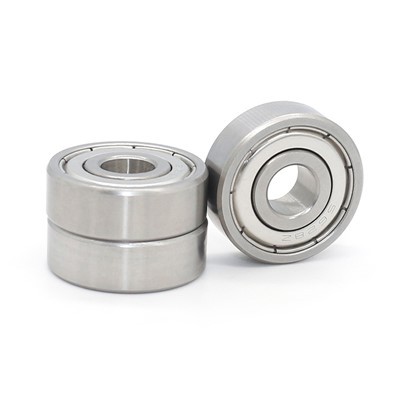
As a trusted supplier of GE50 bearings, I often encounter inquiries about the friction torque of these bearings. Friction torque is a crucial parameter that significantly impacts the performance and efficiency of bearings in various applications. In this blog post, I will delve into the concept of friction torque in GE50 bearings, exploring its definition, influencing factors, measurement methods, and practical implications.
Understanding Friction Torque
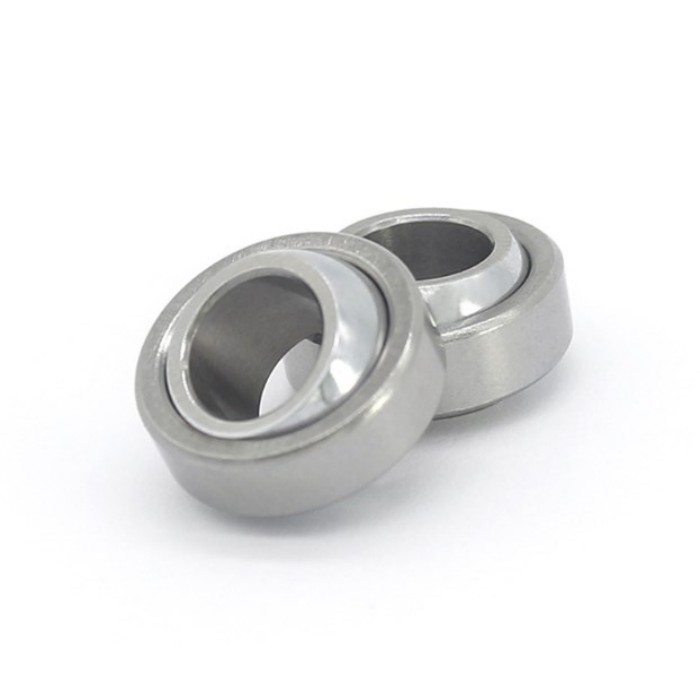
Friction torque refers to the moment required to initiate and maintain the rotation of a bearing under specific operating conditions. It arises from the interaction between the rolling elements, raceways, and lubricant within the bearing. In the case of GE50 bearings, which are radial spherical plain bearings, friction torque plays a vital role in determining the smoothness of operation and the energy consumption of the machinery in which they are installed.
The friction torque of a bearing can be divided into two main components: the starting friction torque and the running friction torque. The starting friction torque is the torque required to overcome the static friction between the bearing components when the bearing starts to rotate from a stationary position. It is typically higher than the running friction torque due to the breakaway force needed to initiate motion. Once the bearing is in motion, the running friction torque comes into play. This is the torque required to sustain the rotation at a constant speed.
Factors Influencing Friction Torque in GE50 Bearings
Several factors can influence the friction torque of GE50 bearings. Understanding these factors is essential for optimizing bearing performance and minimizing energy losses.
Lubrication
Lubrication is one of the most critical factors affecting friction torque. A proper lubricant reduces the friction between the rolling elements and the raceways, thereby decreasing the friction torque. In GE50 bearings, the type of lubricant, its viscosity, and the quantity applied can all have a significant impact on friction torque. For instance, a high-viscosity lubricant may increase the friction torque, while an insufficient amount of lubricant can lead to metal-to-metal contact and increased friction.

Load
The magnitude and distribution of the load applied to the bearing also affect friction torque. Generally, as the load increases, the contact pressure between the rolling elements and the raceways rises, resulting in an increase in friction torque. Additionally, misaligned or unevenly distributed loads can cause localized high-stress areas, further increasing the friction torque.
Speed
The rotational speed of the bearing is another important factor. At low speeds, the friction torque is mainly influenced by the static friction and the properties of the lubricant. As the speed increases, hydrodynamic effects come into play, and the friction torque may change. In some cases, an increase in speed can lead to a decrease in friction torque due to the formation of a lubricant film that separates the bearing components.
Surface Finish
The surface finish of the raceways and rolling elements can affect the friction torque. A smooth surface finish reduces the roughness and asperity contact between the components, resulting in lower friction torque. On the other hand, a rough surface can increase the friction and wear, leading to higher friction torque.
Temperature
Temperature can have a significant impact on the friction torque of GE50 bearings. As the temperature changes, the viscosity of the lubricant and the dimensions of the bearing components can also change. For example, an increase in temperature can cause the lubricant to become thinner, reducing its ability to separate the bearing components and increasing the friction torque.
Measuring Friction Torque
Accurately measuring the friction torque of GE50 bearings is essential for quality control and performance evaluation. There are several methods available for measuring friction torque, each with its own advantages and limitations.
Torque Meter
A torque meter is a commonly used device for measuring friction torque. It works by measuring the rotational force required to turn the bearing at a specific speed. The torque meter is typically connected to the bearing shaft, and the measured torque is displayed on a digital or analog meter. This method provides a direct measurement of the friction torque and is suitable for both laboratory testing and in-situ measurements.
Dynamometer
A dynamometer is another device that can be used to measure friction torque. It measures the power input to the bearing and the rotational speed, and then calculates the friction torque based on the power and speed relationship. Dynamometers are often used in more complex testing setups, where the bearing is integrated into a larger system.
Strain Gauge
Strain gauges can also be used to measure friction torque indirectly. By attaching strain gauges to the bearing housing or shaft, the deformation caused by the friction torque can be measured. The strain gauge output is then converted into a torque value using calibration factors. This method is suitable for applications where direct measurement of the friction torque is difficult or not possible.
Practical Implications of Friction Torque in GE50 Bearings
The friction torque of GE50 bearings has several practical implications for the performance and reliability of the machinery in which they are used.
Energy Efficiency
High friction torque in bearings can lead to increased energy consumption. In applications where the bearing operates continuously, such as in industrial machinery or automotive engines, even a small increase in friction torque can result in significant energy losses over time. By reducing the friction torque of GE50 bearings, the energy efficiency of the machinery can be improved, leading to cost savings and reduced environmental impact.
Wear and Fatigue
Excessive friction torque can cause increased wear and fatigue of the bearing components. The high contact stresses and friction generated by a high friction torque can lead to surface damage, such as pitting and scoring, and can also accelerate the fatigue life of the bearing. By minimizing the friction torque, the wear and fatigue of the bearing can be reduced, improving its reliability and service life.
Noise and Vibration
Friction torque can also contribute to noise and vibration in the machinery. Unsteady or excessive friction torque can cause the bearing to vibrate, which can be transmitted to the surrounding components and result in noise. By reducing the friction torque, the noise and vibration levels of the machinery can be minimized, improving the comfort and safety of the operators.
Conclusion
In conclusion, friction torque is a critical parameter that affects the performance, efficiency, and reliability of GE50 bearings. By understanding the factors that influence friction torque and using appropriate measurement methods, we can optimize the design and operation of bearings to minimize friction torque and improve overall performance.
As a supplier of GE50 Bearing, we are committed to providing high-quality bearings with low friction torque. Our bearings are designed and manufactured to meet the strictest industry standards, ensuring reliable performance and long service life. If you are interested in learning more about our GE50 bearings or have any questions about friction torque, please feel free to contact us for further discussion and potential procurement opportunities. We also offer a range of related products, such as GE80 Bearing, to meet your diverse needs.
References
- Harris, T. A., & Kotzalas, M. N. (2007). Rolling Bearing Analysis. Wiley.
- Zorzi, C., & Giacopini, A. (2012). Friction torque in bearings: A review. Tribology International, 47, 1-12.
- ISO 15242-1:2004. Rolling bearings - Friction torque - Part 1: General principles and basic methods.