


Hey there! As a supplier of plastic ball bearings, I often get asked how plastic ball bearings stack up against PTFE ball bearings. So, I thought I'd break it down for you in this blog post.
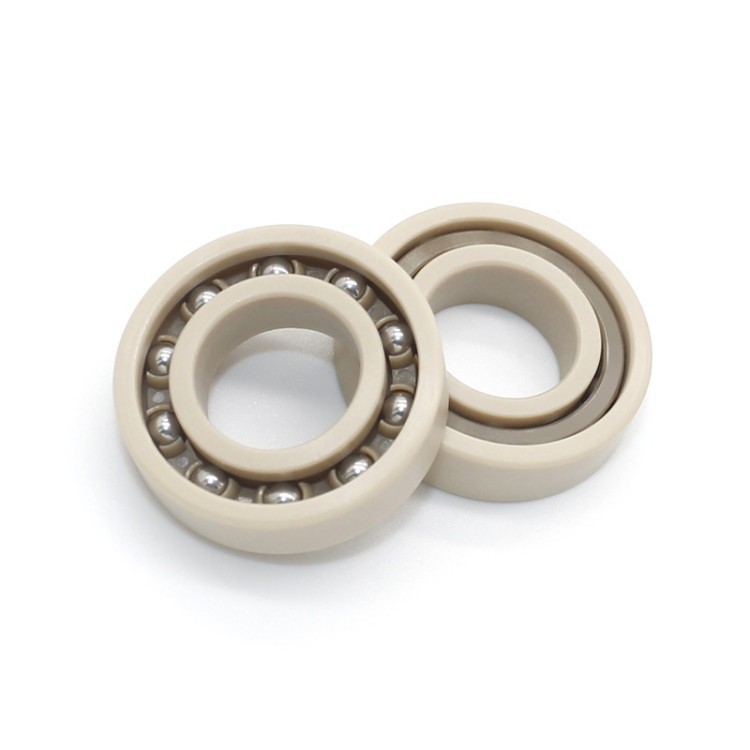
First off, let's talk about what plastic ball bearings are. Plastic ball bearings are made from various types of plastics, such as Peek, Nylon, and POM. Each type of plastic has its own unique properties that make it suitable for different applications.
Peek Bearings
Peek Bearings are known for their high strength and excellent chemical resistance. They can withstand high temperatures and are often used in aerospace, automotive, and medical applications. Peek is a semi - crystalline thermoplastic that offers good mechanical properties, including high stiffness and low wear rates. This makes Peek ball bearings a great choice when you need a bearing that can handle heavy loads and harsh environments.
Nylon Bearings
Nylon Bearings are another popular option. Nylon is a tough, lightweight, and self - lubricating material. It has good impact resistance and is relatively inexpensive compared to some other plastics. Nylon ball bearings are commonly used in consumer products, such as toys and small appliances. They're also used in some industrial applications where low noise and vibration are important.
POM Plastic Bearings
POM Plastic Bearings are made from polyoxymethylene, a high - performance engineering plastic. POM has a low coefficient of friction, high stiffness, and good dimensional stability. These bearings are often used in precision machinery, as they can provide smooth operation and accurate positioning.
Now, let's turn our attention to PTFE ball bearings. PTFE, or polytetrafluoroethylene, is a well - known material for its extremely low coefficient of friction. It's often referred to as the "slippery" material. PTFE ball bearings are great for applications where friction needs to be minimized, such as in high - speed or low - torque systems.
Cost Comparison
One of the first things people consider is cost. Plastic ball bearings, in general, are more cost - effective than PTFE ball bearings. The materials used to make plastic ball bearings are usually less expensive, and the manufacturing processes can be more straightforward. If you're working on a budget project, plastic ball bearings might be the way to go.
Chemical Resistance
When it comes to chemical resistance, both plastic and PTFE ball bearings have their strengths. PTFE is known for its outstanding chemical inertness. It can resist a wide range of chemicals, including acids, bases, and solvents. However, some types of plastic ball bearings, like Peek bearings, also offer good chemical resistance. They can handle many common chemicals, but they may not be as resistant as PTFE in extremely harsh chemical environments.
Temperature Resistance
Temperature is another important factor. PTFE has a relatively high melting point and can withstand high temperatures. It can operate in environments up to around 260°C (500°F). Plastic ball bearings, on the other hand, have different temperature limits depending on the type of plastic. Peek bearings can handle relatively high temperatures, up to around 250°C (482°F), while Nylon bearings have a lower temperature limit, usually around 80 - 120°C (176 - 248°F).
Friction and Wear
As mentioned earlier, PTFE has an extremely low coefficient of friction. This means that PTFE ball bearings can provide very smooth operation and reduce energy consumption in applications where friction is a concern. Plastic ball bearings, depending on the type, have varying coefficients of friction. For example, POM plastic bearings have a relatively low coefficient of friction, but it's not as low as that of PTFE. In terms of wear, PTFE can have good wear resistance, but some plastic ball bearings, like Peek, also offer excellent wear characteristics, especially when properly lubricated.
Weight
Plastic ball bearings are generally lighter than PTFE ball bearings. This can be a significant advantage in applications where weight is a critical factor, such as in aerospace or portable equipment. The lightweight nature of plastic ball bearings can also contribute to lower energy consumption and easier handling.
Noise and Vibration
Nylon and some other plastic ball bearings are known for their ability to reduce noise and vibration. This is because plastic has some damping properties. In applications where quiet operation is required, such as in office equipment or home appliances, plastic ball bearings can be a better choice than PTFE ball bearings.
Application Suitability
The choice between plastic and PTFE ball bearings really depends on the specific application. If you need a bearing for a high - speed, low - friction application where cost is not the main concern, PTFE ball bearings might be the best option. For example, in some high - precision medical instruments or high - end industrial machinery.
On the other hand, if you're working on a project with a budget constraint, need good chemical resistance in a moderately harsh environment, and don't require extremely low friction, plastic ball bearings are a great choice. They're also suitable for a wide range of general - purpose applications, from consumer products to some industrial equipment.

In conclusion, both plastic ball bearings and PTFE ball bearings have their own unique advantages and disadvantages. As a supplier of plastic ball bearings, I believe that plastic ball bearings offer a great balance of performance, cost, and versatility. They can meet the needs of many different applications.
If you're interested in learning more about our plastic ball bearings or have a specific application in mind, I'd love to hear from you. Whether you're a small - scale manufacturer or a large - scale industrial company, we can work together to find the best plastic ball bearing solution for your needs. Reach out to us to start a conversation about your procurement requirements.
References
- "Engineering Plastics Handbook" - A comprehensive guide on the properties and applications of different engineering plastics.
- "Ball Bearings: Design, Selection, and Application" - A technical book that covers various aspects of ball bearings, including different materials and their performance.


