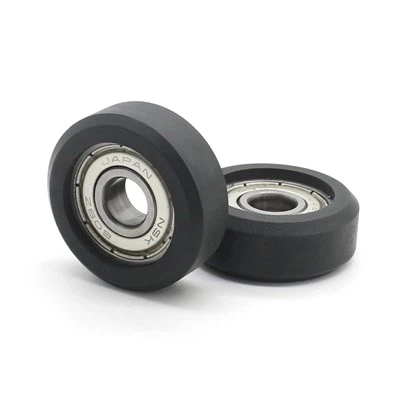
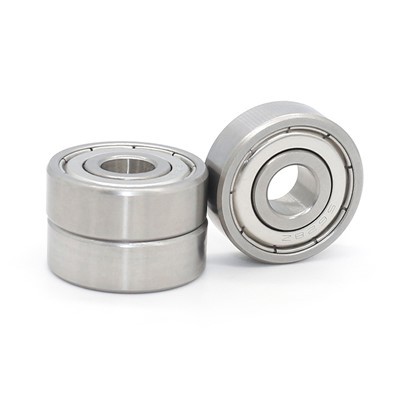
Hey there! As a pulley bearing supplier, I often get asked about the radial clearance of pulley bearings. So, I thought I'd take a moment to break it down for you.
Let's start with the basics. Radial clearance is the amount of play or movement between the inner and outer rings of a bearing in the radial direction. In simpler terms, it's the space that exists between these two parts when the bearing is at rest. This clearance is crucial because it affects how the bearing performs under different conditions.
Now, you might be wondering why radial clearance matters. Well, it plays a significant role in the bearing's lifespan, efficiency, and overall performance. If the radial clearance is too small, the bearing can overheat and wear out quickly. On the other hand, if it's too large, the bearing might vibrate excessively, leading to noise and potential damage to the equipment it's installed in.
There are different types of radial clearance, and they're usually classified according to international standards. For example, the ISO (International Organization for Standardization) has defined several classes of radial clearance, such as C2, CN (Normal), C3, C4, and C5. Each class represents a different range of clearance values.
The C2 class has a smaller clearance than the normal (CN) class. This is often used in applications where high precision is required, like in some machine tools. The normal (CN) class is the most commonly used and is suitable for a wide range of general applications. The C3 class has a larger clearance than the normal class and is used when the bearing is likely to operate at high speeds or under heavy loads. The C4 and C5 classes have even larger clearances and are typically used in very specific, high - stress applications.
When it comes to pulley bearings, the choice of radial clearance depends on several factors. One of the main factors is the operating temperature. As the temperature increases, the bearing components expand. If the initial radial clearance is too small, the expansion can cause the bearing to become too tight, leading to premature failure. So, in applications where the temperature is likely to be high, a larger radial clearance might be necessary.
Another factor is the load. If the pulley bearing is going to be subjected to heavy loads, a larger clearance can help to distribute the load more evenly across the rolling elements. This reduces the stress on individual elements and can extend the bearing's lifespan.
Speed is also an important consideration. At high speeds, the centrifugal forces acting on the rolling elements can cause them to move outwards. A larger radial clearance can accommodate this movement and prevent the bearing from seizing up.
Now, let me introduce you to some of the products we offer as a pulley bearing supplier. We have a wide range of bearings suitable for different applications. For example, our Sliding Door Wheels 608zz are great for sliding door applications. These bearings have a well - optimized radial clearance to ensure smooth and quiet operation.
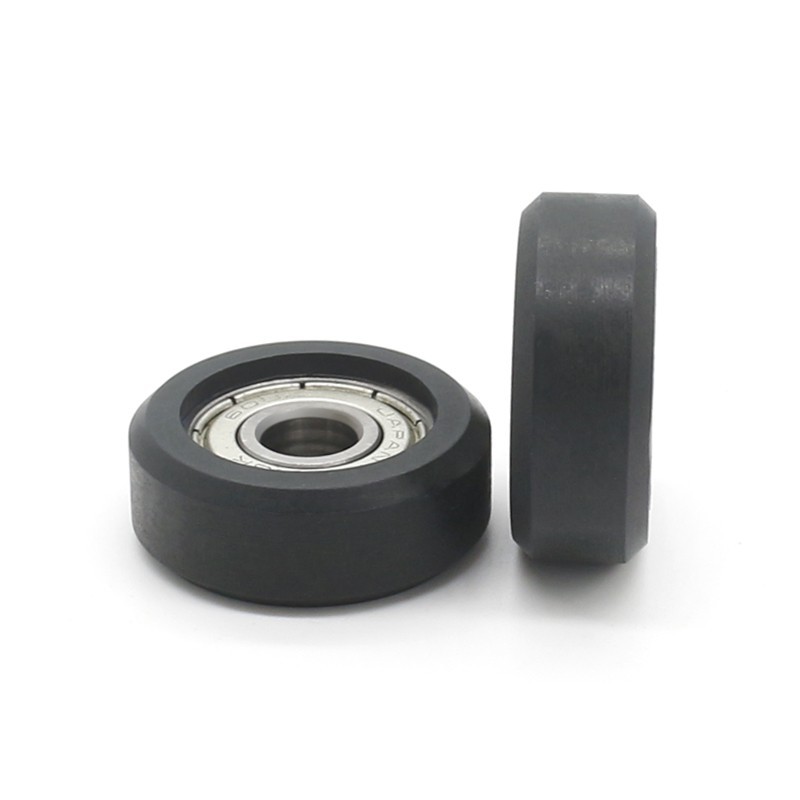
Our Polyurethane Coated Wheel 6205RS is another popular product. The polyurethane coating provides additional protection and reduces noise. The radial clearance of these bearings is carefully selected to work well with the coating and the specific requirements of sliding door systems.
The EPDM Coated Bearing 608ZZ is also a great option. EPDM (Ethylene Propylene Diene Monomer) is a synthetic rubber that offers excellent resistance to weather, heat, and chemicals. The radial clearance of these bearings is designed to maintain the integrity of the coating and the performance of the bearing in various environments.
Our EPDM Roller Bearing 6200 - 2RS/ZZ is suitable for applications where a combination of durability and smooth operation is required. The radial clearance is set to ensure that the bearing can handle the loads and speeds typically encountered in sliding door and other similar applications.
And for window applications, our Window Pulley 6000ZZ is a top - choice. The radial clearance of these bearings is optimized for the relatively light loads and slow speeds associated with window pulleys.
When you're choosing a pulley bearing, it's important to consider the radial clearance along with other factors like the type of load, speed, and operating environment. If you're not sure which bearing is right for your application, don't hesitate to reach out to us. We have a team of experts who can help you make the best choice.
In conclusion, the radial clearance of a pulley bearing is a critical factor that can significantly impact its performance and lifespan. By understanding how it works and how to choose the right clearance for your application, you can ensure that your equipment runs smoothly and efficiently.
If you're in the market for pulley bearings, we'd love to have a chat with you. Whether you have questions about radial clearance or need help selecting the right product, we're here to assist. Contact us to start a discussion about your specific requirements and let's find the perfect pulley bearings for your needs.
References:

- ISO standards on bearing radial clearance
- Technical literature on bearing design and application