


At BLH Bearing Factory we have spent years refining the design and production of Polyurethane Coated Bearings, Urethane Covered Bearing Wheels, and Threaded Stud Mount Rollers. These components solve the everyday problems of noise, wear, floor damage, and inconsistent performance that standard metal wheels create in material handling, conveyor systems, packaging lines, and automated equipment.
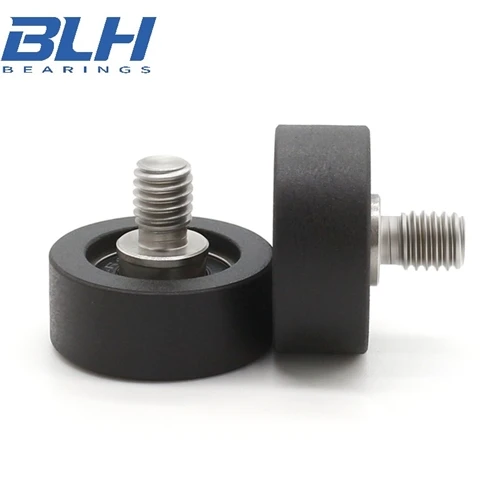
The outer layer is a precisely formulated polyurethane that bonds directly to a high-quality steel or stainless-steel bearing core. The result is a wheel that rolls quietly, resists abrasion and many industrial chemicals, and carries substantial loads without flat-spotting. Hardness is controlled to match the application-softer compounds for quiet, floor-friendly movement; harder compounds for higher capacity and longer service life. Threaded Stud Mount Rollers add straightforward installation: the integrated stud screws directly into the frame or axle, reducing assembly time and eliminating the need for separate hardware in many designs.
We select raw materials that meet strict environmental and performance criteria, then apply consistent coating thickness and curing processes so every batch delivers the same hardness, bond strength, and dimensional accuracy. Finished products undergo load testing, hardness checks, and run-out inspection before shipping. The combination of durable polyurethane and precision bearings has proven reliable in continuous-duty environments where downtime is costly.
Customers choose these components when they need smooth, low-maintenance movement under repeated impact, exposure to oils or cleaning agents, or operation on sensitive flooring. Typical uses include cart wheels, conveyor guide rollers, packaging machinery, and light-to-medium industrial equipment. The threaded stud versions are especially popular for quick retrofits and compact assemblies.
Because we manufacture both the bearing cores and the polyurethane coating in-house, we can adjust outer diameter, tread profile, hardness, and stud thread size to match specific equipment requirements. That flexibility, paired with consistent quality control, is why many overseas buyers return for repeat orders.
Frequently Asked Questions
What load ratings can Polyurethane Coated Bearings typically handle?
Standard sizes cover light-to-medium industrial loads. Exact capacity depends on outer diameter, polyurethane hardness, and bearing type. We provide load charts and can recommend the right combination for your application.
How does the urethane layer improve performance compared with plain steel wheels?
It reduces noise, protects floors, absorbs vibration, and resists abrasion and many chemicals. The bonded layer also prevents the metal core from contacting the running surface directly, extending service life in continuous use.
Are Threaded Stud Mount Rollers available in different thread sizes and lengths?
Yes. Common metric and imperial threads are stocked, and custom stud lengths or thread pitches can be produced to match existing mounting holes.
What hardness ranges are offered for Urethane Covered Bearing Wheels?
Typical hardness spans from approximately 80A to 95A Shore, with harder compounds available for higher-load or higher-speed applications. Soft compounds are preferred when quiet operation and floor protection are priorities.
Can these wheels operate in environments with oils, mild chemicals, or frequent cleaning?
The polyurethane formulations we use resist many oils, greases, and common industrial cleaners. For aggressive chemical exposure we recommend confirming compatibility with a material sample.
Do you offer stainless-steel cores for corrosion-prone environments?
Yes. Stainless cores paired with polyurethane coatings are available for wet, wash-down, or mildly corrosive conditions.
What information do you need to quote a custom Polyurethane Coated Bearing or roller?
Outer diameter, width, bore or stud size, preferred hardness, expected load, operating speed, and any environmental conditions. Photos or drawings of the existing component accelerate the process.
How should these components be stored and handled before installation?
Keep them in a cool, dry area away from direct sunlight and ozone sources. Avoid stacking heavy items on the tread surface for long periods so the polyurethane retains its original shape.


