


Hey there! As a supplier of plastic bearings, I often get asked about the stiffness properties of these nifty little components. So, I thought I'd take a moment to break it down for you in a way that's easy to understand.
First off, let's talk about what stiffness actually means in the context of plastic bearings. Stiffness refers to a material's ability to resist deformation when a force is applied to it. In simpler terms, it's how much a bearing will bend or flex under pressure. This property is crucial because it affects the bearing's performance, durability, and overall functionality.

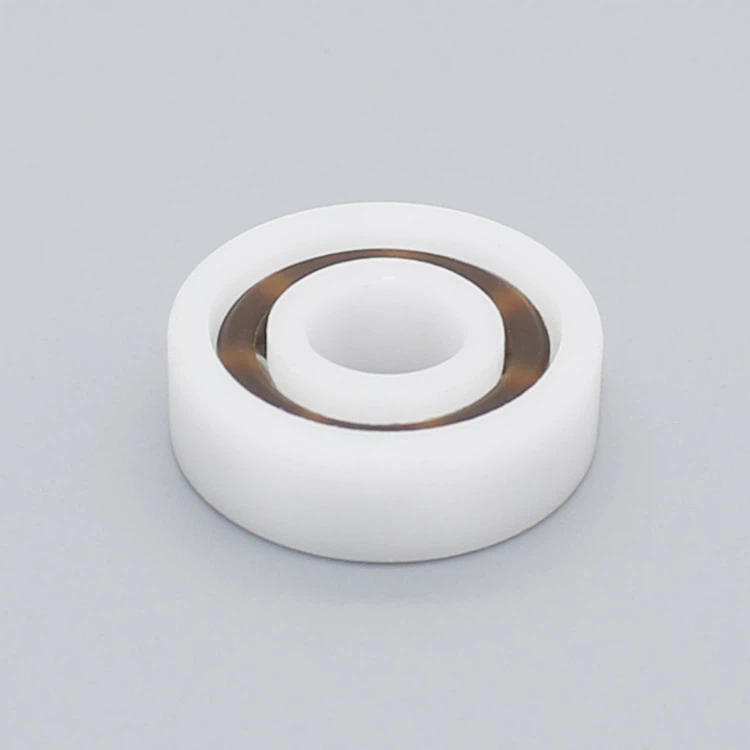
Now, there are several types of plastic bearings out there, each with its own unique stiffness characteristics. Let's take a closer look at some of the most common ones.
Peek Bearings
Peek, or polyether ether ketone, is a high-performance thermoplastic known for its excellent mechanical properties. Peek Bearings are incredibly stiff, which means they can withstand high loads without deforming. This makes them ideal for applications where precision and reliability are essential, such as in aerospace, automotive, and medical industries.
One of the key factors that contribute to the stiffness of Peek bearings is its high melting point. This allows the material to maintain its shape and strength even at elevated temperatures. Additionally, Peek has a low coefficient of friction, which reduces wear and tear on the bearings and helps to maintain their stiffness over time.
POM Plastic Bearings
POM, or polyoxymethylene, is another popular choice for plastic bearings. POM Plastic Bearings are known for their high stiffness and dimensional stability. They are often used in applications where low friction and high wear resistance are required, such as in conveyor systems, textile machinery, and food processing equipment.
The stiffness of POM bearings is due to their crystalline structure, which gives the material a high degree of rigidity. POM also has excellent chemical resistance, which makes it suitable for use in harsh environments. However, it's important to note that POM can be sensitive to moisture, so it may not be the best choice for applications where the bearings will be exposed to water or high humidity.
Nylon Bearings
Nylon is a versatile thermoplastic that is widely used in the manufacturing of plastic bearings. Nylon Bearings are known for their good stiffness, impact resistance, and self-lubricating properties. They are often used in applications where cost-effectiveness and ease of installation are important, such as in consumer products, agricultural equipment, and home appliances.
The stiffness of nylon bearings can vary depending on the type of nylon used and the manufacturing process. Generally, nylon bearings have a lower stiffness compared to Peek and POM bearings, but they still offer good performance in many applications. Nylon is also a lightweight material, which can be an advantage in some applications where weight is a concern.
Factors Affecting Stiffness
In addition to the type of plastic used, there are several other factors that can affect the stiffness of plastic bearings. These include:
- Wall thickness: Thicker walls generally result in higher stiffness. However, increasing the wall thickness can also increase the weight and cost of the bearings.
- Geometry: The shape and design of the bearings can also affect their stiffness. For example, bearings with a larger diameter or a more complex shape may be stiffer than those with a smaller diameter or a simpler shape.
- Temperature: The stiffness of plastic bearings can decrease as the temperature increases. This is because the material becomes more flexible at higher temperatures. It's important to consider the operating temperature range when selecting plastic bearings.
- Load: The amount of load applied to the bearings can also affect their stiffness. Higher loads can cause the bearings to deform more, which can reduce their stiffness.
Importance of Stiffness in Plastic Bearings
So, why is stiffness so important in plastic bearings? Well, there are several reasons. First, stiffness helps to ensure that the bearings maintain their shape and position under load. This is crucial for applications where precision and accuracy are required, such as in machine tools and robotics.
Second, stiffness can help to reduce vibration and noise. When a bearing is stiff, it is less likely to flex or vibrate, which can result in a smoother and quieter operation. This is especially important in applications where noise and vibration can be a problem, such as in automotive and aerospace industries.
Finally, stiffness can improve the durability and lifespan of the bearings. When a bearing is stiff, it is less likely to deform or wear out over time, which can extend its service life. This can result in cost savings for the end user, as they will not have to replace the bearings as frequently.
Choosing the Right Plastic Bearing
When choosing a plastic bearing, it's important to consider the stiffness requirements of your application. If you need a bearing that can withstand high loads and maintain its shape under pressure, then Peek or POM bearings may be the best choice. On the other hand, if you need a bearing that is cost-effective and easy to install, then nylon bearings may be a good option.
It's also important to consider the other factors that can affect the performance of the bearings, such as temperature, load, and operating environment. By taking these factors into account, you can choose the right plastic bearing for your application and ensure that it provides reliable and long-lasting performance.
Conclusion
In conclusion, the stiffness properties of plastic bearings are an important consideration when choosing the right bearing for your application. Peek, POM, and nylon are all popular choices for plastic bearings, each with its own unique stiffness characteristics. By understanding the factors that affect stiffness and the importance of stiffness in plastic bearings, you can make an informed decision and choose the right bearing for your needs.
If you're interested in learning more about our plastic bearings or have any questions about their stiffness properties, please don't hesitate to contact us. We'd be happy to help you find the right bearing for your application and answer any questions you may have.
References
- "Engineering Plastics: Properties and Applications" by Charles A. Harper
- "Plastic Bearings: Design, Materials, and Applications" by John W. Hall


