


Hey there! As a supplier of spherical plain bearings, I've been getting a lot of questions lately about how hardness affects the wear resistance of these nifty little components. So, I thought I'd take a deep dive into this topic and share some insights with you all.
First off, let's talk about what spherical plain bearings are. These bearings are designed to handle both radial and axial loads while allowing for angular misalignment. They're used in a wide range of applications, from automotive and aerospace to industrial machinery and construction equipment. They're pretty versatile, and that's one of the reasons they're so popular.
Now, hardness is a measure of a material's resistance to deformation, particularly when it comes to indentation or scratching. In the context of spherical plain bearings, hardness plays a crucial role in determining how well the bearing can withstand wear and tear over time.
When a spherical plain bearing is in use, it's constantly subjected to friction and pressure. The harder the bearing material, the better it can resist the forces that cause wear. For example, if you have a bearing that's made of a relatively soft material, it might start to show signs of wear after just a short period of use. The surface of the bearing could become scratched or pitted, which can lead to increased friction and eventually, failure.
On the other hand, a bearing made of a hard material is much more likely to maintain its integrity over a longer period. It can withstand the high pressures and forces that come with normal operation without deforming or wearing down quickly. This means that the bearing will last longer and require less frequent replacement, which can save you a lot of time and money in the long run.
But it's not all about just making the bearing as hard as possible. There's a balance to be struck here. If the bearing is too hard, it can become brittle. A brittle bearing is more likely to crack or break under stress, which can be just as bad as a bearing that wears out too quickly. So, manufacturers need to find the sweet spot where the bearing has enough hardness to resist wear, but not so much that it becomes brittle.
One of the ways we can control the hardness of a spherical plain bearing is through the choice of material. Different materials have different inherent hardness levels. For example, steel is a commonly used material for bearings because it can be heat-treated to achieve a wide range of hardness values. By adjusting the heat treatment process, we can make the steel harder or softer as needed.
Another factor that affects the hardness and wear resistance of a bearing is the surface finish. A smooth surface finish can reduce friction and wear, even if the material itself isn't extremely hard. We use advanced machining and finishing techniques to ensure that our bearings have a smooth, even surface that helps to minimize wear.
Now, let's talk about some real-world applications. In the automotive industry, spherical plain bearings are used in a variety of components, such as suspension systems and steering linkages. These bearings need to be able to withstand the constant vibrations and forces that come with driving. A hard, wear-resistant bearing is essential to ensure the safety and reliability of the vehicle.

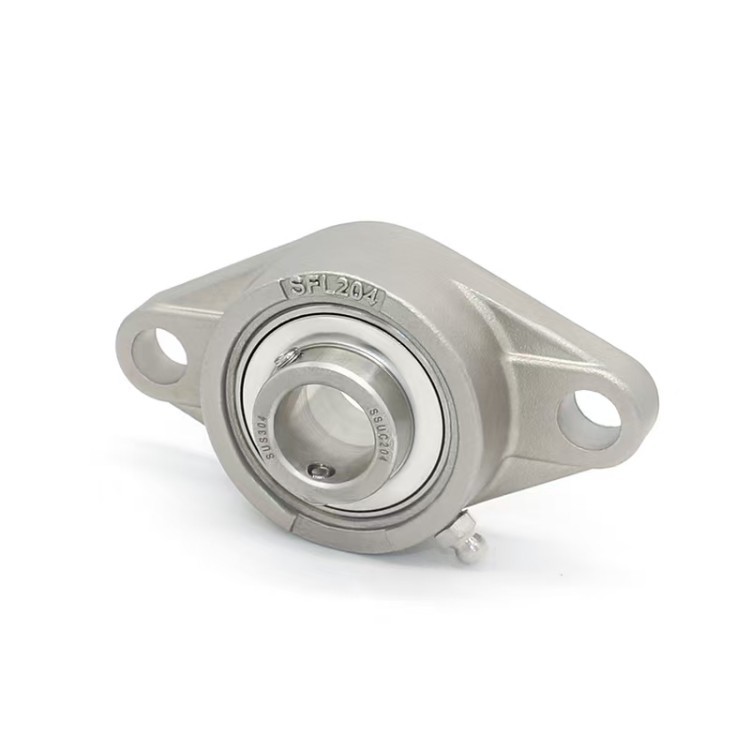
In the aerospace industry, the requirements are even more stringent. Bearings used in aircraft need to be able to operate in extreme conditions, including high temperatures and pressures. The hardness and wear resistance of these bearings are critical to the performance and safety of the aircraft.
If you're in the market for spherical plain bearings, or other related products like the Pillow Block Bearing UCFL200, Nylon Roller 6002ZZ, or 606ZZ Bearing Pulley, you need to consider the hardness and wear resistance of the products. You want to make sure you're getting a high-quality bearing that will last.
At our company, we take pride in providing top-notch spherical plain bearings. We use the latest technology and manufacturing processes to ensure that our bearings have the right balance of hardness and wear resistance. Our team of experts is always available to answer your questions and help you find the right bearing for your specific application.
If you're interested in learning more about our products or have any questions about how hardness affects the wear resistance of spherical plain bearings, don't hesitate to reach out. We're here to help you make the best decision for your business. Whether you're a small workshop or a large industrial manufacturer, we have the products and expertise to meet your needs.
In conclusion, hardness is a key factor in determining the wear resistance of a spherical plain bearing. By choosing the right material, controlling the heat treatment process, and ensuring a smooth surface finish, we can produce bearings that are durable, reliable, and long-lasting. So, if you're looking for high-quality bearings, give us a call or send us an email. We're ready to start a conversation and help you find the perfect solution for your application.
References
- "Bearing Technology Handbook" by Peter Musial
- "Mechanical Design of Machine Elements and Machines: A Failure Prevention Perspective" by Robert L. Norton


