


Hey there! As a supplier of screw rollers, I often get asked a bunch of questions about where these nifty little things can be used. One question that pops up quite a bit is, "Can a screw roller be used in a corrosive environment?" Well, let's dive right into it and find out.
First off, let's talk about what a screw roller is. It's a type of mechanical component that's used in all sorts of machinery. It works by converting rotational motion into linear motion, or vice versa. You'll find screw rollers in things like conveyor systems, CNC machines, and even some automotive applications. They're pretty versatile, but when it comes to corrosive environments, things get a bit tricky.
A corrosive environment is basically any place where there are chemicals or substances that can eat away at materials over time. Think about places like chemical plants, wastewater treatment facilities, or even the ocean. In these environments, metals can rust, plastics can degrade, and other materials can break down. So, the big question is, can a screw roller stand up to all that?
The short answer is, it depends. There are a few factors that come into play when deciding whether a screw roller can be used in a corrosive environment.
Material Matters
The material of the screw roller is super important. Most screw rollers are made from metals like steel or stainless steel. Regular steel is pretty strong, but it's not very resistant to corrosion. If you put a regular steel screw roller in a corrosive environment, it'll start to rust pretty quickly. Rust can cause the roller to lose its smooth surface, which can lead to problems with its performance. It might not move as smoothly, or it could even jam up completely.
On the other hand, stainless steel is a much better option for corrosive environments. Stainless steel contains chromium, which forms a thin layer of oxide on the surface of the metal. This layer acts as a barrier, protecting the steel from corrosion. There are different grades of stainless steel, and some are more resistant to corrosion than others. For example, 316 stainless steel is often used in marine applications because it's highly resistant to saltwater corrosion.
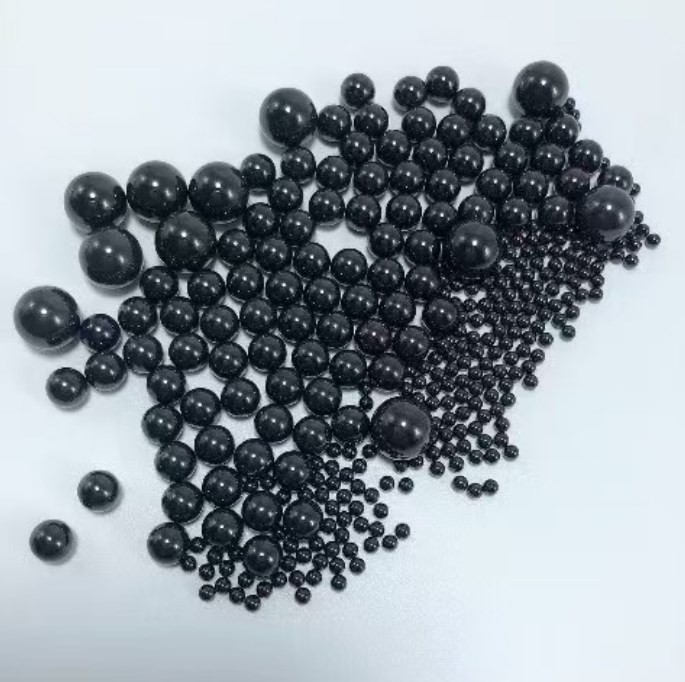
But stainless steel isn't the only option. There are also screw rollers made from other materials like ceramics. Ceramic screw rollers are extremely resistant to corrosion because ceramics don't react with most chemicals. They're also very hard and wear-resistant, which means they can last a long time in tough environments. Check out Hybrid Ceramic Bearings for more info on ceramic components that can be used in similar situations.
Coating and Surface Treatments
Another way to make a screw roller more resistant to corrosion is by applying a coating or surface treatment. There are several types of coatings available, each with its own advantages.
One common coating is zinc plating. Zinc is a sacrificial metal, which means it will corrode before the underlying metal. When zinc plating is applied to a screw roller, it forms a protective layer that can help prevent corrosion. However, zinc plating has its limitations. It can wear off over time, especially in harsh environments, and once it's gone, the underlying metal is exposed to corrosion.
Another option is a polymer coating. Polymer coatings are made from synthetic materials that can provide excellent corrosion resistance. They can also be customized to have other properties, like low friction or high wear resistance. Polymer-coated screw rollers are often used in food processing and pharmaceutical industries because they're non-toxic and easy to clean.
Sealing and Protection
In addition to using the right material and coating, proper sealing and protection are also crucial in a corrosive environment. Seals can prevent corrosive substances from getting inside the screw roller and causing damage. There are different types of seals available, such as O-rings, lip seals, and labyrinth seals.
O-rings are simple, circular seals that are made from rubber or other elastomeric materials. They're easy to install and can provide a good seal against liquids and gases. Lip seals, on the other hand, have a flexible lip that presses against the surface of the screw roller to prevent leakage. Labyrinth seals are more complex and use a series of grooves and channels to create a tortuous path for corrosive substances, making it difficult for them to reach the inside of the roller.
It's also important to protect the screw roller from physical damage. In a corrosive environment, there may be other factors that can cause damage to the roller, such as abrasion from particles in the air or water. Using guards or shields can help prevent this type of damage.
Case Studies
Let's take a look at a couple of real-world examples to see how screw rollers perform in corrosive environments.
In a chemical plant, a conveyor system was using regular steel screw rollers. Over time, the rollers started to rust due to exposure to various chemicals. This caused the conveyor to slow down and become less efficient. The maintenance team decided to replace the regular steel rollers with stainless steel ones. After the replacement, the rollers showed no signs of corrosion, and the conveyor system started to work smoothly again.
In a wastewater treatment facility, a screw roller was used in a sludge handling system. The sludge contained high levels of corrosive chemicals, so the original steel roller quickly deteriorated. The facility decided to try a ceramic screw roller. The ceramic roller was able to withstand the corrosive environment and lasted much longer than the steel roller. It also required less maintenance, which saved the facility time and money.
Conclusion
So, can a screw roller be used in a corrosive environment? The answer is yes, but it requires careful consideration of the material, coating, sealing, and protection. By choosing the right combination of these factors, you can ensure that your screw roller will perform well and last a long time in a corrosive environment.

If you're in the market for screw rollers for a corrosive environment, or if you have any questions about our products, don't hesitate to reach out. We're here to help you find the best solution for your needs. Whether you need Rod End Bearings SA8 or Rod End Bearings SA5, we've got you covered. Let's have a chat and see how we can work together to solve your problems.
References
- "Corrosion Resistance of Metals and Alloys" by Robert W. Revie
- "Ceramic Materials: Science and Engineering" by W. D. Kingery, H. K. Bowen, and D. R. Uhlmann
- "Mechanical Seals: Design, Selection, and Installation" by John H. Smith


