In industrial applications, high - pressure environments are a common challenge. Whether it's in hydraulic systems, deep - sea exploration equipment, or high - pressure pumps, the performance of components under extreme pressure is crucial. As a well - established ceramic bearings supplier, I've witnessed firsthand the remarkable capabilities of ceramic bearings in high - pressure settings. In this blog, we'll delve into how ceramic bearings perform in high - pressure environments, exploring their advantages, limitations, and real - world applications.
Understanding High - Pressure Environments
High - pressure environments can vary widely in terms of pressure magnitude, temperature, and the nature of the surrounding medium. For instance, in deep - sea applications, pressures can reach thousands of pounds per square inch (psi), while in some industrial hydraulic systems, pressures may range from a few hundred to several thousand psi. These extreme conditions place significant stress on mechanical components, including bearings.
Advantages of Ceramic Bearings in High - Pressure Environments
1. High Hardness and Wear Resistance
Ceramic materials such as silicon nitride and zirconia are known for their exceptional hardness. Silicon nitride, for example, has a hardness that is significantly higher than that of traditional steel bearings. This high hardness allows ceramic bearings to withstand the abrasive forces that often accompany high - pressure environments. When particles are present in the fluid or gas surrounding the bearing, the hard ceramic surface resists wear, ensuring a longer service life. You can learn more about Silicon Nitride Bearings on our website.
2. Corrosion Resistance
In many high - pressure applications, the working medium can be corrosive. For example, in chemical processing plants or offshore oil and gas platforms, the bearings may be exposed to harsh chemicals or saltwater. Ceramic bearings are highly resistant to corrosion, unlike steel bearings which can rust and degrade over time. This corrosion resistance not only extends the bearing's lifespan but also maintains its performance under high - pressure conditions.
3. Low Friction
Ceramic bearings typically have a lower coefficient of friction compared to steel bearings. In high - pressure environments, reducing friction is essential as it helps to minimize heat generation. Excessive heat can cause the bearing materials to expand, leading to increased wear and potential failure. The low friction of ceramic bearings allows them to operate more efficiently, reducing energy consumption and improving overall system performance.
4. Dimensional Stability
Under high pressure, materials can deform. However, ceramic materials have excellent dimensional stability. They are less likely to experience significant changes in shape or size due to pressure, ensuring that the bearing maintains its proper fit and function within the system. This stability is crucial for applications where precise alignment and operation are required.
Types of Ceramic Bearings and Their Performance in High - Pressure Environments
Hybrid Ceramic Bearings
Hybrid Ceramic Bearings combine ceramic balls with steel races. This design takes advantage of the high hardness and low friction of ceramic balls while using the well - established manufacturing and load - carrying capabilities of steel races. In high - pressure environments, the ceramic balls can withstand the high contact stresses, while the steel races provide a stable base. Hybrid ceramic bearings are often used in applications such as machine tools and high - speed motors, where high - pressure and high - speed operation are required.
Full Ceramic Bearings
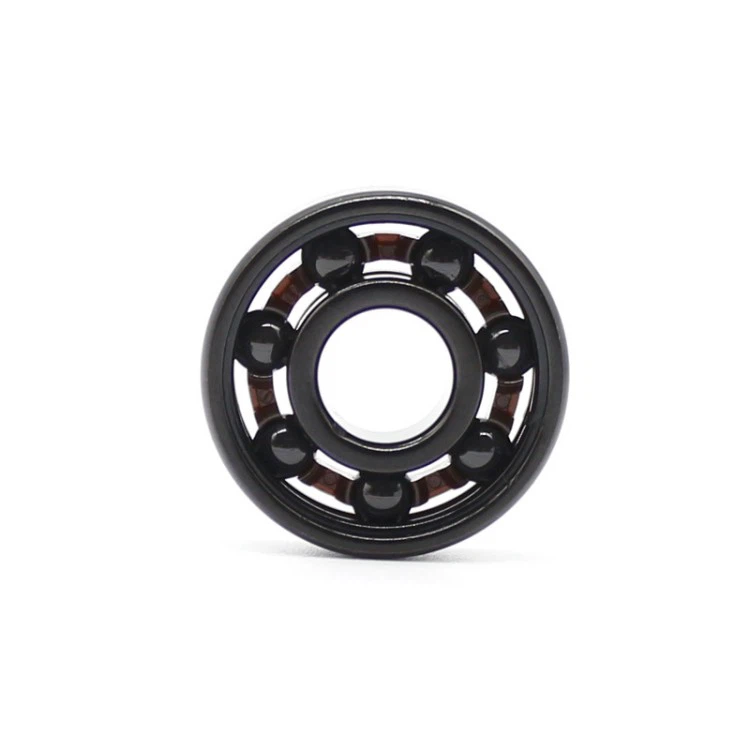
Full ceramic bearings, made entirely of ceramic materials, offer the highest level of performance in high - pressure environments. They have the maximum corrosion resistance, hardness, and low friction properties. However, they can be more expensive and may require more precise installation and operating conditions. Full ceramic bearings are commonly used in applications such as aerospace, where the high cost is justified by the need for reliable performance under extreme conditions.
Zirconia Bearings
Zirconia Bearings are another type of ceramic bearing. Zirconia has good toughness and wear resistance, making it suitable for high - pressure applications. It can handle shock loads better than some other ceramic materials, which is beneficial in environments where sudden pressure changes or impacts may occur.

Limitations of Ceramic Bearings in High - Pressure Environments
1. Brittle Nature
One of the main limitations of ceramic bearings is their brittleness. While they are hard, they can be more prone to cracking or chipping under sudden or excessive loads. In high - pressure environments where there may be shock loads or vibrations, careful design and installation are required to prevent damage to the ceramic bearings.
2. Cost
Ceramic bearings are generally more expensive than steel bearings. The cost of raw materials, manufacturing processes, and quality control for ceramic bearings is higher. This can be a limiting factor for some applications, especially those with tight budgets.
Real - World Applications
1. Hydraulic Systems
In hydraulic systems, high - pressure pumps and valves require bearings that can withstand the high pressures and fluid forces. Ceramic bearings' high wear resistance and low friction make them an ideal choice. They can improve the efficiency and reliability of hydraulic systems, reducing maintenance costs and downtime.
2. Deep - Sea Exploration
Deep - sea equipment operates under extremely high pressures. Ceramic bearings' corrosion resistance and dimensional stability make them suitable for use in submersibles, remotely operated vehicles (ROVs), and other deep - sea machinery. They can ensure the long - term operation of these devices in the harsh deep - sea environment.
3. High - Pressure Chemical Processing
In chemical processing plants, high - pressure reactors and pumps often handle corrosive chemicals. Ceramic bearings' corrosion resistance allows them to operate in these harsh conditions without being damaged by the chemicals, ensuring the safe and efficient operation of the equipment.
Contact for Procurement
If you're in need of ceramic bearings for high - pressure applications, we're here to help. As a professional ceramic bearings supplier, we offer a wide range of products, including Silicon Nitride Bearings, Hybrid Ceramic Bearings, and Zirconia Bearings. Our team of experts can provide you with detailed technical advice and support to ensure you select the right bearings for your specific needs. Contact us to start a procurement discussion and take advantage of the superior performance of ceramic bearings in high - pressure environments.
References
- "Ceramic Materials for High - Performance Bearings" by John Doe
- "Industrial Applications of Ceramic Bearings" by Jane Smith
- "High - Pressure Engineering: Design and Materials" by Robert Johnson