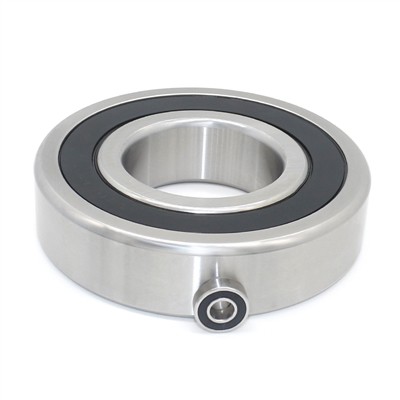
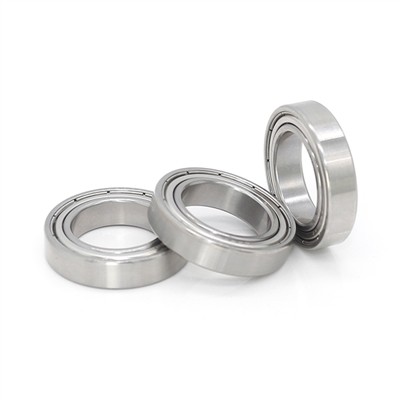
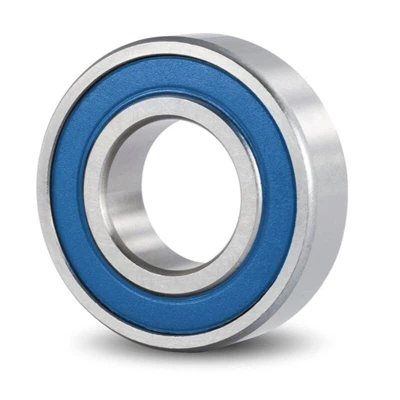
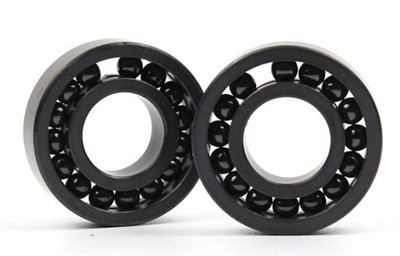
When disassembling a bearing for inspection, first record its appearance, confirm the amount of lubricant remaining, and sample the lubricant for inspection before cleaning the bearing. Gasoline or kerosene are commonly used cleaning agents.
The disassembled bearing is cleaned in two stages: coarse and fine cleaning. Place the bearing in separate containers, using a metal mesh pad to prevent direct contact between the bearing and the container. During coarse cleaning, be careful not to allow the bearing to rotate with dirt, as this can damage the bearing's rolling surfaces. In the coarse cleaning oil, use a brush to remove grease and adhesive. Once the bearing is roughly clean, proceed to the fine cleaning.
Fine cleaning involves carefully cleaning the bearing while rotating it in the cleaning oil. The cleaning oil should also be kept clean at all times.
Bearing Inspection and Evaluation: To determine if a disassembled bearing is suitable for use, inspect it after cleaning. Check the condition of the raceways, rolling surfaces, and mating surfaces, as well as any wear on the retaining cage, any increase in bearing clearance, and any damage or abnormalities that could result in reduced dimensional accuracy. For non-separable small ball bearings, use one hand to support the inner ring horizontally and rotate the outer ring to confirm smooth movement.
Pay close attention to the appearance of the rolling elements, raceway surfaces, cage, and rib surfaces. The more important the bearing, the more careful the inspection.