Introduction to types of robot specific bearings
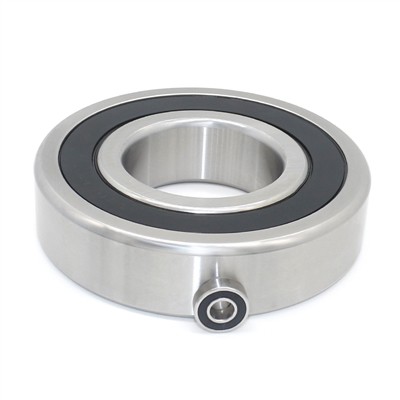
1. Cross roller bearings, with internal rollers arranged in a 90 ° cross pattern, can simultaneously withstand radial loads, axial loads, and overturning moments. This type of bearing has high rigidity, high rotational accuracy, and compact structure, making it suitable for use in robot joints.
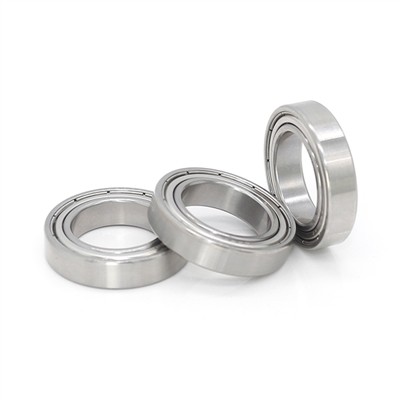
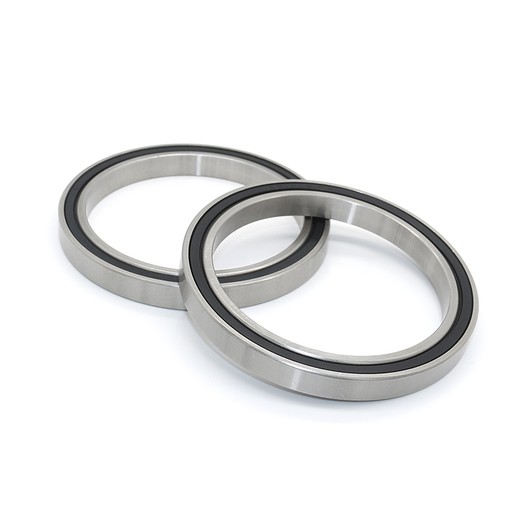
2. Thin walled bearings, designed with a thin-walled structure, have the characteristics of light weight, thin cross-section, and saving installation space. They are suitable for lightweight design of robots and are commonly used in collaborative robots and small mechanical hands.
3. Angular contact ball bearings can withstand both radial and axial loads simultaneously, and can be paired back-to-back or face-to-face to improve overall rigidity and rotational accuracy. They are commonly used in robot joints such as RV reducers and motors.
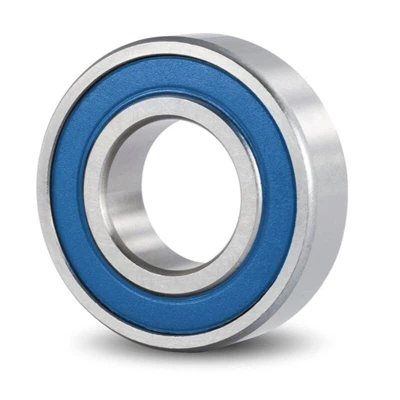
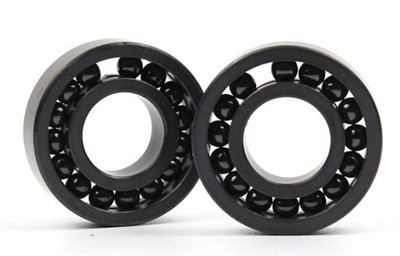
4. Deep groove ball bearings, although belonging to ordinary rolling bearings, are also widely used in robots, such as small motors, auxiliary transmission structures, encoders, and fans. This type of bearing has low friction, high speed, and relatively low cost.
5. Joint bearings, belonging to spherical sliding bearings, have spherical sliding contact surfaces between the inner and outer rings, which can achieve multi degree of freedom movements such as pitch, yaw, and rotation, making them an ideal choice for robot joint structure design.
6. Linear bearings are responsible for converting rotational motion into linear motion and are often used in conjunction with linear transmission components such as rollers and screws. They are used for linear motion parts such as wrists, elbows, knees, and ankles in humanoid robots.
What are the requirements for selecting robot bearings?
1. Accuracy. Robots require high repeatability positioning accuracy, usually using precision bearings such as P5, P4, or even P2 to reduce rotational errors and vibrations.
2. High rigidity. During the operation of robots, they must withstand complex torque and impact loads. If the bearing rigidity is insufficient, it is easy to cause joint deformation, which affects the performance of the robot.
3. High lifespan. Industrial robots need to operate continuously for a long time, not only to withstand high speeds, but also to have strong fatigue resistance and support long-term use of bearings.
4. Compact structure. The installation space inside the robot is limited, and when selecting bearings, thin-walled, integrated, and lightweight designs are adopted.
A robot is a whole composed of precision equipment, and whether it is a humanoid robot or a collaborative robot, a considerable number of bearings are required. These bearings are not large in size, but they undertake the functions of transmission, reducing friction, and bearing complexity. BLH bearings are a professional bearing manufacturer, and our bearings will make your robot and equipment transmission more reliable and reliable.