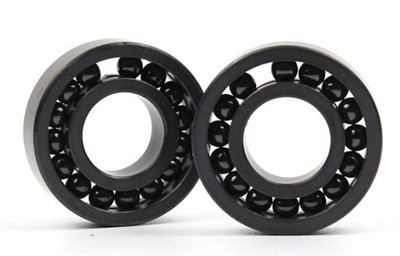
I. Basic Limitations of Thrust Ball Bearings in Aquatic Environments
1. Material Issues:
Ordinary thrust ball bearings are mostly made of carbon steel (such as GCr15), which is prone to rusting in water. Experimental data shows that unprotected carbon steel bearings can rust up to 60% of their surface area after immersion in fresh water for 30 days (see a 2021 study in Mechanical Engineering Materials). If waterproofing is required, stainless steel (such as 440C) or ceramic should be used instead.
2. Lubrication Failure:
Traditional grease lubrication will be washed away or emulsified when exposed to water. For example, the friction coefficient of a bearing lubricated with lithium-based grease increases by 300% within 24 hours after being immersed in water (data source: SKF Technical Manual). For underwater use, a waterproof grease (such as polyurea-based grease) must be selected or a solid lubricant must be switched.
3. Sealing Shortcomings:
Standard thrust bearings lack seals, allowing water to directly intrude into the raceways. Tests show that after operating in water at a flow rate of 1 m/s for 10 hours, the internal water ingress rate of open bearings exceeds 90%.
---
II. Feasible Solutions for Underwater Use
1. Specialized Waterproof Bearings:
- Material Upgrade: For example, Japan's NSK "Aqua Series" uses SUS304 stainless steel and shows no rust after a 500-hour salt spray test.
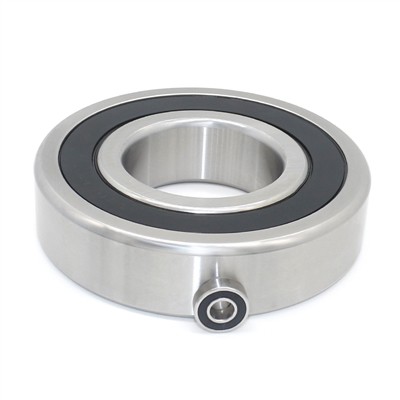
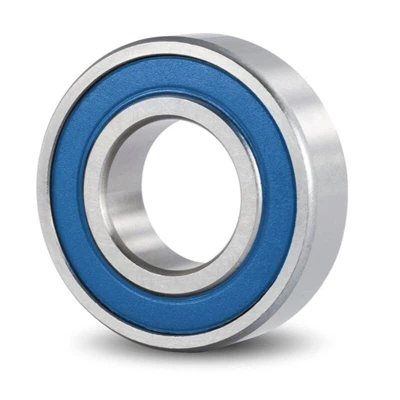
- Sealing Improvement: Double-lip rubber seals (made of NBR) can block 99% of moisture (verified according to ISO 281).
2. Supplementary Protective Measures:
- External Sealing Cover: Adding an IP68-rated housing increases costs by approximately 20%, but increases lifespan by three times.
- Regular Maintenance: Grease should be replaced every 500 operating hours (Klüber's Aquatro 2 series is recommended).
III. Practical Application Recommendations
- For short-term underwater operations: Ordinary bearings with a temporary waterproof coating (such as WD-40 spray) can withstand less than 48 hours.
For long-term underwater use: Bearings designed specifically for submersible motors (such as THK's DSA series) are essential. These cost approximately $80-$150 each but offer a design life of 50,000 hours.
Conclusion: Whether thrust ball bearings can be used underwater depends on their degree of protection and operating life. Users should balance cost and performance, prioritizing pre-sealed, waterproof models.