Bearing Selection for Marine Environments and Underwater Robot Equipment: BLH Bearing Factory's Analysis of Applications from Deep-Sea Gear Bearings to Common Types
In the application of intelligent robots in marine engineering and underwater equipment, the performance of the bearings used in the robots directly determines the operating time and reliability of the equipment. Especially in the extreme marine environment, the triple challenges of high pressure, high salinity, and low temperature place stringent requirements on the waterproof and corrosion-resistant capabilities of the bearings. Based on current practical application cases and common types of waterproof bearings, we will discuss the key points of bearing selection in different scenarios, as well as the technical and pricing issues that users frequently consider.
Core Competencies in Deep-Sea Operations: The "Hardcore Strength" of Customized Gear Bearings
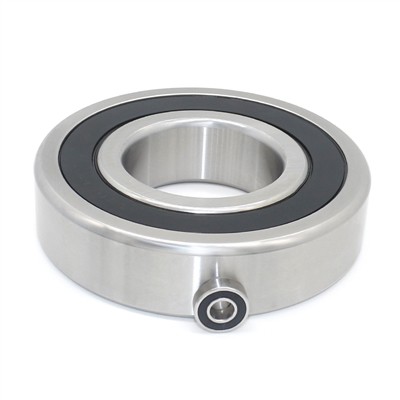
BLH bearings' custom-designed waterproof gear bearings were used in a deep-sea exploration project in the South China Sea. An underwater robot equipped with these bearings operated continuously for 72 hours at a depth of 3000 meters, with its core components showing no corrosion and maintaining perfect seals. BLH's deep-sea gear bearings feature an integrated design, combining gear transmission and bearing support. Combined with specially modified fluororubber seals and 316L stainless steel, they can withstand 30MPa high pressure and operate stably in temperature fluctuations ranging from -40℃ to 50℃. For example, the planetary gear bearings in the joints of underwater robot robotic arms use multi-layered seals to prevent seawater intrusion, extending the equipment maintenance cycle from one month to six months. The spiral bearings in the propulsion system have optimized raceway curvature, achieving a tolerance of 0.001mm and increasing load-bearing capacity by 28%, reducing the failure rate of underwater inspection robots to 0.2%.
It's worth noting that the operating conditions for deep-sea bearings differ significantly from those for civilian applications. A customer once asked, "How much does a deep-sea gear bearing cost compared to a Honda Activa transmission bearing?" The truth is, their application scenarios are completely different-civilian transmission bearings prioritize low speed and low cost, while deep-sea bearings require higher investment in materials and seals, and their price needs to be calculated based on operating depth, load, and other conditions. Currently, we provide customized services to over 20 underwater equipment companies and collaborate with DARK Gear Bearing Supply Company to supply bearings for overseas deep-sea mining and exploration projects. This demonstrates the principle that "suitability takes precedence over simple price comparison" in specialized operating conditions.
The suitability and limitations of common bearing types in marine/underwater applications
1. Miniature bearings and electrically conductive miniature ball bearings: Due to their small size, miniature bearings can play a role in small underwater robots (such as shallow water quality monitoring equipment and marine life detection). For example, the "small gear bearing race actuator" mentioned in the article, which is 40% smaller than traditional components, draws on the lightweight design concept of miniature bearings. Miniature ball bearings, on the other hand, are suitable for special underwater intelligent electronic devices that require anti-static or conductive transmission, but require additional waterproof coating treatment.
2. Custom-made plastic bearings: Plastic bearings have the advantages of strong corrosion resistance and light weight, and can be used for low-load applications of shallow sea aquaculture inspection robots, such as swimming pool cleaning and near-shore aquaculture surveys. However, they are prone to deformation in the high-pressure environment of deep sea and cannot replace custom-made metal gear bearings. In addition, they have poor high-temperature resistance and are not suitable for applications near hydrothermal vents.
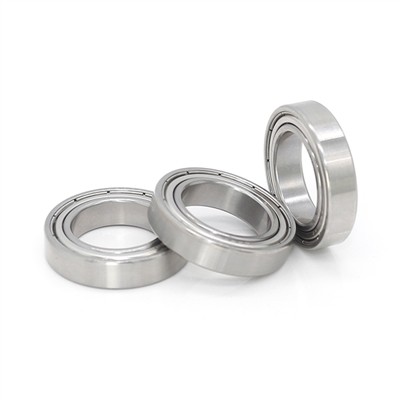
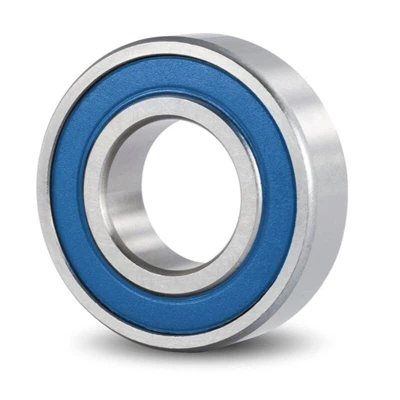
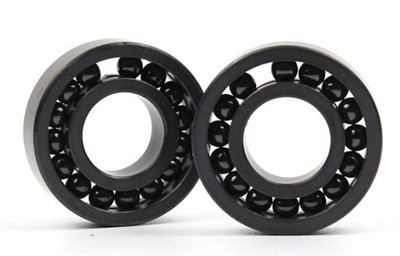
3. Custom-made Bearing 608 and 608 Ceramic Bearings: Bearing 608 is a common deep groove ball bearing, widely used in civilian applications such as skateboards and motors (commonly known as bearing skates). However, its conventional metal material is prone to corrosion in seawater, and its simple sealing structure limits its use to simple equipment for short-term operations in shallow water. 608 ceramic bearings, on the other hand, use zirconium oxide or silicon nitride ceramic rolling elements, significantly improving corrosion resistance and hardness. They are suitable for high-speed equipment in shallow water (such as small underwater propulsion devices and underwater sweepers). However, they are more expensive than ordinary 608 bearings, and the ceramic material is more brittle, requiring protection from severe impacts under the high pressure of deep sea conditions.
4. Customized Bearing F205 and Bridge Bearing: The Bearing F205 is an outer spherical ball bearing, commonly used in land-based applications such as agricultural machinery and ventilation equipment. Its sealing structure and materials are ill-suited for seawater corrosion. For marine applications, custom fluororubber seals and 316L stainless steel are required, and it is only suitable for shallow-sea, low-load equipment (such as rotating components in dock monitoring equipment). Bridge bearings and the price of bridge bearings are for large-scale land-based infrastructure components, primarily bearing the vertical loads and horizontal displacements of bridges. They are completely incompatible with marine underwater conditions, and their pricing systems differ significantly. Users should clearly distinguish their application scenarios when inquiring. For more technical information, please consult engineers at the BLH bearing factory.
Key considerations for custom bearing selection and pricing
1. Prioritize Operating Condition Adaptability: As shown in the cross-reference of well-known brand Koyo Bearing, different brands of bearings have different performance parameters. When selecting a bearing, it's necessary to consider factors such as the depth of the marine operation (shallow/deep sea), load (axial/radial), speed, and temperature, rather than simply comparing models. For example, deep-sea gear bearings require a focus on waterproof sealing and corrosion-resistant materials; shallow-sea equipment can choose customized 608 ceramic bearings or customized bearing F205 depending on the load; and miniature equipment should prioritize electrically conductive miniature ball bearings or lightweight miniature bearings.
2. Price and Cost Balance: Price list bearings need to be calculated based on operating conditions. Custom-made gear bearings for deep-sea applications are more expensive than standard bearings due to higher investment in materials (such as 316L stainless steel and ceramic rolling elements) and processes (integrated design, multi-layer sealing). For shallow-sea equipment, more cost-effective options include 608 ceramic bearings or plastic bearings. BLH Bearing Factory plans to launch economical customized solutions for small and medium-sized research teams in the future, reducing costs while ensuring basic waterproof and corrosion-resistant performance, thus promoting the widespread adoption of marine exploration projects.
3. Comprehensive Service Guarantee: Professional bearing factories provide end-to-end service from selection to after-sales support. This includes recommending suitable products based on the user's operating depth and expected service life, preventing equipment failures due to incorrect selection. BLH Bearing Factory can prepare bearing samples for testing during the selection process to ensure no quality issues arise during mass production.
Future technological directions: Improving the reliability and widespread adoption of customized bearings for marine applications.
With the localization and upgrading of marine engineering equipment, customized stainless steel bearing technology still needs continuous optimization. In the future, we plan to develop a composite structure of ceramic rolling elements and metal rings to further improve the lifespan of deep-sea bearings. Simultaneously, we will refine bearing pricing, providing differentiated solutions for users of different sizes (large enterprises / small and medium-sized research teams), enabling more marine projects to use reliable Chinese-made bearing models. Whether it's heavy equipment for deep-sea resource exploration or miniature robots for shallow-water quality monitoring, choosing bearing models from BLH Bearing Factory will provide your equipment with a solid "power defense line," supporting the steady progress of marine exploration.
Parameter table of marine custom gear bearings manufactured by BLH bearing factory