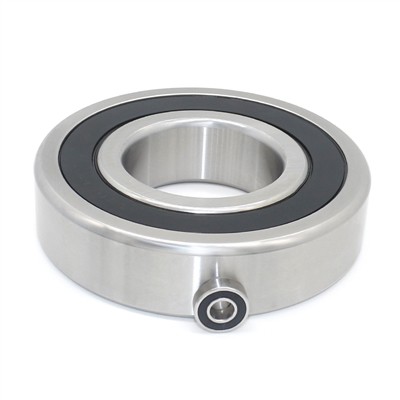
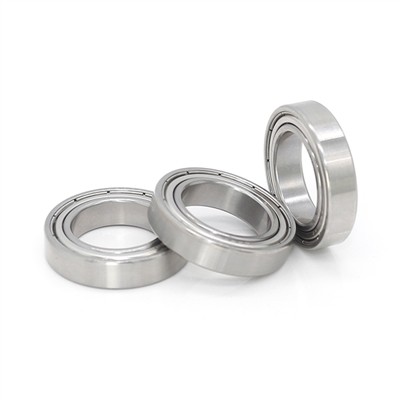
I. Working Principle
Ball bearings utilize the gap between the sphere and the inner and outer rings. When force acts on the sphere, it is transmitted along the centerline of the bearing, transforming the force borne by the inner and outer rings into a force perpendicular to the axis. This force effectively reduces bearing wear and friction.
II. Structural Types
Ball bearings are available in two types: single-row and double-row. Single-row bearings primarily include deep groove ball bearings, angular contact ball bearings, and self-aligning ball bearings; double-row bearings primarily include double-row angular contact ball bearings and double-row self-aligning ball bearings.
III. Advantages and Disadvantages
Ball bearings offer advantages such as high load capacity, smooth operation, and long service life. Furthermore, they have a low coefficient of friction, high speed, and minimal interference, making them suitable for higher frequencies and speeds. However, they also have disadvantages such as poor sealing, susceptibility to contamination, and low axial load carrying capacity.
IV. Applications
Ball bearings are widely used in various mechanical equipment, such as automobiles, aircraft, high-speed trains, and lifting machinery. In addition, ball bearings are also suitable for high-speed machine tools, precision machine tools, automation equipment and other fields.