Insufficient lubrication
Grease lubrication
Precautions during the first grease injection or start-up period:
1. The lubricating grease should fill the bearing 100% and reach the bottom 1/3 to 1/2 of the shaft in the bearing seat.
2. If the cavity next to the bearing in the bearing seat is very small, it may be necessary to slightly reduce the amount of lubricating grease filled to avoid overheating due to oil agitation.
Measures taken during operation:
Check if the seals are worn, damaged, or leaking.
Measures taken during supplementary lubrication:
1. Ensure that the interval between lubrication supplements is appropriate (not too long).
2. Ensure that new lubricating grease enters the bearing.
Oil bath lubrication
Precautions for the first oil injection, supplementary oil injection, or static period:
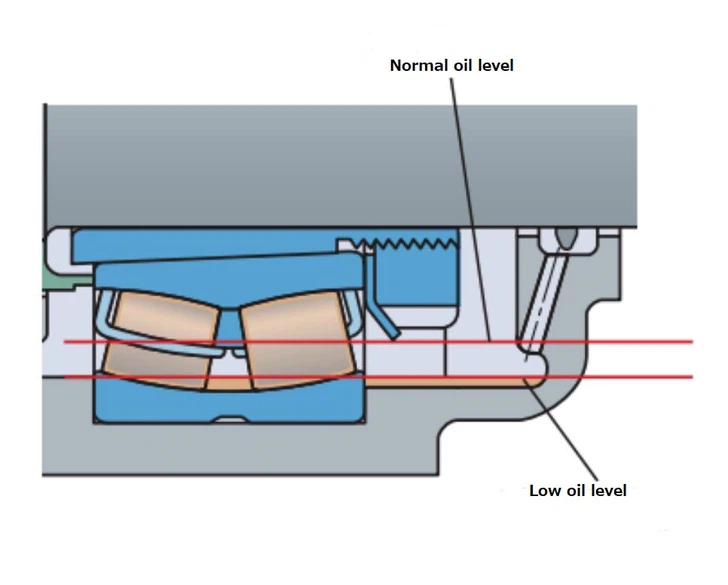
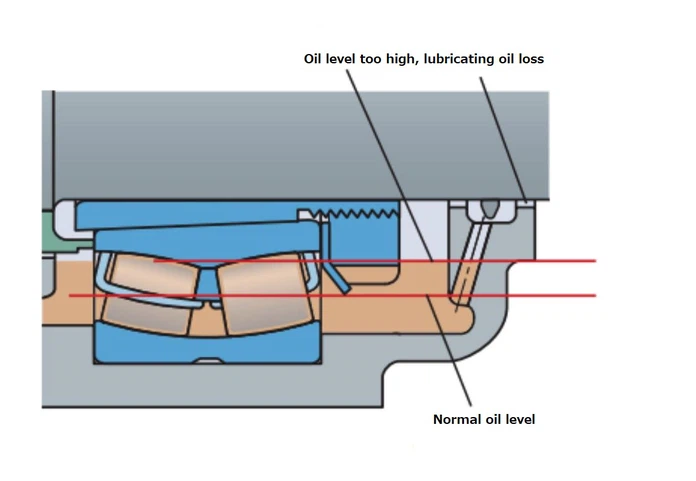
In a stationary state, the oil level should reach the middle of the bottommost rolling element.
Measures taken during operation:
1. Ensure proper ventilation of the bearing seat to prevent reverse pressure, otherwise it may cause malfunction of the automatic lubricator.
2. Check whether the bearing seals are worn, damaged, or leaking.
3. Check for leaks in the split bearing seat and apply a thin layer of adhesive packing if necessary.
Excessive lubrication
Excessive lubrication may cause oil agitation and temperature rise.
Grease lubrication
Precautions during the first grease injection or start-up period:
1. The lubricating grease should fill the bearing 100% and reach the bottom of the shaft in the bearing seat (1/3 to 1/2).
2. If the cavity next to the bearing in the bearing seat is small, it may be necessary to slightly reduce the amount of lubricating grease filling to avoid oil agitation and overheating.
Measures taken during operation:
1. Check if the lubricating grease can be discharged through the seal or drain hole. Lubricating grease overflow valve can prevent excessive application of lubricating grease.
2. Check if the direction of the seal is correct. When the direction is correct, excess lubricating grease can be discharged while preventing contaminants from entering.
3. Ensure that the interval for supplementing lubrication is not too short.
4. Ensure the correct amount of lubricating grease is used when supplementing lubrication.
Oil bath lubrication
Measures:
1. Ensure that the oil level reaches the middle of the lowest rolling element in a stationary state
2. Check if the oil return hole is blocked
3. Install oil observation glasses on all bearing seats to quickly check the oil level in the bearing seats
Wrong lubricant
Measures:
1. Check the application scenario and determine the required viscosity (grease and lubricant) and consistency (grease) of the base oil under specific working conditions
2. Contact between metals can lead to overheating and premature wear, ultimately resulting in significant noise
3. Check the compatibility of lubricating grease or oil when changing from one type to another
4. Check the viscosity of the lubricating grease
Wrong lubrication system
Measures:
1. Check the working speed and measure the working temperature
2. Determine if a suitable lubrication system has been used
3. Replace the lubricating grease with lubricating oil
4. Turning oil bath lubrication into circulating oil lubrication is a simple solution
5. Adding auxiliary coolers to existing oil lubrication systems can also avoid many heat related problems
6. Please refer to the rated speed described in the product guide provided by the manufacturer
For a solution to the lubrication problem of deep groove ball bearings, please contact our engineers. We will provide you with the most professional service.