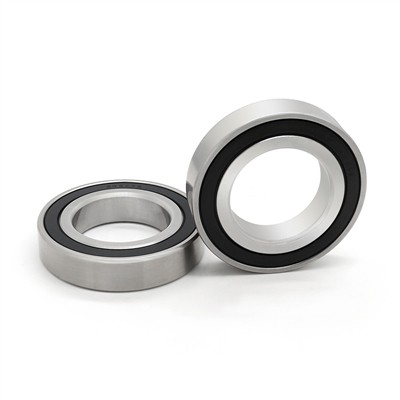
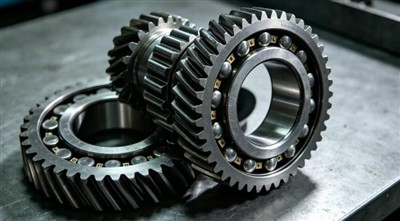
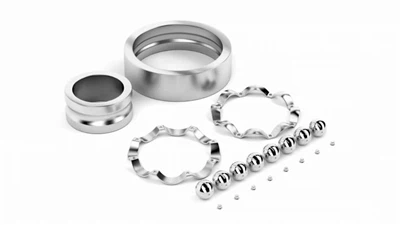
When the stress concentration exceeds the tensile strength of the material during the installation and rotation of ball bearings, compression fracture may occur. The common causes of compression fracture are local overload and overstress.
Directly tapping the bearing ring can cause small cracks to appear on the bearing ring. Once the bearing starts running, these cracks will quickly evolve into penetrating cracks.
If the installation distance of the cone shaft is too large, it may cause the inner ring of the bearing to break. Excessive thrust causes circumferential (tensile) stress in the bearing ring, leading to cracks in the ball bearing ring during operation. Martensitic hardening rings are more sensitive to this type of damage than bainitic hardening rings.
The following figure shows a common cause of fracture - improper handling. This situation occurs when using a hammer or chisel for cold installation of bearings.
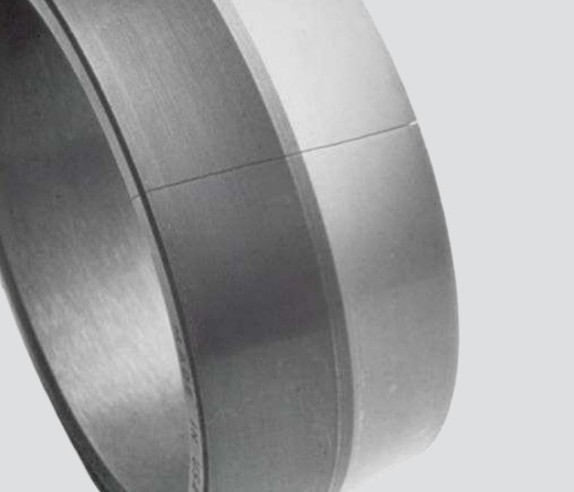
When ball bearings are heated or installed on oversized shafts, such consequences may also occur.
In fact, in the installation of bearing transmission, how to correctly install the bearings is also a very important link. Improper installation can cause bearing failure and mask design or selection defects. In every application of bearing assembly, it is necessary to strictly follow the installation torque, part accuracy fit, and propulsion speed parameters recommended by the bearing manufacturer to avoid axial impact and radial offset load. Ensure the normal use of bearings while prolonging their transmission life.
Thank you for following my article. For more case studies on bearing installation, please contact me:
Email: jackengineer@blhbearing.com
WhatsApp:8613760352799