


When it comes to pulley bearings, one of the most common questions I get as a pulley bearing supplier is about their size range. It's a crucial aspect because the right size ensures the smooth operation of various machinery and equipment. In this blog, I'll break down the size range of pulley bearings and give you some insights into how to choose the right one for your needs.
Understanding Pulley Bearing Sizes
Pulley bearings come in a wide range of sizes, and they're typically measured in millimeters. The size of a pulley bearing is defined by three main dimensions: the inner diameter (ID), the outer diameter (OD), and the width. These dimensions are crucial as they determine how the bearing fits into the machinery and how well it can support the load.
The inner diameter is the size of the hole in the center of the bearing. It's designed to fit onto a shaft, and it's usually the first dimension you'll need to consider when choosing a bearing. The outer diameter is the size of the outside of the bearing, and it needs to fit into the housing or the pulley. The width is the thickness of the bearing, and it affects how much space the bearing takes up and how much load it can handle.
Common Size Ranges
There are some common size ranges for pulley bearings that you'll come across in the market. For smaller applications, such as in precision machinery or electronics, you might find bearings with an inner diameter as small as 3mm. These tiny bearings are used in things like small motors or miniature pulleys.
On the other end of the spectrum, for heavy-duty applications like industrial machinery or large conveyor systems, you can find bearings with inner diameters of 100mm or more. These large bearings are designed to handle significant loads and are often used in high-stress environments.
Let's take a look at some specific examples of pulley bearings and their size ranges. The Polyurethane Rubber TPU Silent Pulley Bearing 638RS has an inner diameter of 8mm, an outer diameter of 22mm, and a width of 7mm. This bearing is great for applications where you need a quiet and smooth operation, like in some types of sliding doors.

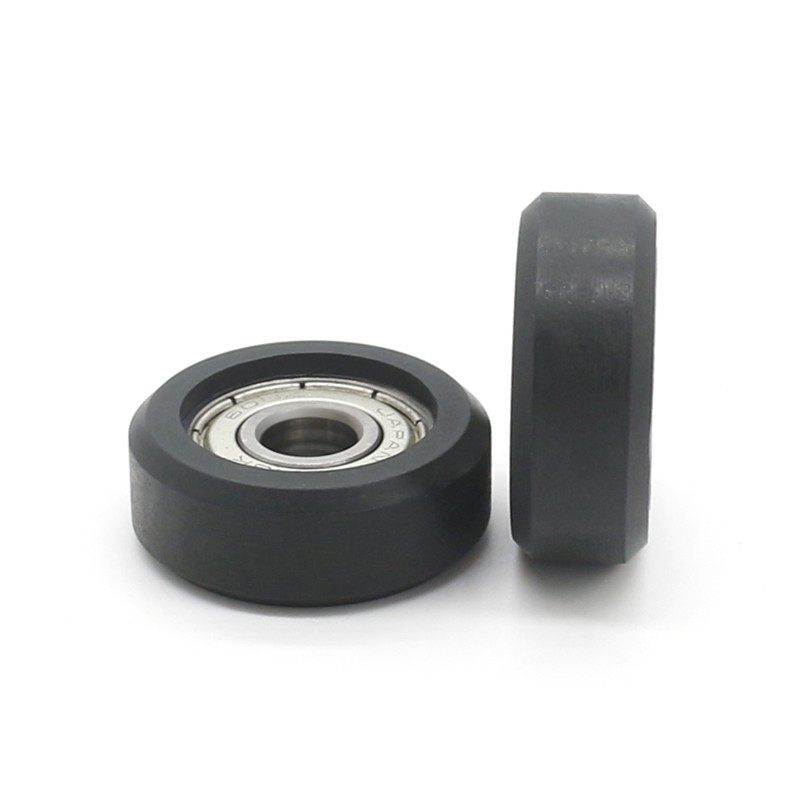
The Sliding Door Wheels 608zz has an inner diameter of 8mm, an outer diameter of 22mm, and a width of 7mm as well. It's a popular choice for sliding door applications because of its durability and smooth rolling.
The Polyurethane Coated Wheel 6205RS has an inner diameter of 25mm, an outer diameter of 52mm, and a width of 15mm. This bearing is suitable for applications where you need a larger wheel and more load capacity, like in some industrial sliding door systems.
The EPDM Roller Bearing 6200-2RS/ZZ has an inner diameter of 10mm, an outer diameter of 30mm, and a width of 9mm. It's often used in applications where you need a bearing that can resist water and other environmental factors, like in some outdoor sliding door systems.
The Window Pulley 6000ZZ has an inner diameter of 10mm, an outer diameter of 26mm, and a width of 8mm. This bearing is a common choice for window pulley systems because of its compact size and smooth operation.
Factors Affecting Size Selection
When choosing the right size of pulley bearing, there are several factors you need to consider. First, you need to think about the load that the bearing will need to support. If you're dealing with a heavy load, you'll need a larger bearing with a higher load capacity. On the other hand, if the load is light, you can choose a smaller bearing.
The speed of the machinery is also an important factor. High-speed applications require bearings that can handle the centrifugal forces and heat generated at high speeds. These bearings often have special designs and materials to ensure smooth operation.
The environment in which the bearing will be used is another crucial factor. If the bearing will be exposed to water, dust, or other contaminants, you'll need a bearing that can resist these elements. For example, bearings with seals or shields are better suited for dirty or wet environments.
How to Measure Pulley Bearings
If you're not sure what size of pulley bearing you need, you can measure the existing bearing or the shaft and housing where the bearing will be installed. To measure the inner diameter, you can use a caliper. Place the caliper inside the bearing and measure the distance across the center of the hole.
To measure the outer diameter, place the caliper on the outside of the bearing and measure the distance across the widest part. To measure the width, place the caliper on the side of the bearing and measure the thickness.
Conclusion
In conclusion, the size range of pulley bearings is quite extensive, from small bearings with inner diameters of a few millimeters to large bearings with inner diameters of over 100mm. Choosing the right size is crucial for the smooth operation and longevity of your machinery. By considering factors like load, speed, and environment, you can select the perfect pulley bearing for your needs.
If you're in the market for pulley bearings, don't hesitate to reach out for more information and to discuss your specific requirements. We're here to help you find the right bearings for your applications.
References
- Machinery's Handbook: A comprehensive reference for mechanical engineering and manufacturing, which includes detailed information on bearing sizes and specifications.
- Bearing manufacturers' catalogs: These catalogs provide in-depth information on the size ranges, load capacities, and other features of their pulley bearings.


