


What is the run - out tolerance of cam follower bearings?
As a supplier of cam follower bearings, I often encounter questions from customers regarding the run - out tolerance of these crucial components. Understanding the run - out tolerance is essential for ensuring the proper functioning and performance of cam follower bearings in various applications.
Definition of Run - out Tolerance
Run - out tolerance refers to the allowable deviation of a rotating part from its ideal circular path. In the context of cam follower bearings, it is a measure of how much the outer surface of the bearing's roller or the shaft on which the bearing is mounted deviates from a perfect circle during rotation. This deviation can occur in two main forms: radial run - out and axial run - out.
Radial run - out is the variation in the distance between the center of the bearing's rotation and the outer surface of the roller or the shaft at different points around the circumference. Axial run - out, on the other hand, is the deviation of the bearing's end face from a plane perpendicular to the axis of rotation.
Importance of Run - out Tolerance in Cam Follower Bearings
The run - out tolerance of cam follower bearings has a significant impact on their performance and the overall operation of the machinery in which they are used. Excessive run - out can lead to a variety of problems, including:
- Vibration and Noise: When a cam follower bearing has a high run - out, it can cause vibrations and noise during operation. These vibrations can not only be annoying but also lead to premature wear and damage to other components in the system.
- Reduced Efficiency: Run - out can cause uneven loading on the bearing, which can result in increased friction and energy consumption. This can reduce the overall efficiency of the machinery and increase operating costs.
- Poor Performance: In applications where precise motion control is required, such as in automated manufacturing systems or robotics, excessive run - out can lead to inaccurate positioning and reduced performance.
Factors Affecting Run - out Tolerance
Several factors can affect the run - out tolerance of cam follower bearings. These include:
- Manufacturing Quality: The quality of the manufacturing process plays a crucial role in determining the run - out tolerance of a cam follower bearing. High - precision manufacturing techniques and strict quality control measures can help ensure that the run - out is within acceptable limits.
- Material Properties: The material used to manufacture the bearing can also affect its run - out tolerance. For example, bearings made from high - quality steels with uniform grain structures are more likely to have lower run - out than those made from inferior materials.
- Installation and Mounting: Proper installation and mounting of the cam follower bearing are essential for minimizing run - out. Incorrect installation, such as over - tightening or misalignment, can cause the bearing to deviate from its ideal position and increase run - out.
- Operating Conditions: The operating conditions, such as speed, load, and temperature, can also have an impact on the run - out tolerance of the bearing. High - speed or high - load applications may require bearings with lower run - out tolerances to ensure reliable operation.
Measuring Run - out Tolerance
There are several methods for measuring the run - out tolerance of cam follower bearings. One common method is to use a dial indicator. A dial indicator is a precision measuring instrument that can be used to measure the deviation of the bearing's outer surface or end face from a reference point.
To measure radial run - out, the dial indicator is placed against the outer surface of the bearing's roller or shaft, and the bearing is rotated slowly. The maximum and minimum readings on the dial indicator are recorded, and the difference between them is the radial run - out.
To measure axial run - out, the dial indicator is placed against the end face of the bearing, and the bearing is rotated. The maximum and minimum readings on the dial indicator are recorded, and the difference between them is the axial run - out.
Run - out Tolerance Standards
There are various standards and specifications that define the acceptable run - out tolerances for cam follower bearings. These standards are typically set by international organizations such as the International Organization for Standardization (ISO) or by industry - specific organizations.
For example, ISO 492 sets the general requirements for the geometric tolerances of rolling bearings, including run - out tolerances. Different types and sizes of cam follower bearings may have different run - out tolerance requirements based on their intended applications.
Our Cam Follower Bearings and Run - out Tolerance
At our company, we understand the importance of run - out tolerance in cam follower bearings. That's why we use the latest manufacturing technologies and strict quality control measures to ensure that our bearings have low run - out tolerances.
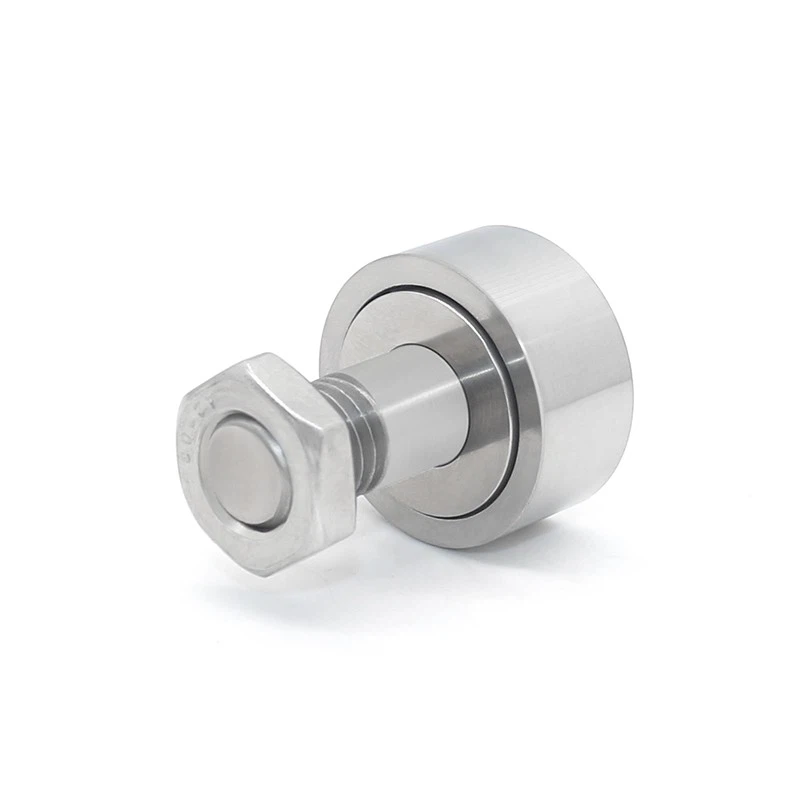
We offer a wide range of cam follower bearings, including the Cf12 Cam Follower and the Cf10 Cam Follower. These bearings are designed to meet the highest standards of quality and performance, with low run - out tolerances to ensure smooth and reliable operation.
Our team of experts is always available to provide technical support and advice on selecting the right cam follower bearing for your specific application. We can help you determine the appropriate run - out tolerance based on your operating conditions and performance requirements.
Contact Us for Your Cam Follower Bearing Needs
If you are in the market for high - quality cam follower bearings with low run - out tolerances, look no further. Our company is committed to providing our customers with the best products and services.
Whether you need a single bearing for a small project or a large quantity for a major industrial application, we can meet your needs. Contact us today to discuss your requirements and get a quote. We look forward to working with you to ensure the success of your projects.

References
- ISO 492: Rolling bearings - General requirements for geometric tolerances
- Bearing Handbook, various editions, covering principles of bearing design and manufacturing
- Technical literature from leading bearing manufacturers on cam follower bearing performance and quality control.


