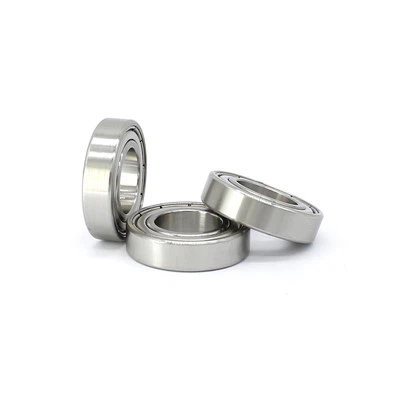
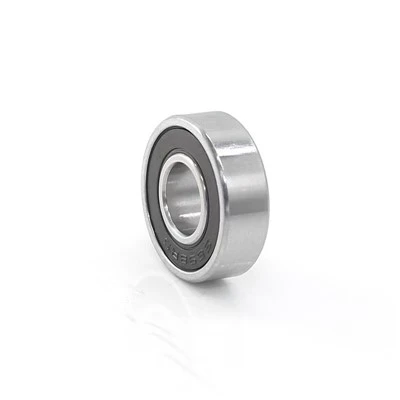
As a supplier of the 163110 - 2RS bearings, I've witnessed firsthand the critical role these components play in various industrial applications. One factor that significantly impacts the performance and lifespan of the 163110 - 2RS is vibration. In this blog, we will delve into the influence of vibration on the 163110 - 2RS bearings, exploring both the negative effects and some potential mitigation strategies.
Understanding the 163110 - 2RS Bearing
The 163110 - 2RS is a type of deep - groove ball bearing. These bearings are designed to support both radial and axial loads and are widely used in machinery due to their high - speed capabilities, low friction, and versatility. They come with rubber seals (2RS), which help to keep contaminants out and lubricant in, ensuring smooth operation over time.
Negative Impacts of Vibration on 163110 - 2RS Bearings
Wear and Tear
Vibration causes the rolling elements (balls) and raceways of the 163110 - 2RS to experience uneven contact and stress distribution. Over time, this leads to increased wear on the bearing surfaces. The constant micro - movements due to vibration can cause the material to gradually erode, reducing the bearing's precision and smoothness of operation. For example, in high - speed rotating machinery where the 163110 - 2RS is used, the vibration can accelerate the wear of the balls and raceways, resulting in a shorter service life.


Fatigue Failure
Excessive vibration can induce fatigue in the bearing material. Fatigue failure occurs when the cyclic stresses caused by vibration exceed the fatigue strength of the bearing material. Micro - cracks start to form on the surface of the raceways or the rolling elements. These cracks can propagate over time, eventually leading to the complete failure of the bearing. In industrial settings, where the 163110 - 2RS may be subject to continuous vibration for long periods, the risk of fatigue failure is a significant concern.
Lubrication Breakdown
Proper lubrication is essential for the 163110 - 2RS bearings to function smoothly. However, vibration can disrupt the lubricant film between the rolling elements and the raceways. When the lubricant film is broken, metal - to - metal contact occurs, increasing friction and heat generation. This not only accelerates wear but also can lead to the degradation of the lubricant itself. In high - vibration environments, the lubricant may be forced out of the bearing, further reducing its effectiveness.
Noise and Vibration Amplification
Vibration in the 163110 - 2RS can also cause noise. The uneven movement of the rolling elements and the resulting wear can generate audible vibrations. Moreover, if the vibration frequency of the bearing matches the natural frequency of the surrounding structure, resonance can occur. Resonance amplifies the vibration, leading to even more severe damage to the bearing and the associated machinery. This can also cause discomfort to operators and may violate noise - level regulations in some workplaces.
Sources of Vibration Affecting 163110 - 2RS Bearings
Unbalanced Rotating Parts
In machinery where the 163110 - 2RS is installed, unbalanced rotating parts are a common source of vibration. For example, if a pulley or a shaft attached to the bearing is not balanced correctly, it will create an uneven centrifugal force during rotation. This force causes the bearing to vibrate, putting additional stress on the 163110 - 2RS.
Misalignment
Misalignment between the shaft and the bearing housing can also lead to vibration. When the shaft is not properly aligned with the bearing, the rolling elements of the 163110 - 2RS experience uneven loading. This uneven loading causes the bearing to vibrate, which can accelerate wear and potentially lead to early failure.
External Shock and Impact
In some industrial environments, the 163110 - 2RS bearings may be subjected to external shock and impact. For example, in heavy - duty machinery or in applications where there are sudden starts and stops, the bearings can experience high - impact forces. These forces can cause the bearing to vibrate and may also damage the internal structure of the bearing.
Mitigation Strategies
Balancing Rotating Parts
To reduce vibration caused by unbalanced rotating parts, it is essential to perform proper balancing. This involves measuring the imbalance of the rotating components and adding or removing weight to achieve a more balanced state. By ensuring that the rotating parts are balanced, the vibration transmitted to the 163110 - 2RS can be significantly reduced.
Correct Installation and Alignment
Proper installation and alignment of the 163110 - 2RS are crucial. During installation, it is important to follow the manufacturer's guidelines to ensure that the bearing is correctly seated in the housing and that the shaft is properly aligned. Using alignment tools and techniques can help to minimize misalignment and reduce vibration.
Vibration Damping
Vibration damping materials can be used to reduce the impact of vibration on the 163110 - 2RS. These materials absorb and dissipate the vibrational energy, reducing the amplitude of the vibration. For example, rubber mounts or damping pads can be installed between the bearing housing and the machinery frame to isolate the bearing from external vibrations.
Regular Maintenance and Inspection
Regular maintenance and inspection of the 163110 - 2RS bearings can help to detect early signs of vibration - related problems. This includes checking for wear, measuring vibration levels, and monitoring the condition of the lubricant. By identifying and addressing issues early, the risk of bearing failure can be minimized.
Related Products and Applications
If you are interested in other bearing products, we also offer a wide range of options. For example, Washing Machinery Application Bearings S698RS are specifically designed for washing machine applications, providing reliable performance in a high - vibration environment. Miniature Ball Bearings are suitable for applications where space is limited, and Single Row Deep Groove Ball Bearing S689 offers excellent radial load - carrying capacity.
Conclusion
In conclusion, vibration has a significant influence on the 163110 - 2RS bearings. It can cause wear and tear, fatigue failure, lubrication breakdown, and noise amplification. However, by understanding the sources of vibration and implementing appropriate mitigation strategies, we can minimize these negative effects and extend the service life of the bearings. If you are in need of 163110 - 2RS bearings or other related products, we are here to provide you with high - quality solutions. Feel free to contact us for more information and to discuss your specific requirements for a procurement.
References
- Harris, T. A., & Kotzalas, M. N. (2007). Rolling Bearing Analysis. John Wiley & Sons.
- Zorzi, M., & Frosini, L. (2015). Vibration - Based Condition Monitoring of Rolling Element Bearings: A Review. Shock and Vibration, 2015.