


When it comes to high - performance mechanical systems, ceramic ball bearings have emerged as a game - changer. As a leading supplier of ceramic ball bearings, I've encountered numerous inquiries regarding the coefficient of thermal expansion (CTE) of these remarkable components. In this blog, we'll delve into what the coefficient of thermal expansion of ceramic ball bearings is, why it matters, and how it varies across different types of ceramic materials used in these bearings.
Understanding the Coefficient of Thermal Expansion
The coefficient of thermal expansion is a measure of how much a material expands or contracts when its temperature changes. It is defined as the fractional change in length or volume per unit change in temperature. Mathematically, for linear expansion, the coefficient of linear thermal expansion (α) is given by the formula:
α = (ΔL / L₀) / ΔT
where ΔL is the change in length, L₀ is the original length, and ΔT is the change in temperature. For volumetric expansion, a similar concept applies, but it accounts for changes in volume rather than length.
In the context of ceramic ball bearings, the CTE is crucial because it affects the performance and durability of the bearings in various operating conditions. When a bearing is in use, heat is generated due to friction between the balls and the raceways. If the CTE of the ceramic balls and the surrounding components (such as the metal raceways in hybrid ceramic bearings) is significantly different, it can lead to problems like excessive stress, premature wear, and even bearing failure.
CTE of Different Ceramic Materials in Ball Bearings
Silicon Nitride (Si₃N₄)
Silicon nitride is one of the most commonly used ceramic materials in ball bearings, especially in high - performance applications. It offers excellent mechanical properties, including high hardness, low density, and good thermal shock resistance.
The coefficient of linear thermal expansion of silicon nitride is relatively low, typically in the range of 2.4 - 3.2 × 10⁻⁶ /°C. This low CTE is advantageous because it means that silicon nitride ball bearings can maintain their dimensional stability over a wide temperature range. When used in hybrid ceramic bearings, where the steel raceways have a higher CTE (around 11 - 13 × 10⁻⁶ /°C), the low CTE of silicon nitride helps to minimize the thermal mismatch between the balls and the raceways. This results in reduced stress on the bearing components, less wear, and longer service life. For more information on Silicon Nitride Bearings, you can visit our website.
Zirconia (ZrO₂)
Zirconia is another ceramic material used in ball bearings, known for its high toughness and good corrosion resistance. The coefficient of linear thermal expansion of zirconia is higher than that of silicon nitride, typically in the range of 9 - 11 × 10⁻⁶ /°C.
Although zirconia has a higher CTE compared to silicon nitride, it can still be used effectively in certain applications. In some cases, the CTE of zirconia can be more closely matched to that of the surrounding materials, which can be beneficial for reducing thermal stress. For example, in applications where the operating temperature range is relatively narrow and the surrounding components have a CTE similar to zirconia, zirconia ball bearings can provide reliable performance. To learn more about Zirconia Bearings, please refer to our detailed product page.
Impact of CTE on Bearing Performance
Dimensional Stability
The CTE directly affects the dimensional stability of ceramic ball bearings. A low CTE means that the bearings will experience less change in size as the temperature fluctuates. This is essential for maintaining the precise clearances and tolerances required for proper bearing operation. In high - precision applications such as machine tools and aerospace equipment, even a small change in bearing dimensions can lead to significant errors in the overall system performance.
Friction and Wear
Thermal expansion can also influence the friction and wear characteristics of ceramic ball bearings. When there is a large thermal mismatch between the balls and the raceways, it can cause uneven loading and increased contact stress. This, in turn, leads to higher friction and accelerated wear. By choosing ceramic materials with appropriate CTE values, we can minimize these effects and ensure smooth and efficient bearing operation.
Bearing Life
The overall service life of a ceramic ball bearing is closely related to its CTE. Bearings that experience less thermal stress due to well - matched CTE values are less likely to develop cracks, spalling, or other forms of damage. As a result, they can operate for longer periods without requiring replacement, reducing maintenance costs and downtime for the end - user.
Hybrid Ceramic Bearings and CTE
Hybrid ceramic bearings, which combine ceramic balls with steel raceways, are widely used in many industries. The difference in CTE between the ceramic balls and the steel raceways is a critical factor in their design and performance.
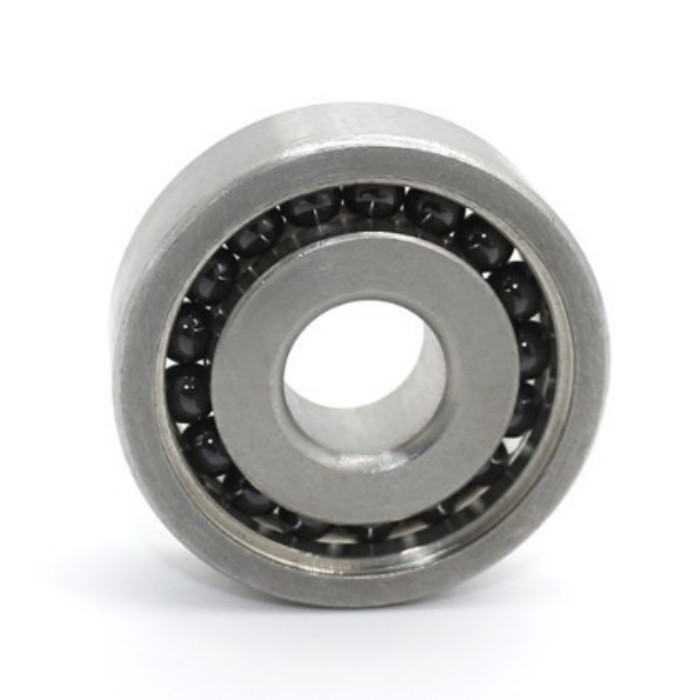

Manufacturers carefully select the ceramic material and the steel grade to minimize the thermal mismatch. For example, when using silicon nitride balls in hybrid ceramic bearings, the steel raceways are often made of high - quality steels with specific heat - treatment processes to optimize their CTE and other properties. By doing so, we can ensure that the hybrid ceramic bearings can operate reliably in a wide range of temperatures, from cryogenic conditions to high - temperature environments. For more details on Hybrid Ceramic Bearings, visit our dedicated page.
Conclusion
The coefficient of thermal expansion is a fundamental property of ceramic ball bearings that significantly impacts their performance, durability, and suitability for different applications. As a supplier of ceramic ball bearings, we understand the importance of selecting the right ceramic material with an appropriate CTE to meet the specific needs of our customers.
Whether you are looking for high - precision bearings for a machine tool, high - speed bearings for a motor, or bearings for a harsh environment, our team of experts can help you choose the best ceramic ball bearings based on their CTE and other key properties. We offer a wide range of ceramic ball bearings made from silicon nitride, zirconia, and other advanced ceramic materials, all of which are manufactured to the highest quality standards.
If you are interested in learning more about our ceramic ball bearings or would like to discuss your specific requirements, please don't hesitate to get in touch with us. We are committed to providing you with the best products and services to ensure the success of your projects.
References
- "Ceramics for Engineering Applications" by Richard M. Fulrath and John A. Pask.
- "Handbook of Bearings" by SKF Bearings.
- Technical data sheets from leading ceramic bearing manufacturers.


