


When it comes to high temperature bearings, one of the critical factors that engineers and users often focus on is the coefficient of friction. As a high temperature bearings supplier, I've encountered numerous inquiries regarding this topic. In this blog, I'll delve into what the coefficient of friction of high temperature bearings is, why it matters, and how it impacts the performance of these specialized bearings.
Understanding the Coefficient of Friction
The coefficient of friction is a dimensionless number that represents the ratio of the force of friction between two surfaces in contact to the normal force pressing the two surfaces together. In the context of high temperature bearings, it describes how much resistance there is to the relative motion between the bearing components, such as the rolling elements and the raceways.
There are two main types of coefficients of friction that are relevant to high temperature bearings: static and kinetic. The static coefficient of friction (μs) is the force required to initiate motion between two surfaces at rest. Once the motion starts, the kinetic coefficient of friction (μk) comes into play, which is generally lower than the static coefficient.
For high temperature bearings, the coefficient of friction is influenced by several factors. The material of the bearing components is a primary factor. For example, bearings made from different alloys may have different coefficients of friction due to their inherent properties. The surface finish of the raceways and rolling elements also plays a crucial role. A smoother surface finish typically results in a lower coefficient of friction, as there is less resistance to the movement of the rolling elements.
Another significant factor is the lubrication. High temperature bearings often operate in extreme conditions, and the lubricant used must be able to withstand high temperatures without breaking down. The type of lubricant, its viscosity, and how well it adheres to the bearing surfaces all affect the coefficient of friction. Inadequate lubrication can lead to increased friction, which in turn can cause excessive heat generation, wear, and ultimately, bearing failure.
Why the Coefficient of Friction Matters in High Temperature Bearings
The coefficient of friction has a profound impact on the performance and lifespan of high temperature bearings. High friction can lead to several issues, including increased energy consumption. When there is more friction in the bearing, more energy is required to overcome it, resulting in higher operating costs.
Excessive friction also generates heat. In high temperature applications, this can be a major problem as the bearing is already operating in a high - temperature environment. The additional heat generated by friction can cause the bearing materials to expand, which may lead to changes in the bearing's internal clearance and potentially cause binding or premature wear.
Moreover, high friction can accelerate wear on the bearing components. The rolling elements and raceways are subjected to high contact stresses, and increased friction exacerbates this wear. This can lead to a reduction in the bearing's load - carrying capacity and a shorter service life.
On the other hand, a low coefficient of friction is desirable as it reduces energy consumption, minimizes heat generation, and extends the bearing's lifespan. It allows the bearing to operate more smoothly and efficiently, even in demanding high temperature applications.
Measuring the Coefficient of Friction in High Temperature Bearings
Measuring the coefficient of friction in high temperature bearings is a complex task. Specialized testing equipment is required to simulate the high temperature and load conditions that the bearings will encounter in real - world applications.
One common method is to use a tribometer, which measures the frictional force between the bearing components under controlled conditions. The tribometer can be set up to apply a specific normal force and measure the force required to move the rolling elements relative to the raceways. By varying the temperature, load, and lubrication conditions, it is possible to obtain a comprehensive understanding of how the coefficient of friction changes under different circumstances.
However, it's important to note that the coefficient of friction can vary depending on the specific application and operating conditions. For example, a bearing operating in a dusty environment may have a higher coefficient of friction than one operating in a clean environment. Therefore, it's crucial to consider the actual conditions when evaluating the coefficient of friction of high temperature bearings.
Our High Temperature Bearings and Coefficient of Friction
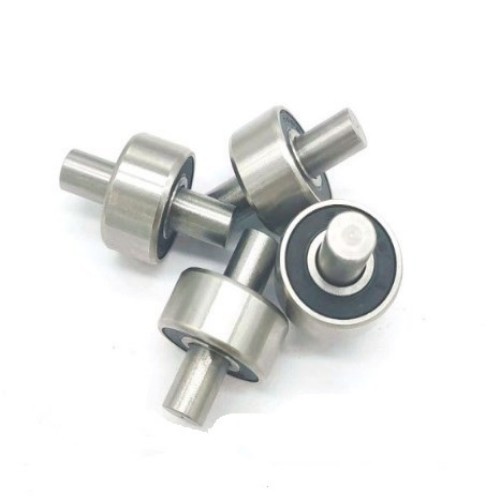
As a high temperature bearings supplier, we offer a range of products designed to minimize the coefficient of friction and provide optimal performance in high temperature applications. Our Custom SUS304 High Temperature Bearings are made from high - quality SUS304 stainless steel, which has excellent corrosion resistance and mechanical properties. The surface finish of these bearings is carefully controlled to ensure a low coefficient of friction.
We also have Non Standard Stainless Steel Bearing S6000ZZ, which is specifically designed for non - standard applications. These bearings are engineered to operate smoothly even at high temperatures, with a focus on reducing friction and wear.
In addition, our Deep Groove Ball Water Pump Bearing S608 - 2RS is suitable for high temperature water pump applications. The design of this bearing takes into account the need for a low coefficient of friction to ensure efficient operation and long service life.

Conclusion and Call to Action
In conclusion, the coefficient of friction is a critical parameter for high temperature bearings. It affects the energy consumption, heat generation, and lifespan of the bearings. As a high temperature bearings supplier, we are committed to providing products with low coefficients of friction to meet the demanding requirements of our customers.
If you are in need of high temperature bearings for your application, we invite you to contact us for a detailed discussion. Our team of experts can help you select the right bearings based on your specific needs, including the desired coefficient of friction. We look forward to working with you to ensure the success of your projects.
References
- "Bearing Tribology" by T. A. Harris
- "High Temperature Materials and Their Applications" edited by R. C. Bradt, D. P. H. Hasselman, and F. F. Lange


