


Hey there! As a supplier of cam roller bearings, I'm super excited to dive into the amazing applications of these nifty components in the machinery industry. Cam roller bearings are like the unsung heroes of the mechanical world, quietly doing their job to keep all sorts of machines running smoothly.
First off, let's quickly understand what cam roller bearings are. They're basically a type of bearing designed to handle both radial and axial loads. They have a cylindrical outer surface that rolls along a cam track, which allows for precise motion control. This makes them ideal for a wide range of applications where accurate movement is crucial.
Automation and Robotics
One of the biggest areas where cam roller bearings shine is in automation and robotics. In these high - tech fields, precision is everything. Robots need to move with extreme accuracy to perform tasks like picking and placing objects on an assembly line. Cam roller bearings are used in the joints and moving parts of robots. They help in translating rotational motion into linear motion, which is essential for the robot's arms to reach different positions.
For example, in a robotic arm used in a car manufacturing plant, cam roller bearings ensure that the arm can move smoothly and precisely to weld, paint, or assemble different parts of the vehicle. The smooth rolling action of these bearings reduces friction, which not only improves the efficiency of the robot but also extends its lifespan. This means less downtime for maintenance and more productivity for the manufacturing process.
Packaging Machinery
Packaging machinery is another industry that heavily relies on cam roller bearings. In a packaging line, products need to be moved, sorted, and wrapped at high speeds. Cam roller bearings are used in the conveyors, filling machines, and sealing mechanisms.
In a conveyor system, they help in guiding the movement of the belts or chains. The bearings ensure that the conveyor moves steadily, preventing any jams or misalignments. In filling machines, cam roller bearings are used to control the flow of liquids or powders into containers. They enable precise dosing and filling, which is crucial for maintaining the quality and consistency of the packaged products. And in sealing mechanisms, they help in applying the right amount of pressure to seal the packages properly.
Printing Presses
When it comes to printing presses, cam roller bearings play a vital role in ensuring high - quality prints. Printing presses have multiple moving parts that need to work in perfect harmony. Cam roller bearings are used in the paper feed systems, ink distribution mechanisms, and the printing cylinders.
In the paper feed system, they help in accurately feeding the paper into the press. The smooth operation of the bearings ensures that the paper doesn't get wrinkled or misaligned, which could lead to printing errors. In the ink distribution mechanism, they control the flow of ink, ensuring that the right amount of ink is applied to the printing plates. And in the printing cylinders, they help in maintaining the correct pressure and alignment, which is essential for sharp and clear prints.
Textile Machinery
The textile industry also benefits greatly from cam roller bearings. Textile machines involve a lot of complex movements, such as spinning, weaving, and knitting. Cam roller bearings are used in the spindles, looms, and other moving parts of these machines.
In spinning machines, they help in rotating the spindles at high speeds. The low - friction design of the bearings allows for efficient spinning, which increases the production rate. In looms, cam roller bearings are used to control the movement of the warp and weft threads. They ensure that the threads are woven together evenly, resulting in high - quality fabrics.
Agricultural Machinery
Agricultural machinery, like tractors, harvesters, and seeders, also use cam roller bearings. These machines operate in tough environments, often exposed to dirt, dust, and moisture. Cam roller bearings are designed to withstand these harsh conditions.
In a tractor, they are used in the steering system, transmission, and the implement attachment points. In the steering system, the bearings help in providing smooth and responsive steering. In the transmission, they ensure efficient power transfer from the engine to the wheels. And in the implement attachment points, they allow for easy connection and disconnection of different agricultural implements.
Plastic Cam Followers and Polyurethane Cam Followers
Now, let's talk about some specific types of cam roller bearings. Plastic Cam Followers are a great option when you need a lightweight and corrosion - resistant solution. They are often used in applications where weight is a concern, such as in some types of automation equipment. Plastic cam followers are also quieter in operation compared to their metal counterparts, which can be an advantage in noise - sensitive environments.
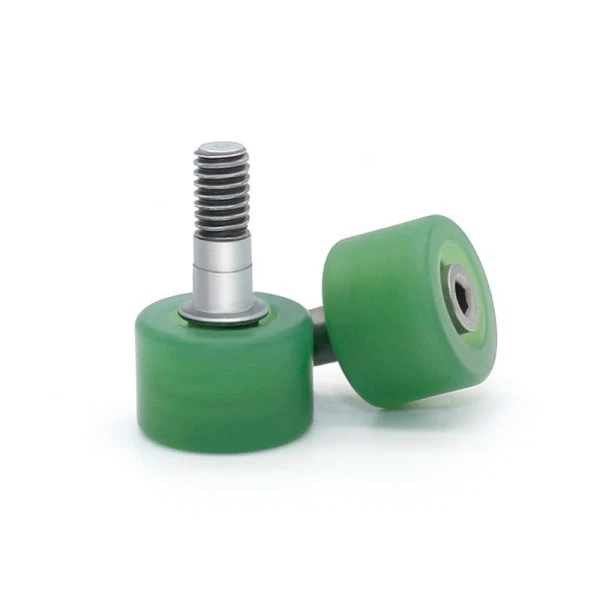
On the other hand, Polyurethane Cam Follower offer excellent shock absorption and wear resistance. They are ideal for applications where there are high - impact loads, such as in some types of packaging machinery or heavy - duty conveyor systems. The polyurethane material can absorb the shock and vibrations, which helps in protecting the other components of the machine.

Conclusion
As you can see, cam roller bearings have a wide range of applications in the machinery industry. From high - tech robots to heavy - duty agricultural machines, these bearings are essential for ensuring smooth, efficient, and reliable operation. Whether you're in the automation, packaging, printing, textile, or agricultural sector, cam roller bearings can make a big difference in the performance of your machinery.
If you're in the market for cam roller bearings, whether it's the standard types or the specialized plastic or polyurethane cam followers, I'd love to have a chat with you. We have a wide range of products to meet your specific needs. Don't hesitate to reach out to discuss your requirements and find the perfect cam roller bearings for your machinery.
References
- "Bearing Handbook" by SKF
- "Mechanical Design in Three Dimensions" by Norman M. Burns
- Industry - specific trade magazines and journals on automation, packaging, printing, textiles, and agriculture.


