


Hey there! If you're in the market for a U groove pulley, you're probably wondering how to pick the right belt for it. Well, you've come to the right place. As a U groove pulley supplier, I've got a ton of experience in this area, and I'm here to share some tips with you.
First things first, let's talk about why choosing the right belt is so important. The belt is what transfers power from the pulley to the other components in your system. If you choose the wrong belt, it can lead to all sorts of problems, like slippage, premature wear, and even system failure. So, taking the time to select the right belt is definitely worth it.
Consider the Belt Material
One of the first things you need to think about when selecting a belt for a U groove pulley is the material. There are several different types of belt materials available, each with its own set of pros and cons.
- Rubber Belts: Rubber belts are a popular choice because they're flexible, have good grip, and can handle a wide range of temperatures. They're also relatively inexpensive. However, they may not be suitable for high - speed or high - load applications. For example, if you're using a pulley in a sliding door system, a Sliding Door U Groove Rubber Pulley paired with a rubber belt can work well as the door doesn't require extremely high speeds or heavy loads.
- Polyurethane Belts: Polyurethane belts are known for their high strength, abrasion resistance, and long service life. They can handle higher loads and speeds compared to rubber belts. But they're usually more expensive. If you have a more demanding application, like a conveyor system that runs continuously, a polyurethane belt might be a better option.
- Neoprene Belts: Neoprene belts offer good oil and chemical resistance, making them suitable for applications where the belt may come into contact with these substances. They also have good flexibility and can maintain their performance over a wide temperature range.
Match the Belt Width and Length
The width and length of the belt are crucial factors. The width of the belt should match the width of the U groove pulley. If the belt is too narrow, it may not sit properly in the groove, leading to slippage. On the other hand, if it's too wide, it can cause excessive wear on the edges of the belt and the pulley.
To determine the right length, you need to consider the distance between the pulleys and the amount of tension you want to apply. You can use some simple formulas or online calculators to figure out the correct length. Make sure to account for any future adjustments or stretching that the belt may undergo over time.
Check the Belt Tension
Proper belt tension is essential for the efficient operation of the U groove pulley system. If the belt is too loose, it will slip, and power transmission will be inefficient. If it's too tight, it can put excessive stress on the pulley bearings and other components, leading to premature failure.
There are a few ways to check and adjust belt tension. One common method is to use a tension gauge. You can also use the "finger - press" method. Press down on the belt in the middle between the two pulleys. If it deflects too much, the belt is too loose; if it hardly deflects at all, it's too tight.

Look at the Belt's Tooth Profile (if applicable)
Some belts, like timing belts, have a tooth profile. The tooth profile of the belt must match the groove profile of the U groove pulley. This ensures proper engagement and prevents slippage. For example, in a precision machinery application where accurate power transmission is crucial, a belt with the right tooth profile is a must.
Consider the Operating Environment
The environment in which the U groove pulley and belt will operate also plays a big role in belt selection.
- Temperature: If the system will be operating in a high - temperature environment, you need to choose a belt material that can withstand those temperatures. For example, some belts are rated for continuous operation at temperatures up to 150°C or more.
- Humidity and Moisture: In wet or humid conditions, you should select a belt that is resistant to water and moisture. Otherwise, the belt may deteriorate over time.
- Dust and Debris: If the area has a lot of dust or debris, you might want to choose a belt that is less likely to attract and hold onto these particles. A smooth - surfaced belt may be a better option in such cases.
Compatibility with Non - standard Pulleys
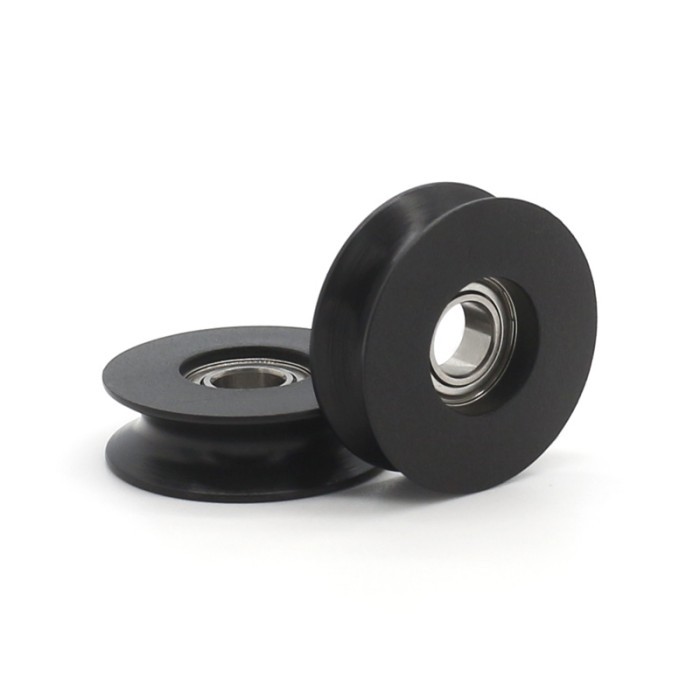
If you're using a non - standard U groove pulley, like the Non - standard U - shaped Rubber - coated Pulley Bearing S608ZZ, you need to pay extra attention to belt compatibility. Non - standard pulleys may have unique groove dimensions or other features that require a custom - fit belt. In some cases, you may need to work with a belt manufacturer to get a belt that is specifically designed for your non - standard pulley.
Specialized Applications
Some applications may require specialized belts. For example, in a medical device or a food processing machine, you need to use belts that are compliant with relevant safety and hygiene standards. These belts are often made from materials that are non - toxic and easy to clean.
Cost - Benefit Analysis
Finally, you need to consider the cost - benefit ratio. While it may be tempting to go for the cheapest belt option, it may not be the best in the long run. A more expensive belt with better performance and durability may save you money in the long term by reducing downtime and replacement costs.
As a U groove pulley supplier, I've seen many customers make the mistake of choosing the wrong belt, which then leads to all sorts of problems. By following these tips, you can avoid those issues and ensure that your U groove pulley system runs smoothly and efficiently.
If you're still not sure which belt is the right one for your U groove pulley, don't hesitate to reach out. We have a team of experts who can help you make the right decision based on your specific requirements. Whether you're using a S626RS Bearing Pulley or any other type of U groove pulley, we've got the knowledge and experience to assist you.
So, if you're looking to purchase U groove pulleys and the right belts for them, get in touch with us. We're here to help you with your procurement needs and ensure that you get the best products for your application.
References
- Belt Drives: Selection, Installation, and Maintenance Guide. Industry Publications.
- Pulley and Belt System Design Manual. Machinery Manufacturers Association.


