


As a supplier of screw bearings, I understand the critical role that heat dissipation plays in the performance and longevity of these components. Screw bearings are widely used in various industrial applications, where they are often subjected to high loads, high speeds, and harsh operating conditions. Effective heat dissipation is essential to prevent overheating, which can lead to premature wear, reduced efficiency, and even catastrophic failure. In this blog post, I will share some practical tips on how to improve the heat - dissipation performance of screw bearings.
Understanding the Heat Generation in Screw Bearings
Before we delve into the methods of improving heat dissipation, it's important to understand how heat is generated in screw bearings. The primary sources of heat in screw bearings include friction between the rolling elements and raceways, as well as between the cage and the rolling elements. Additionally, external factors such as high - speed rotation, heavy loads, and poor lubrication can also contribute to increased heat generation.
When a screw bearing operates, the rolling elements roll along the raceways, and the frictional forces between them convert mechanical energy into heat. The amount of heat generated depends on several factors, including the bearing's design, the quality of the materials used, the operating speed, and the load applied. For example, a bearing operating at a high speed with a heavy load will generate more heat than one operating at a lower speed with a lighter load.
Selecting the Right Bearing Materials
One of the first steps in improving heat - dissipation performance is to select the right bearing materials. Some materials have better thermal conductivity than others, which means they can transfer heat away from the bearing more effectively. For instance, bearings made from high - quality steels with good thermal properties can help dissipate heat more efficiently.
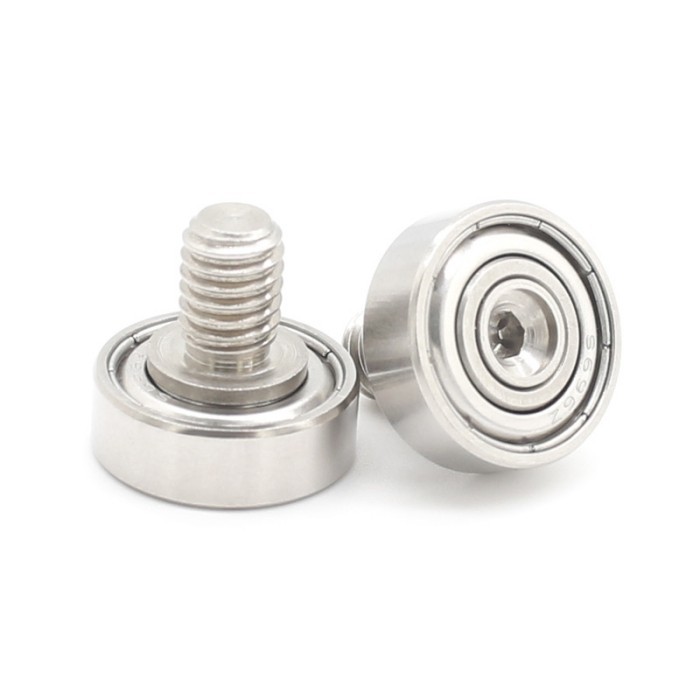
In addition to the base material, the surface treatment of the bearing can also affect heat dissipation. Coatings that improve the surface finish and reduce friction can help lower the heat generated during operation. For example, a bearing with a smooth, low - friction surface will generate less heat compared to one with a rough surface. As a screw bearing supplier, we offer a range of bearings made from different materials and with various surface treatments to meet the specific heat - dissipation requirements of our customers. You can check out our External Threaded Bearing 6002ZZ With Screw, which is designed with materials and surface treatments optimized for heat dissipation.
Optimizing the Bearing Design
The design of the screw bearing also plays a crucial role in heat dissipation. A well - designed bearing can allow for better airflow around the bearing, which helps carry away the heat. For example, bearings with open - type designs or those with ventilation holes can promote better air circulation.
Another aspect of design optimization is the internal geometry of the bearing. The shape and size of the rolling elements, the cage design, and the spacing between the elements can all affect heat generation and dissipation. For instance, a bearing with a larger number of smaller rolling elements may distribute the load more evenly, reducing the stress on individual elements and thus lowering the heat generated. Our Screw BearingsS696ZZ is designed with an optimized internal geometry to enhance heat dissipation while maintaining high load - carrying capacity.
Proper Lubrication
Lubrication is perhaps the most important factor in improving heat - dissipation performance in screw bearings. A good lubricant not only reduces friction between the moving parts but also helps carry away the heat generated. The lubricant acts as a coolant, absorbing the heat from the bearing and transferring it to the surrounding environment.
There are several types of lubricants available, including oils and greases. The choice of lubricant depends on the operating conditions of the bearing, such as the speed, load, temperature, and environment. For high - speed applications, a low - viscosity oil may be more suitable as it can flow more easily and carry away heat more effectively. On the other hand, for applications with heavy loads and lower speeds, a high - viscosity grease may be a better choice as it can provide better lubrication and protection.
It's also important to ensure that the bearing is properly lubricated. Over - lubrication can lead to increased churning losses and heat generation, while under - lubrication can result in excessive friction and wear. As a supplier, we can provide our customers with detailed lubrication guidelines based on the specific bearing and application requirements.
Cooling Systems
In some cases, especially in high - performance applications where the heat generated is very high, additional cooling systems may be required. There are several types of cooling systems that can be used to improve the heat - dissipation performance of screw bearings.
One common cooling method is the use of external fans or blowers. These devices can direct a flow of air over the bearing, increasing the rate of heat transfer to the surrounding environment. Another option is the use of liquid - cooling systems, where a coolant is circulated around the bearing to absorb the heat. Liquid - cooling systems are often more effective than air - cooling systems, especially in applications where the heat load is extremely high.
However, the implementation of cooling systems adds complexity and cost to the overall system. Therefore, it's important to carefully evaluate the need for a cooling system based on the bearing's operating conditions and the heat - dissipation requirements.
Monitoring and Maintenance
Regular monitoring and maintenance are essential to ensure that the screw bearings are operating at optimal heat - dissipation performance. By monitoring the temperature of the bearing during operation, you can detect any abnormal increases in temperature, which may indicate a problem with the bearing or the cooling system.
There are several ways to monitor the temperature of a bearing, including the use of temperature sensors. These sensors can be installed directly on the bearing or in the vicinity to measure the temperature accurately. If a significant increase in temperature is detected, it's important to take immediate action to identify and resolve the problem.

Maintenance activities such as cleaning the bearing, replacing the lubricant at regular intervals, and inspecting for any signs of wear or damage can also help maintain good heat - dissipation performance. A well - maintained bearing will operate more efficiently and generate less heat, which in turn reduces the risk of overheating and premature failure.
Conclusion
Improving the heat - dissipation performance of screw bearings is a multi - faceted process that involves selecting the right materials, optimizing the design, proper lubrication, and, in some cases, implementing additional cooling systems. As a screw bearing supplier, we are committed to providing our customers with high - quality bearings and expert advice on how to improve heat dissipation.
If you are looking for screw bearings with excellent heat - dissipation performance, or if you have any questions about heat management in your bearing applications, we would be happy to assist you. Our Screw BearingsS609ZZ is another great option for applications where heat dissipation is a concern. Contact us today to discuss your specific requirements and start a procurement negotiation.
References
- Harris, T. A., & Kotzalas, M. N. (2007). Rolling Bearing Analysis. Wiley.
- Zaretsky, E. V. (2010). Ball and Roller Bearing Engineering. CRC Press.


