


Hey there! As a nylon roller supplier, I've seen firsthand how important it is to balance these little guys properly. Balancing a nylon roller isn't just some random task; it's crucial for the smooth operation and longevity of the equipment they're used in. In this blog, I'm gonna share some tips on how to balance a nylon roller effectively.
First off, let's talk about why balancing is so important. When a nylon roller is unbalanced, it can cause a whole bunch of problems. It might lead to excessive vibration, which can wear out the bearings faster and even damage the surrounding components. This not only shortens the lifespan of the roller but can also result in costly repairs and downtime for the machinery. So, getting that balance right is a must.
Understanding the Basics of Nylon Roller Balance
Before we dive into the balancing process, it's important to understand what balance means in the context of nylon rollers. A balanced roller is one where the mass is evenly distributed around its axis of rotation. When the mass is unevenly distributed, the roller will have a tendency to wobble or vibrate as it spins.

There are two main types of balance: static balance and dynamic balance. Static balance is about ensuring that the center of gravity of the roller is on its axis of rotation. You can think of it like a seesaw. If the center of gravity is off to one side, the roller will be like a lopsided seesaw, and it won't sit still properly. Dynamic balance, on the other hand, takes into account the forces that act on the roller when it's spinning at high speeds. It's a bit more complex but equally important, especially for rollers that are used in high - speed applications.
Tools You'll Need
To balance a nylon roller, you'll need a few basic tools. A balancing stand is a great place to start. This is a simple device that allows you to mount the roller and check its static balance. You can usually find these stands at your local industrial supply store or online.
You'll also need some weights. These weights are used to counteract any imbalance in the roller. They come in different sizes and can be attached to the roller in various ways, depending on the design of the roller. A precision scale can also be handy to measure the exact amount of weight you need to add or remove.
The Static Balancing Process
Let's start with static balancing. First, you need to mount the nylon roller on the balancing stand. Make sure it's properly centered and can rotate freely. Once it's on the stand, give it a gentle spin. If the roller stops with the same side always facing down, that means there's an imbalance.
The heavier side of the roller will naturally end up at the bottom. To correct this, you can add small weights to the lighter side of the roller. Start with a small weight and see how it affects the balance. Keep adding or adjusting the weights until the roller can stop in any position when you spin it. This indicates that the center of gravity is now on the axis of rotation, and the roller is statically balanced.
Dynamic Balancing
Dynamic balancing is a bit more involved. For this, you'll need a dynamic balancing machine. These machines are designed to measure the forces acting on the roller when it's spinning at high speeds. They can detect even the slightest imbalances that might not be noticeable during static balancing.
When using a dynamic balancing machine, you'll mount the nylon roller on the machine and set it to the appropriate speed. The machine will then analyze the vibrations and forces and tell you where and how much weight needs to be added or removed. It's a very precise process, and it's essential for rollers that are used in high - speed or high - precision applications.
Checking the Balance Regularly
Balancing isn't a one - time thing. Over time, the nylon roller can become unbalanced again due to wear and tear, changes in temperature, or other factors. That's why it's important to check the balance regularly.
For rollers that are used in light - duty applications, you might only need to check the balance once a year. But for those in heavy - duty or high - speed applications, it could be as often as once a month. By regularly checking and re - balancing the rollers, you can ensure that they continue to operate smoothly and efficiently.
Common Mistakes to Avoid
One common mistake is using the wrong type of weights. Make sure the weights you use are compatible with the nylon roller. Some weights might be too heavy or too light, or they might not attach properly to the roller.
Another mistake is not cleaning the roller before balancing. Dirt and debris on the roller can affect the balance. So, always give the roller a good clean before you start the balancing process.
Our Nylon Roller Products
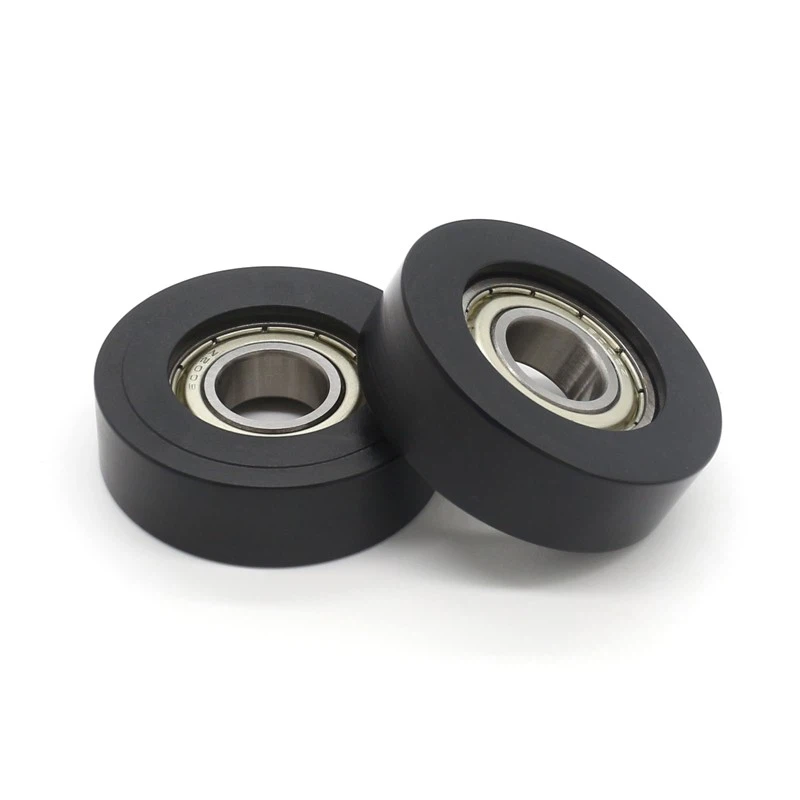
We offer a wide range of high - quality nylon rollers, including the Nylon Roller 6001ZZ and the Nylon Roller 6002ZZ. These rollers are made from top - notch materials and are designed to be easy to balance. Whether you need a roller for a sliding door, a conveyor system, or any other application, we've got you covered.
Contact Us for Your Nylon Roller Needs
If you're in the market for nylon rollers or need help with balancing your existing rollers, don't hesitate to reach out. We're here to provide you with the best products and support. Whether you have questions about the balancing process or need advice on which roller is right for your application, our team of experts is ready to assist you.
In conclusion, balancing a nylon roller is an important process that can significantly improve the performance and lifespan of your equipment. By following the steps outlined in this blog and using the right tools and techniques, you can ensure that your nylon rollers are always in top - notch condition.
References
- Industrial Balancing Handbook
- Nylon Roller Manufacturer's Guide


