


Hey there! As a cam follower bearing supplier, I often get asked about how these nifty little components perform under shock loads. It's a crucial question, especially for industries where sudden jolts and impacts are part of the daily grind. So, let's dive right in and explore this topic.
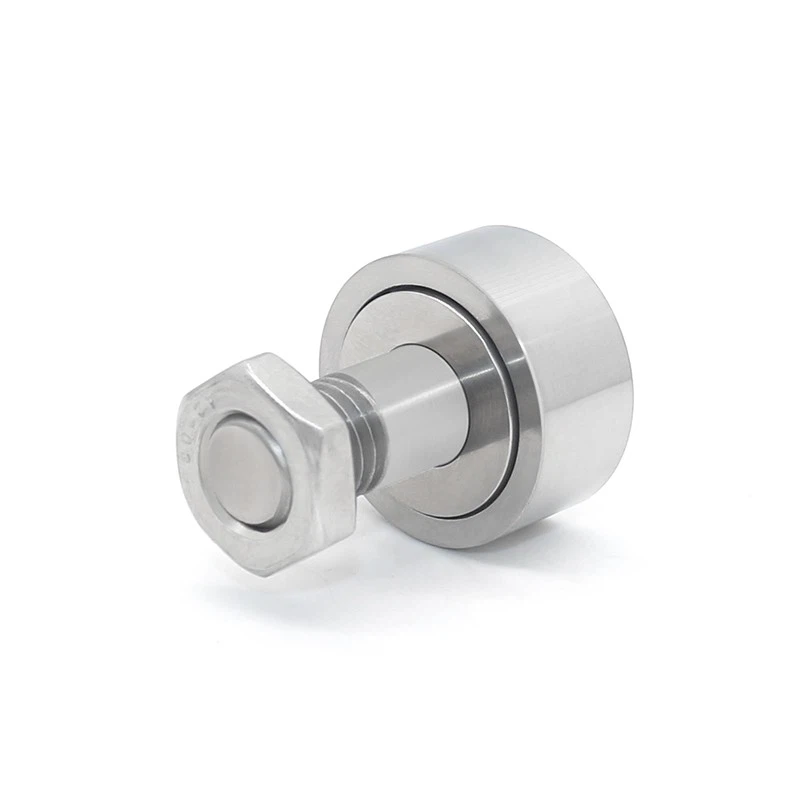
First off, what exactly are cam follower bearings? Well, they're specialized bearings designed to follow the contour of a cam. They're used in a wide range of applications, from automotive engines to industrial machinery. These bearings are built to handle both radial and axial loads, making them versatile workhorses in many mechanical systems.
Now, let's talk about shock loads. Shock loads occur when a bearing experiences a sudden, intense force. This can happen due to a variety of reasons, like a sudden stop in a conveyor belt, a collision in a manufacturing process, or even a seismic event in some cases. Shock loads can be a real headache for bearings because they can cause damage that might not be immediately apparent but can lead to premature failure down the line.
So, how do cam follower bearings hold up under these shock loads? It all boils down to their design and construction.

Design Features that Help with Shock Loads
One of the key design features of cam follower bearings is their robust outer ring. The outer ring is typically made of high - quality steel that can withstand a significant amount of stress. This steel is heat - treated to increase its hardness and toughness, which helps it resist deformation when a shock load hits.
Another important aspect is the rolling elements. Most cam follower bearings use cylindrical rollers or needle rollers. These rolling elements are designed to distribute the load evenly across the bearing surface. When a shock load occurs, this even load distribution helps prevent concentrated stress points that could lead to cracking or spalling.
The internal clearance of the bearing also plays a role. A properly adjusted internal clearance allows the bearing to accommodate the additional forces generated by a shock load without binding. If the clearance is too tight, the bearing can overheat and fail quickly under shock loads. On the other hand, if it's too loose, the bearing may experience excessive vibration and wear.
Real - World Performance
In real - world applications, cam follower bearings often prove their mettle under shock loads. Take the automotive industry, for example. In engines, cam follower bearings are used to actuate the valves. During the combustion process, there are sudden pressure changes that create shock loads on the bearings. But thanks to their well - engineered design, these bearings can handle these loads and keep the engine running smoothly for thousands of miles.
In the manufacturing sector, cam follower bearings are used in conveyor systems. When products are loaded or unloaded onto the conveyor, there can be sudden impacts. The bearings in these systems need to be able to withstand these shock loads to ensure continuous operation. Our Cf10 Cam Follower and Cf12 Cam Follower are great examples of bearings that are well - suited for such applications. They have been tested rigorously to ensure they can handle the shock loads commonly encountered in conveyor systems.
Testing and Quality Control
At our company, we take the performance of our cam follower bearings under shock loads very seriously. We conduct a series of tests to ensure that our bearings meet the highest standards.
One of the tests we perform is the impact test. In this test, we subject the bearing to a controlled shock load using a specialized testing machine. We measure the deformation and stress levels in the bearing during and after the impact. This helps us determine if the bearing can withstand the shock load without significant damage.
We also perform fatigue tests. These tests simulate the long - term effects of repeated shock loads. By running the bearings through thousands of cycles of shock loads, we can predict their lifespan and identify any potential weaknesses in the design.
Factors Affecting Performance
While cam follower bearings are designed to handle shock loads, there are several factors that can affect their performance.
The speed at which the shock load occurs is one such factor. A high - speed shock load can generate more stress in the bearing than a low - speed one. This is because the kinetic energy of the impact is higher at higher speeds.
The frequency of the shock loads also matters. If the bearings are subjected to frequent shock loads, they may experience more wear and tear over time. This can lead to a reduction in their lifespan and performance.
The operating environment is another important factor. If the bearing is operating in a dirty or corrosive environment, it may be more prone to damage under shock loads. Contaminants can get into the bearing and cause abrasion, while corrosion can weaken the bearing material.
Tips for Maximizing Performance
If you're using cam follower bearings in an application where shock loads are a concern, here are some tips to maximize their performance:
- Proper Installation: Make sure the bearings are installed correctly. Incorrect installation can lead to uneven load distribution and increase the risk of damage under shock loads.
- Regular Maintenance: Keep the bearings clean and lubricated. Regular maintenance can help prevent wear and corrosion, which can improve the bearing's ability to handle shock loads.
- Choose the Right Bearing: Select a bearing that is specifically designed for your application. Consider factors like the magnitude and frequency of the shock loads, as well as the operating environment.
Conclusion
In conclusion, cam follower bearings are well - equipped to handle shock loads thanks to their robust design and high - quality construction. However, their performance can be affected by various factors, and proper installation, maintenance, and selection are key to ensuring their long - term reliability.
If you're in the market for cam follower bearings that can stand up to shock loads, we're here to help. We have a wide range of products, including the Cf10 Cam Follower and Cf12 Cam Follower, that are designed to meet the toughest requirements. Contact us to discuss your specific needs and let's work together to find the perfect solution for your application.
References
- Harris, T. A., & Kotzalas, M. N. (2007). Rolling Bearing Analysis. Wiley.
- Juvinall, R. C., & Marshek, K. M. (2011). Fundamentals of Machine Component Design. Wiley.


