


Can plastic ball bearings be used in glass - processing equipment?
In the realm of glass - processing equipment, the selection of appropriate components is crucial for ensuring high - quality production, efficient operation, and long - term durability. Traditionally, metal ball bearings have been the go - to choice in many industrial applications. However, with technological advancements, plastic ball bearings have emerged as a viable alternative, and the question of whether they can be used in glass - processing equipment is worth exploring.
First, let's understand the characteristics of plastic ball bearings. Plastic ball bearings are made from various polymers, each with its own unique properties. For instance, Peek Bearings [/ball - bearings/plastic - ball - bearings/peek - bearings.html] are known for their excellent mechanical strength, high - temperature resistance, and chemical stability. PEEK (Polyetheretherketone) can withstand continuous temperatures up to around 250°C and has good wear resistance, which makes it suitable for applications where the operating environment is harsh.
Nylon Bearings [/ball - bearings/plastic - ball - bearings/nylon - bearings.html] are another popular type of plastic ball bearings. Nylon is a cost - effective material with good self - lubricating properties. It has a relatively low coefficient of friction, which can reduce energy consumption during operation. Additionally, nylon is lightweight, which can be beneficial in applications where weight reduction is a priority.
POM Plastic Bearings [/ball - bearings/plastic - ball - bearings/pom - plastic - bearings.html] are made from polyoxymethylene. POM has high stiffness, low moisture absorption, and good dimensional stability. These properties make POM plastic bearings reliable in maintaining their shape and performance over time.
Now, let's analyze the requirements of glass - processing equipment. Glass - processing involves operations such as cutting, grinding, polishing, and shaping. During these processes, the equipment has to operate at high precision to ensure the quality of the glass products. Some key requirements for the bearings in glass - processing equipment include:
- Precision: Glass - processing equipment demands high - precision operation. The bearings need to have low run - out and provide smooth rotation to ensure accurate cutting, grinding, or polishing of the glass.
- Resistance to contamination: In a glass - processing environment, there are often glass particles and dust. The bearings should be able to resist contamination to avoid premature wear and failure.
- Chemical resistance: Some glass - processing processes may involve the use of chemicals. The bearings need to be resistant to these chemicals to maintain their performance.
- Noise reduction: In a production environment, lower noise levels are preferred. Quiet operation of the bearings can create a more comfortable working environment and reduce the need for additional noise - insulation measures.
Let's evaluate plastic ball bearings against these requirements.
In terms of precision, modern manufacturing techniques enable plastic ball bearings to be produced with high precision. Advanced molding and machining processes can ensure that the bearings have tight tolerances, which meet the precision requirements of glass - processing equipment. For instance, the use of computer - controlled machining in the production of plastic ball bearings can significantly improve their dimensional accuracy.
Regarding contamination resistance, plastic ball bearings have an advantage over metal bearings. Plastic is less likely to be corroded by glass particles and dust. Moreover, some plastic materials can be formulated to have self - cleaning properties to a certain extent. This means that even if some contaminants enter the bearing, they are less likely to cause severe damage compared to metal bearings.
Chemical resistance is also a strong suit of plastic ball bearings. As mentioned earlier, materials like PEEK and POM have excellent chemical resistance. They can withstand exposure to many common chemicals used in glass - processing, such as acids and alkalis, without significant degradation.
Noise reduction is another area where plastic ball bearings shine. The self - lubricating properties of many plastic materials reduce friction, which in turn reduces noise during operation. This can be a significant advantage in a glass - processing facility, where noise from the equipment can be a problem.
However, there are also some limitations to using plastic ball bearings in glass - processing equipment. One of the main concerns is the load - carrying capacity. Generally, plastic ball bearings have a lower load - carrying capacity compared to metal bearings. In applications where the equipment has to handle heavy loads, plastic ball bearings may not be the best choice. Additionally, the high - temperature performance of plastic ball bearings, although good in some materials like PEEK, may still be inferior to that of metal bearings in extremely high - temperature environments.
Despite these limitations, there are many glass - processing applications where plastic ball bearings can be effectively used. For example, in small - scale glass - processing machines or in equipment where the loads are relatively light, plastic ball bearings can provide a cost - effective and reliable solution. They can also be used in support structures or in components where the precision and contamination - resistance requirements are high.

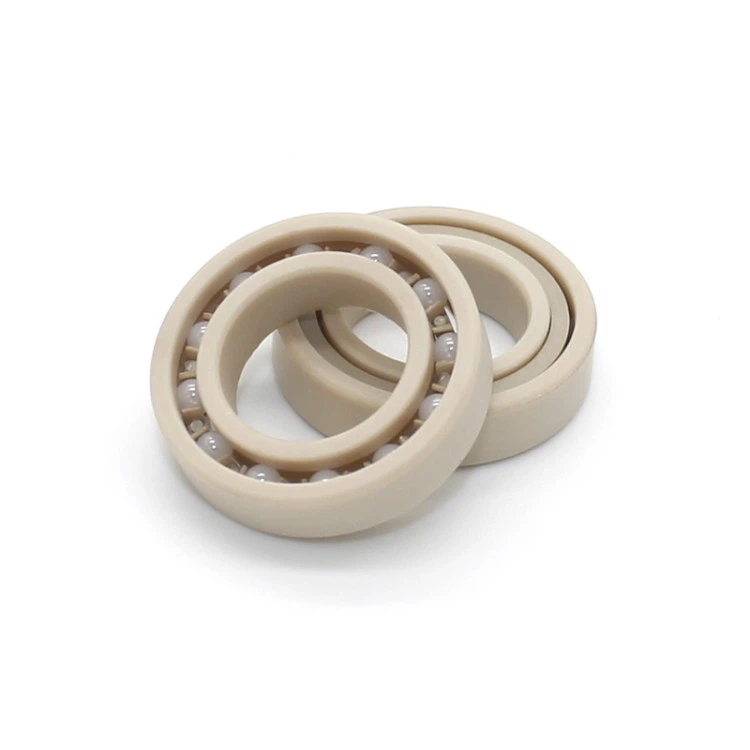
As a plastic ball bearings supplier, we have seen an increasing number of customers in the glass - processing industry showing interest in our products. We offer a wide range of plastic ball bearings made from different materials, including PEEK, nylon, and POM, to meet the diverse needs of our customers. Whether you are looking for high - temperature - resistant bearings for a glass - melting furnace or low - friction bearings for a precision glass - cutting machine, we have the right solutions for you.
If you are involved in the glass - processing industry and are considering using plastic ball bearings in your equipment, we encourage you to reach out to us. Our team of experts can provide you with detailed technical information, help you select the most suitable bearings for your specific application, and offer support throughout the procurement process. Contact us today to start a conversation about how our plastic ball bearings can improve the performance of your glass - processing equipment.
References:
- Materials Science for Engineering Applications. Wiley - Blackwell.
- Handbook of Plastics, Elastomers and Composites. McGraw - Hill.
- Industrial Glass Processing Technology Manual. Elsevier.


