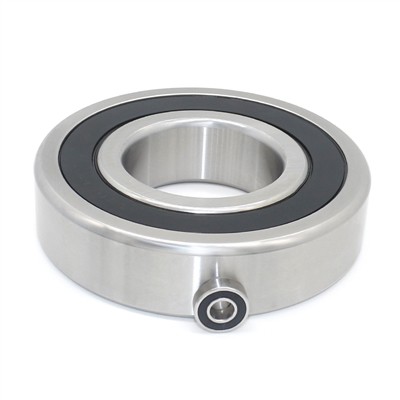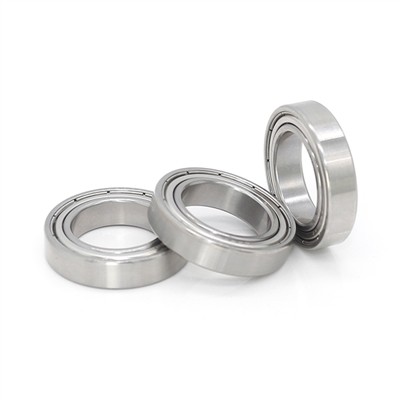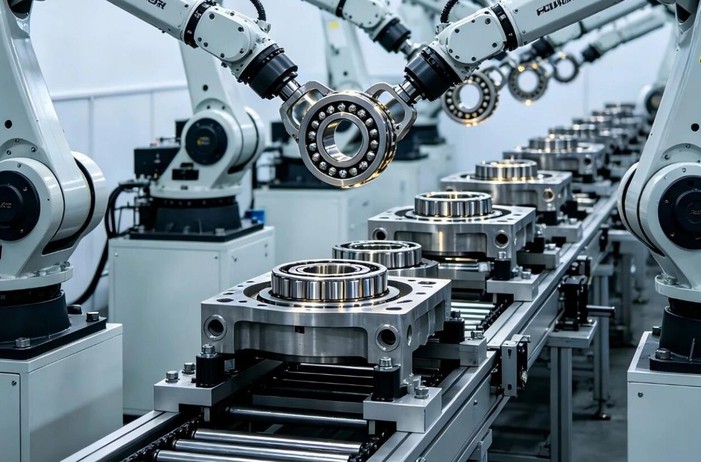
While the competition in the new energy vehicle (NEV) sector appears to center on batteries, electric motors, and electronic controls, its true core lies in bearings. With motor speeds reaching 20,000 RPM-demanding zero electrical corrosion, minimal noise, low friction, and exceptional longevity-traditional bearings are rendered obsolete. This represents an entirely new competitive arena, offering a golden opportunity for China's bearing industry to achieve a "cornering overtake"-surpassing established global players through strategic innovation.
By 2026, Chinese enterprises such as Dongguan Lihao Bearing, HRB (Harbin Bearing), and LYC (Luoyang Bearing) had achieved significant technological breakthroughs, commenced mass production, and successfully integrated into the supply chains of mainstream automotive manufacturers. Today, we conduct an in-depth analysis: What exactly makes NEV bearings so technically challenging? How is China breaking through these barriers? And where do the future opportunities lie?
Bearings for new energy vehicles are a completely different thing from those for fuel-powered vehicles.
Bearings for Fuel-Powered Vehicles: 3,000–5,000 rpm; mild operating conditions; service life of 3–5 years. Bearings for New Energy Vehicle Motors: 20,000–25,000 rpm; sustained high-speed operation; rapid acceleration and deceleration; wide operating temperature range of -40°C to 150°C; zero electrical corrosion; low noise; low friction; service life of 10+ years.
Three Critical Thresholds:
1. Speed Limit: The n×dm value reaches 800,000 (compared to just 300,000 for fuel-powered vehicles)-equivalent to a standard bearing running continuously in an F1 race car.
2. Electrical Corrosion: Motor currents cause electrical breakdown within the bearing, leading to failure within just three months; therefore, electrical insulation is mandatory.
3. Friction Loss: Reducing friction by just 1 watt extends the driving range by 1 kilometer; this factor directly determines the vehicle's total cruising range.
Dongguan Lihao Bearings: Three Cutting-Edge Technologies Break Foreign Monopoly
1) Hybrid Ceramic Ball Bearings: Electrically Insulating, High-Speed, Long-Life
• Rolling elements made of silicon nitride ceramic provide electrical insulation and non-conductivity, completely eliminating the issue of electrical corrosion.
• 40% lighter weight, twice the hardness, and high-temperature resistance; maximum rotational speed increased by 50%.
2) Low-Friction Design: Friction Torque Reduced by 60%, Driving Range Increased by 5%
• Optimized internal structure combined with a specialized cage (PEEK) reduces friction by 60% within the core operating range of 70–110 km/h.
• BLH Bearings: Low-torque hub bearings that extend driving range by 5–8 km; already integrated into Magna's supply chain.
3) Nano-Lubrication: High-Temperature Stability, Self-Repairing, Doubled Service Life
• Nano-diamond / graphene-based grease maintains performance without degradation at 120°C, reduces friction by 30%, and extends service life twofold.
• Resolves critical issues regarding grease carbonization and failure under conditions of high speed and high temperature.
A $100 Billion "Blue Ocean" by 2026: Chinese Enterprises Vie for Market Share
• By 2026, the global market for new energy bearings is projected to surpass 80 billion; China's market share is expected to reach 40%.
• Chinese enterprises have already commenced mass supply: BLH Bearings, HRB, LYC, and C&U have successfully integrated into the supply chains of BYD, Geely, NIO, and XPeng.
• Companies in Liaocheng and Linqing are leveraging "shared intelligent manufacturing" and digitalization to rapidly enter the new energy sector, demonstrating distinct cost advantages.
Three Key Directions: Grasp Them, and You Win.
1. Motor High-Speed Bearings: 25,000+ RPM; Hybrid Ceramic Dominates
2. Wheel Hub Bearing Units: Lightweight, Low-Friction, Integrated Design
3. Reducer Low-Friction Bearings: Enhancing Energy Efficiency and Extending Range