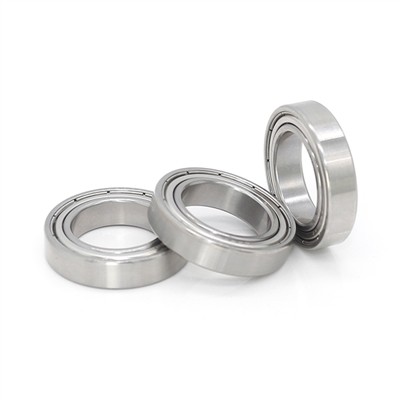
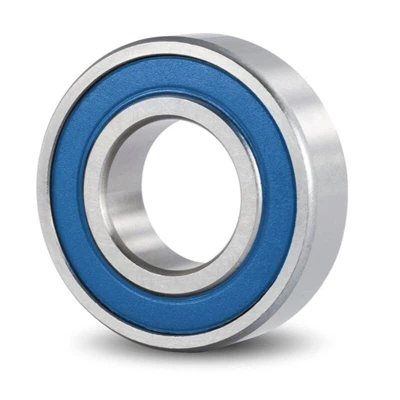
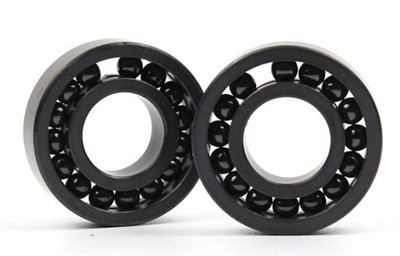
Non-standard bearings refer to bearings that do not conform to the dimensions specified in national standards. They are typically manufactured to customer specifications and have fluid dimensions and structures. Non-standard bearings are primarily used for specialized equipment and applications, such as imperial non-standard bearings, which are primarily customized to customer specifications and have limited versatility.
In contrast, standard bearings conform to the dimensions specified in national standards and are more widely used. When selecting bearings, the appropriate bearing should be chosen based on the specific application requirements and operating conditions. For example, double-row angular contact ball bearings are suitable for bidirectional loads, self-aligning ball bearings are suitable for situations where coaxiality cannot be guaranteed, and tapered roller bearings and deep groove ball bearings can withstand radial and axial loads.
The structural design of non-standard bearings requires consideration of factors such as lubricant access to the friction surface, bearing introduction location, and oil groove design. Furthermore, it is important to avoid sharp edges or corners that could disrupt the oil film and prevent the formation of dead zones.
The production process for non-standard bearings begins with product design, which requires specialized technicians and engineers. During the design process, customer needs and product performance requirements must be fully considered to ensure the feasibility and reliability of the design.
Subsequently, raw materials are selected and purchased based on the design requirements. Raw material quality directly impacts the performance and service life of the bearings, and therefore must be strictly controlled.
Once raw materials are procured, bearing manufacturing and processing begins. This process includes heat treatment of the bearing steel, turning, grinding, and milling of bearing components, and surface treatments such as chrome and nickel plating are also required to ensure the bearing's appearance and corrosion resistance.
Strict quality control measures are essential during the production process. In addition to using advanced equipment and processes such as CNC lathes and grinders, rigorous quality inspections are also required, including dimensional inspection, rotational accuracy testing, and fatigue strength testing.
Finally, after inspection, the products are packaged and stored. During packaging and transportation, measures such as moisture-proofing, shockproofing, and drop protection are also required to ensure product quality and safety.
In summary, the production process and quality control measures of non-standard bearings are a systematic and complex process that requires comprehensive control and consideration to ensure that the quality and performance of the products meet customer requirements.