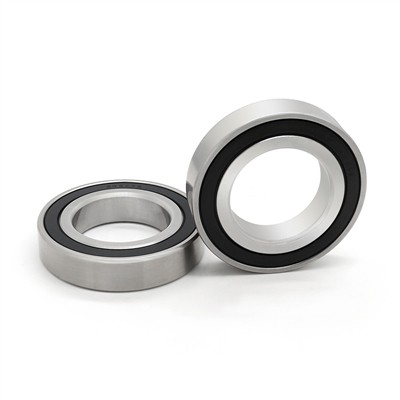
Linear bearings play a vital role in supporting and guiding linear motion in mechanical systems. The following are some of the main functions of linear bearings: 1. Supporting Loads: Linear bearings support loads, allowing moving parts (such as tables and slides) to move smoothly on the bearings. They can support radial, axial, or combined loads, depending on the specific design and type of bearing. 2. Guiding Motion: Linear bearings provide guidance for linear motion, ensuring that moving parts move accurately along a predetermined trajectory. They use sliding or rolling mechanisms to keep moving parts on their axis and reduce friction and unwanted slip. 3. Reducing Friction: Linear bearings reduce friction through sliding or rolling, resulting in smoother and more efficient motion. Sliding bearings reduce friction through a lubricating film, while rolling bearings reduce sliding friction through rolling elements (such as balls or rollers). 4. Providing Precise Positioning: Linear bearings provide precise positioning and position retention, ensuring moving parts remain in the desired position and preventing misalignment or drift. 5. Increased System Rigidity: Linear bearings can increase the rigidity and stability of mechanical systems, ensuring that the system does not experience excessive vibration or deformation during motion. In summary, the primary function of linear bearings is to support and guide linear motion, reduce friction, provide precise positioning, and increase system rigidity and stability. This makes them essential components in many applications, such as automated equipment, industrial machinery, workbenches, and linear guide systems.
 English
- English
- Français
- Deutsch
- 日本語
- Italiano
- Español
- Português
- русский
- Nederlands
- Svenska
- dansk
- Ελληνικά
- íslenska
- हिंदी
- slovenčina
- Việt Nam
- România limbi
- suomi
- 한국어
- Melayu
- عربي
- Lietuvių
- magyar
- Gaeilgenah Éireann
- Polski
- Bai Miaowen
- বাংলা
- Indonesia
- Cymraeg
- Latviešu
- اردو
- Türkçe
- hrvatski
- slovenščina
- bosanski
- Eesti
- ไทย
- Kreyòl Ayisyen
- Български
- Català
- עברית
- українська
- Malti
- Norsk
- Čeština
- فارسی