Exploring the Black Technology in the Bearing Industry - A Low Temperature LNG Submersible Pump Bearing S608UU
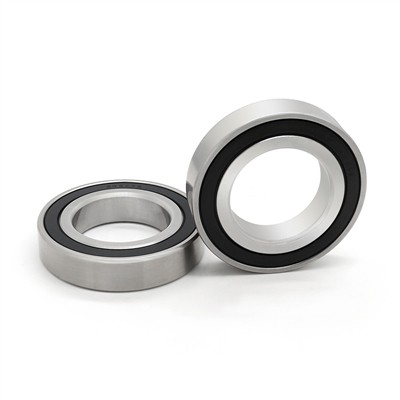
The following questions take the S608UU low-temperature bearing produced by BLH Bearing Factory as an example
Q: What are the advantages of low-temperature bearings for LNG submersible pumps?
Answer: This type of bearing uses low-temperature materials and can rotate for a long time in an ultra-low temperature environment of -200 ℃
Q: In what environment can the low-temperature bearings of LNG submersible pumps be installed and used?
Answer: It can be installed and used in the following three environments:
1. Ultra low temperature environment: In a low temperature environment of -160~-200 ℃, the bearing material will not break due to cold brittleness.
2. Ultra low temperature lubrication environment: No external lubrication required, relying solely on low viscosity LNG for self-lubricating, with good lubrication performance.
3. Complex working environment: Liquid nitrogen medium contains trace impurities, is corrosive, and requires high speed, long life, and reduced maintenance.
Q: What structures have you produced in the LNG submersible pump low-temperature bearing industry?
Answer: In the low-temperature bearing industry, we can produce the following three types of bearing structures:
1. Deep groove ball bearing structure: used in radial load as the main working condition, with a simple structure and controllable cost.
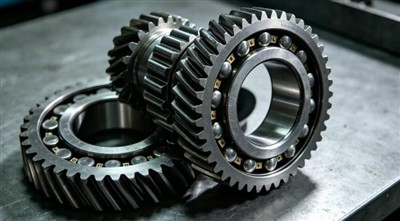
2.angle contact ball bearing structure: used in environments with high axial loads, it can be installed to enhance higher load-bearing capacity.
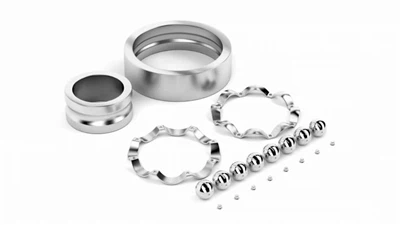
3. Hybrid ceramic ball bearing structure: stainless steel ring+silicon nitride Si3N4 ceramic ball, capable of self repairing the bearing inner channel and wear-resistant.
Q: What materials do you usually use to produce low-temperature bearings for LNG submersible pumps?
Answer: Each component has its own dedicated low-temperature material.
The bearing ring is made of high nitrogen stainless steel, G98Cr18, etc., with excellent low-temperature toughness and corrosion resistance.
The bearing steel balls are made of silicon nitride Si3N4 ceramic balls, which are made of high hardness, self-lubricating, and low friction materials.
The bearing cage is made of low-temperature resistant fluororesin such as PTFE, which is self-lubricating and wear-resistant.
Q: What is the lubrication method for the low-temperature bearings of LNG submersible pumps?
Answer: This bearing relies entirely on LNG self-lubricating and does not require external grease, but requires strict control over the cleanliness of the medium.
Q: How to maintain the low-temperature bearings of LNG submersible pumps on a daily basis?
Answer: Strictly control the installation accuracy (P4 grade bearings are selected); Regularly monitor vibration, temperature, and noise; Avoid dry rotation and impurities entering; Regularly inspect to prevent bearing jamming and abnormal noise.
Q: How to choose an ultra-low temperature bearing?
Answer: Radial force is the main force, choose bearings with deep groove ball structure; Axial force is the main force, and angular contact ball bearings are selected; Choose hybrid ceramic ball bearings for high reliability scenarios.
Q: What faults usually occur during the use of low-temperature bearings?
Answer: Common faults include lubrication failure (main cause), cold brittle fracture, wear, pitting, and damaged retaining frame;
Q: How can we use it to reduce the failure of LNG low-temperature bearings?
Answer: Control cleanliness, select specialized low-temperature materials, enhance sealing grade, and control bearing installation accuracy.