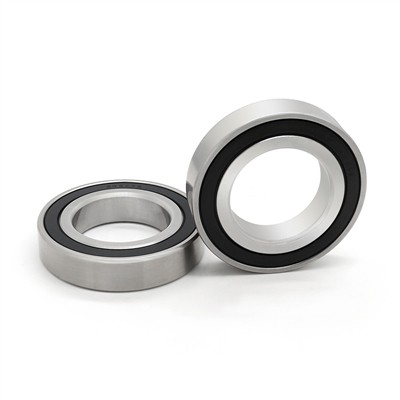
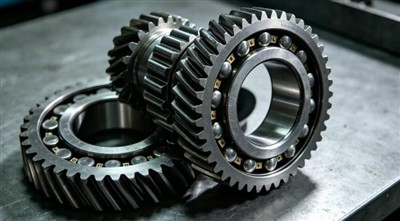
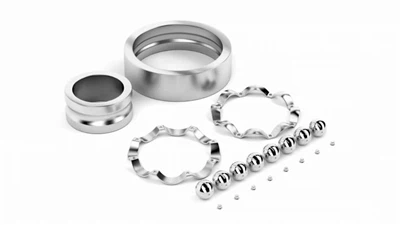
Classification of Bearing Cage Materials:
Bearing Cage Shapes: Wavy, Clawed, Riveted
Bearing Cage Materials: Brass, Stainless Steel, PA66
As a core component of rolling bearings, the bearing cage plays a crucial role in separating rolling elements and reducing frictional heat generation. The choice of material directly affects the bearing's rotational performance and lifespan. Whether it's a common ball bearing, a wheel hub unit bearing or excavator bearing in industrial applications, or an eccentric bearing or self-aligning roller bearing for precision transmission, all bearing types require suitable cage materials to fully realize their operational advantages.
This article will focus on two mainstream cage materials: brass and nylon, analyzing their characteristics and compatibility with various bearing types. It will also introduce the application highlights of high-quality bearings such as Timken Bearing, Timken Bearing Original, and Original Koyo Bearings, as well as their matching bearing supports and roller bearing housings.
1. Brass cage: Suitable for bearing applications in high-load and high-temperature environments.
Brass cages are available in stamped and machined (cast or forged) types. The former is suitable for small and medium-sized bearings, while the latter can handle more complex operating conditions. In components like excavator bearings that withstand high loads and strong impacts, brass cages, with their excellent mechanical strength and heat resistance, effectively prevent cage deformation or breakage, ensuring stable operation of the excavator in harsh environments. In some precision models of Timken bearings, the low-friction characteristics of brass cages combined with high-precision machining further improve bearing transmission efficiency. These bearings are suitable for industrial transmission equipment with high stability requirements.
It is particularly important to note that the upper limit of the operating temperature for brass cages is 300℃, and direct contact with highly corrosive substances should be avoided. When used with bearing supports, it is necessary to ensure that the installation clearance between the cage and the support meets the standards to prevent abnormal wear caused by vibration. Especially in the assembly of wheel hub unit bearings, the precise fit between the brass cage and the bearing support can reduce noise and vibration during vehicle operation, improving the driving experience.
2. Nylon cage: Low noise, impact resistant, suitable for various precision bearing applications.
Nylon cages (mostly made of glass fiber reinforced PA 66) are ideal for precision bearings such as ball bearings and self-aligning roller bearings due to their excellent slip properties and elasticity. In eccentric bearings, nylon cages buffer the impact between the rolling elements and the inner and outer rings, reducing operating noise. Meanwhile, the lightweight nature of PA66 reduces the bearing's moment of inertia and improves its response speed. In smaller models of original Koyo bearings, the injection molding process for nylon cages can meet special design requirements, making them suitable for electronic equipment, medical devices, and other applications where size and quiet operation are critical.
Temperature limitations must be considered when using nylon cages: the recommended operating temperature is generally -40℃ to 120℃. Brief over-temperature exposure should not exceed 20℃ and should be dispersed under low-load conditions. If the equipment is to be exposed to environments above 120℃ for extended periods, a metal cage (such as a brass or stainless steel cage) should be used instead. In addition, when using it with roller bearing housing, it is essential to ensure that the nylon cage and the bearing housing have a proper seal to prevent grease leakage or the entry of impurities and dust. In outdoor applications of wheel hub unit bearings, a good bearing seal is crucial to extending the service life of the nylon cage.
3. Cage material selection: A comprehensive judgment based on bearing type and operating conditions.
Whether using a brass or PA66 cage, the choice must be made comprehensively based on the bearing type (e.g., excavator bearing, self-aligning roller bearing), operating conditions (temperature, load, speed, medium), and matching components (bearing support, roller bearing housing). For example, heavy-duty Timken bearings are better suited to brass cages, while light-duty precision miniature bearings can use nylon cages. For eccentric bearings used in low-speed, low-load applications, nylon cages offer a more significant advantage in terms of quietness; however, for high-speed, high-load applications, brass cages should be prioritized.
BLH BEARING manufactures various types of bearings and custom bearings (such as models compatible with wheel hub unit bearings and self-aligning roller bearings). When producing bearings, BLH recommends appropriate cage materials based on the customer's operating conditions and provides selection advice for supporting components such as bearing supports and roller bearing housings to ensure the longest possible overall bearing performance and lifespan. Whether purchasing original Timken bearings, original Koyo bearings, or custom-made eccentric bearings, choosing suitable cage materials and matching parts is crucial for ensuring efficient equipment operation.
If you need more information on selecting bearing cage materials, or if you need to purchase wheel hub unit bearings, excavator bearings, and matching bearing supports and roller bearing housings, please contact BLH BEARING factory for professional technical support and high-quality product supply services!
My name is JACK, and I'm from BLH Bearing in China. I'm a bearing R&D engineer. Thank you for reading my articles. Please contact me for more bearing knowledge. Thank you.