


Hey there! As a supplier of linear flange bearings, I often get asked about the materials these nifty little components are made of. So, I thought I'd take a deep dive into this topic and share all the juicy details with you.
Steel - The Classic Choice
Steel is hands down one of the most common materials used in making linear flange bearings. There are different types of steel that can be used, but the two main ones are carbon steel and stainless steel.
Carbon steel is a popular option because it's strong and relatively inexpensive. It can handle a good amount of load and wear, making it suitable for a wide range of applications. However, it's not the best when it comes to corrosion resistance. If the bearing is going to be used in an environment where it might be exposed to moisture or chemicals, carbon steel might not be the ideal choice.
On the other hand, stainless steel is a great option for applications where corrosion is a concern. It contains chromium, which forms a thin oxide layer on the surface of the steel, protecting it from rust and other forms of corrosion. Stainless steel linear flange bearings are often used in food processing, medical equipment, and marine applications. They're a bit more expensive than carbon steel bearings, but the extra cost is worth it if you need that added protection against corrosion.
Brass - A Shiny Alternative
Brass is another material that's sometimes used to make linear flange bearings. It's a copper - zinc alloy that has some unique properties. Brass is relatively soft compared to steel, which means it can be easily machined into the desired shape. It also has good anti - friction properties, which can reduce wear and tear on the bearing and the shaft it's running on.
One of the advantages of brass bearings is their ability to operate in low - lubrication or even dry conditions. They can form a thin layer of lubricating oxide on their surface, which helps to reduce friction. However, brass bearings are not as strong as steel bearings, so they're typically used in applications where the load is relatively light. You might find brass linear flange bearings in things like small appliances, office equipment, and some types of machinery where the operating conditions are not too harsh.
Plastic - Lightweight and Versatile
Plastic has become an increasingly popular material for linear flange bearings in recent years. There are several types of plastics that can be used, such as nylon, PTFE (polytetrafluoroethylene), and acetal.
Nylon is a tough and lightweight plastic that has good wear resistance. It can handle moderate loads and is often used in applications where weight is a concern, like in aerospace and automotive industries. Nylon bearings are also resistant to chemicals and moisture, which makes them suitable for use in a variety of environments.
PTFE, also known as Teflon, is famous for its extremely low friction coefficient. This means that PTFE linear flange bearings can operate with very little resistance, reducing energy consumption and wear. PTFE is also highly resistant to chemicals and high temperatures, making it a great choice for demanding applications.
Acetal is another plastic that's commonly used in bearing manufacturing. It has excellent dimensional stability, which means it won't warp or change shape easily under different operating conditions. Acetal bearings are often used in precision machinery, where accuracy is crucial.
Ceramic - High - Performance Option
Ceramic is a high - performance material that's used in some specialized linear flange bearings. There are different types of ceramics, but silicon nitride (Si3N4) is one of the most common ones used in bearing applications.
Ceramic bearings have several advantages over their steel counterparts. They're extremely hard, which means they have a very long service life and can withstand high loads and high speeds. They also have a low density, which reduces the weight of the bearing and the overall system. Ceramic bearings are also resistant to corrosion and can operate in high - temperature environments.
However, ceramic bearings are very expensive to manufacture, so they're typically used in high - end applications where performance is critical, such as in racing cars, high - speed machinery, and some aerospace applications.

Comparing the Materials
Now that we've looked at the different materials used to make linear flange bearings, let's compare them based on some key factors.
- Strength: Steel, especially carbon steel, is the strongest material among the ones we've discussed. It can handle heavy loads and is suitable for industrial applications where the bearing will be subjected to a lot of stress. Ceramic also has high strength, but it's more brittle than steel. Brass and plastic are relatively weaker and are used in lighter - load applications.
- Corrosion Resistance: Stainless steel and ceramic are the best when it comes to corrosion resistance. They can withstand exposure to moisture, chemicals, and harsh environments without rusting or corroding. Brass has some corrosion resistance, but it's not as good as stainless steel or ceramic. Carbon steel has poor corrosion resistance and needs to be properly coated or lubricated to prevent rust. Plastic bearings, depending on the type of plastic, can also have good corrosion resistance.
- Friction and Wear: PTFE has the lowest friction coefficient, followed by brass. These materials can reduce wear on the bearing and the shaft. Steel bearings can also have low friction if they're properly lubricated. Ceramic bearings have good wear resistance due to their hardness.
- Cost: Carbon steel is the most cost - effective option, followed by brass and plastic. Stainless steel is a bit more expensive, and ceramic is the most expensive of all.
Our Product Range
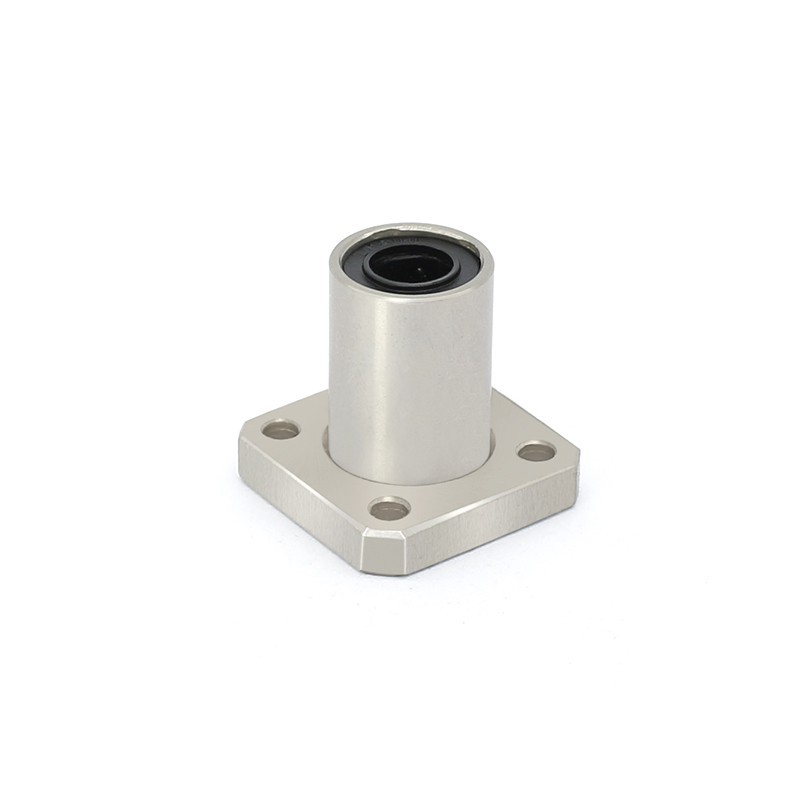
At our company, we offer a wide range of linear flange bearings made from different materials to suit various applications. If you're looking for a Square Flange Linear Bearing, we have options in steel, brass, and plastic. Our square flange bearings are designed to provide a stable and secure mounting, and they come in different sizes to fit your specific needs.
The LMH20UU Bearing is one of our popular products. It's made from high - quality steel and is suitable for a variety of industrial applications. It has a smooth operation and can handle moderate loads.
We also have Round Flange Linear Bearing options. These bearings are available in different materials, allowing you to choose the one that best suits your application requirements. Whether you need a bearing for a light - load application or a high - performance one for a demanding environment, we've got you covered.
Contact Us for Your Bearing Needs
If you're in the market for linear flange bearings, we'd love to hear from you. We can help you choose the right material and bearing for your specific application. Whether you're a small business looking for a few bearings or a large industrial company with a high - volume order, we can provide you with the products and support you need. Just reach out to us, and we'll start the conversation about your bearing requirements.
References
- "Materials Science and Engineering: An Introduction" by William D. Callister Jr. and David G. Rethwisch
- "Bearing Handbook" by SKF
- Industry reports on linear bearing manufacturing and materials


