


Hey there! As a supplier of linear flange bearings, I often get asked about the sealing performance of these nifty little components. So, I thought I'd take a few minutes to break it down for you.
First off, let's talk about what a linear flange bearing is. It's a type of bearing that's designed to provide linear motion along a shaft. The flange part is what gives it its name – it's a flat, circular or square extension around the outside of the bearing that helps with mounting. These bearings are used in all sorts of applications, from industrial machinery to automation systems, and even in some consumer products.
Now, onto the sealing performance. Sealing is a crucial aspect of linear flange bearings because it helps protect the internal components from dirt, dust, moisture, and other contaminants. A good seal can significantly extend the life of the bearing and ensure smooth, reliable operation.
There are several types of seals used in linear flange bearings, each with its own advantages and disadvantages. One common type is the contact seal. This type of seal actually makes physical contact with the shaft, creating a barrier that prevents contaminants from entering the bearing. Contact seals are great for applications where there's a lot of dirt or dust in the environment. However, they do create a bit of friction, which can increase energy consumption and wear on the shaft over time.
Another type is the non - contact seal. As the name suggests, these seals don't touch the shaft. Instead, they use a labyrinth design or other means to create a tortuous path for contaminants, making it difficult for them to get into the bearing. Non - contact seals have less friction than contact seals, which means less energy loss and less wear on the shaft. But they may not be as effective in extremely dirty or wet environments.
Let's take a look at some specific products. We have the LMH20UU Bearing. This bearing comes with a high - quality sealing system that provides excellent protection against contaminants. The seal is designed to withstand a wide range of operating conditions, making it suitable for many different applications. Whether you're using it in a clean factory environment or a more rugged outdoor setting, the LMH20UU Bearing's sealing performance will help keep it running smoothly.
We also offer Square Flange Linear Bearing. These bearings are known for their easy installation and great sealing capabilities. The square flange design allows for a more stable mounting, and the seals are engineered to prevent any ingress of dirt or moisture. This is especially important in applications where the bearing is exposed to harsh elements or where precision is key.
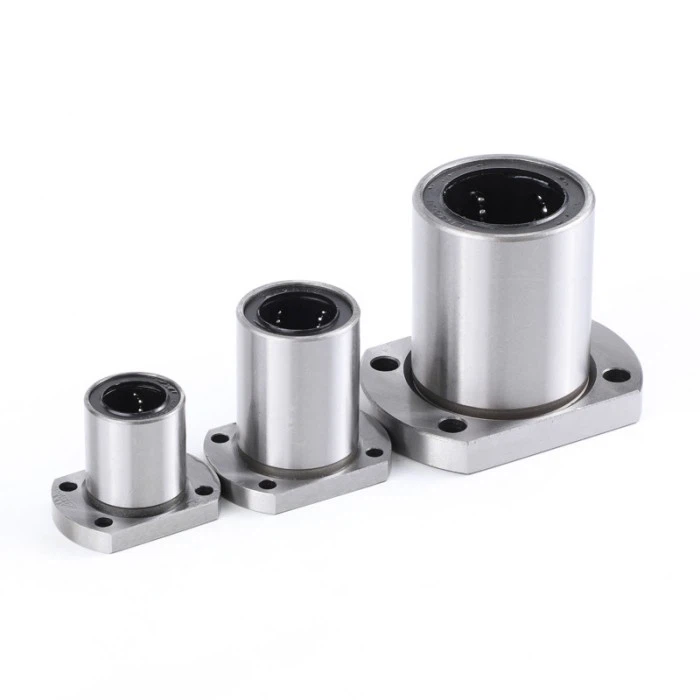

And then there's the Round Flange Linear Bearing. The round flange provides a different kind of mounting option, and the sealing performance is just as top - notch. These bearings are often used in applications where space is limited, and the seal helps ensure that the bearing can operate efficiently in tight quarters.
When it comes to evaluating the sealing performance of a linear flange bearing, there are a few key factors to consider. One is the material of the seal. Different materials have different properties, such as resistance to chemicals, temperature, and wear. For example, rubber seals are commonly used because they're flexible and can provide a good seal, but they may not be suitable for high - temperature applications. On the other hand, silicone seals can withstand higher temperatures but may not be as resistant to certain chemicals.
The design of the seal also matters. A well - designed seal will have a proper lip shape and contact pressure. The lip shape determines how well the seal can conform to the shaft surface, while the contact pressure affects how effectively it can prevent contaminants from entering.
Another important factor is the operating environment. If the bearing is going to be used in a clean room environment, the sealing requirements will be different from those in a mining or construction application. In a clean room, the main concern might be preventing the release of particles from the bearing, while in a harsh industrial environment, the focus will be on keeping dirt and moisture out.
So, how can you tell if a linear flange bearing has good sealing performance? One way is to look at the manufacturer's specifications. Reputable manufacturers will provide detailed information about the sealing capabilities of their bearings, including things like the IP (Ingress Protection) rating. The IP rating is a standardized system that indicates how well a product is protected against solids and liquids. For example, an IP67 rating means that the bearing is completely protected against dust and can withstand immersion in water for a limited time.
You can also look at customer reviews and testimonials. Other users who have actually used the bearing in real - world applications can give you valuable insights into its sealing performance. If you see a lot of positive feedback about a particular bearing's ability to keep contaminants out and maintain smooth operation, that's a good sign.
As a supplier, we understand the importance of sealing performance in linear flange bearings. That's why we work hard to source and offer products that meet the highest standards. Our team of experts is always available to help you choose the right bearing for your specific application, taking into account factors like the operating environment, load requirements, and speed.
If you're in the market for linear flange bearings and want to learn more about our products or have any questions about sealing performance, don't hesitate to reach out. We're here to assist you in finding the perfect solution for your needs. Whether you're a small business looking for a few bearings or a large industrial company with high - volume requirements, we can provide you with the products and support you need.
In conclusion, the sealing performance of a linear flange bearing is a critical factor that can have a big impact on its performance and lifespan. By understanding the different types of seals, considering the operating environment, and choosing a high - quality product, you can ensure that your linear flange bearings will provide reliable service for years to come. So, if you're ready to take your application to the next level, get in touch with us today and let's start the conversation!
References
- Various industry standards and guidelines on bearing design and sealing performance
- Manufacturer's product literature for linear flange bearings


