


Ceramic ball bearings have gained significant popularity in various industries due to their superior performance characteristics compared to traditional steel bearings. As a leading supplier of ceramic ball bearings, I often receive inquiries about the price range of these high - performance components. In this blog, I will delve into the factors that influence the pricing of ceramic ball bearings and provide a comprehensive overview of the typical price ranges.
Factors Affecting the Price of Ceramic Ball Bearings
Material Composition
The type of ceramic material used in the ball bearings is a primary determinant of their cost. There are several common ceramic materials employed in bearing manufacturing, each with its own unique properties and price points.
- Silicon Nitride (Si₃N₄): Silicon nitride is one of the most widely used ceramic materials for ball bearings. It offers excellent hardness, high strength, and good thermal shock resistance. Silicon Nitride Bearings are known for their low density, which reduces centrifugal forces and enables higher rotational speeds. The production process of silicon nitride is complex and requires specialized equipment, which contributes to its relatively high cost. On average, silicon nitride ball bearings can be 2 - 5 times more expensive than their steel counterparts.
- Zirconia (ZrO₂): Zirconia bearings are another popular choice. Zirconia has high fracture toughness and good wear resistance. It also has a lower coefficient of friction compared to steel. Zirconia Bearings are often used in applications where shock resistance and precision are crucial. The cost of zirconia ball bearings is generally lower than that of silicon nitride bearings but still higher than steel bearings, typically ranging from 1.5 - 3 times the price of steel bearings.
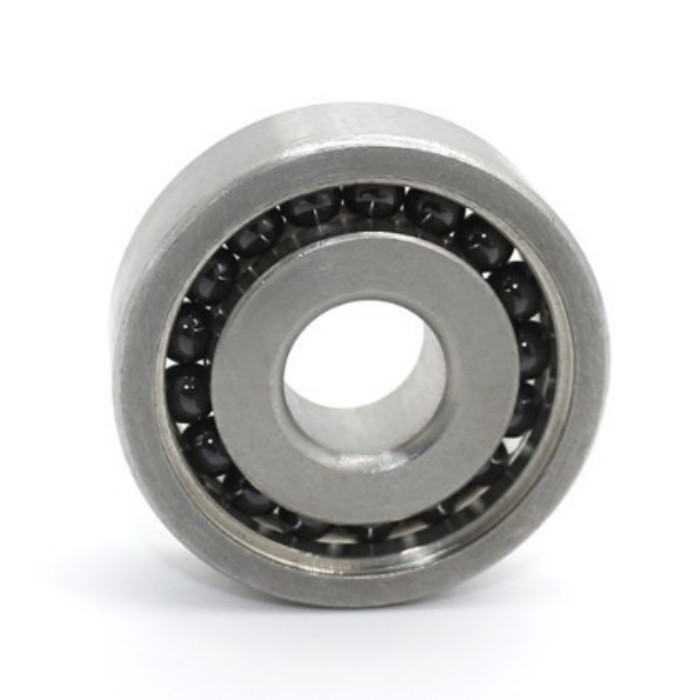
- Hybrid Ceramic Bearings: Hybrid ceramic bearings combine ceramic balls with steel races. This design offers a balance between performance and cost. The ceramic balls provide the benefits of reduced friction, higher speed capabilities, and better corrosion resistance, while the steel races keep the overall cost down. Hybrid Ceramic Bearings are usually 1.2 - 2 times more expensive than all - steel bearings.
Bearing Size
The size of the ceramic ball bearing is another important factor in determining its price. Larger bearings require more raw material and more complex manufacturing processes. As the diameter of the bearing increases, the cost per unit also rises. Small - sized ceramic ball bearings, such as those with an outer diameter of less than 20 mm, are relatively more affordable. Medium - sized bearings (outer diameter between 20 - 100 mm) have a moderate price range, while large - sized bearings (outer diameter greater than 100 mm) can be quite expensive due to the increased material and production costs.
Precision Grade
The precision grade of a ceramic ball bearing refers to its dimensional accuracy and rotational accuracy. Higher precision grades are required for applications that demand extremely smooth operation and high - speed rotation, such as in aerospace and high - end machinery. Bearings with higher precision grades, such as ABEC 5, ABEC 7, or higher, are more expensive than those with lower precision grades (e.g., ABEC 1 or ABEC 3). This is because achieving a higher precision grade requires more precise manufacturing processes, stricter quality control, and additional testing.
Quantity Ordered
The quantity of ceramic ball bearings ordered also has a significant impact on the price. When customers place large - volume orders, suppliers can often offer more favorable pricing due to economies of scale. Bulk orders allow for more efficient production planning, reduced setup costs, and better utilization of resources. On the other hand, small - quantity orders may have a higher unit price as the supplier has to cover the fixed costs associated with production and handling.

Typical Price Ranges
Small - Sized Bearings
For small - sized ceramic ball bearings (outer diameter less than 20 mm), the price range can vary widely depending on the material and precision grade. Hybrid ceramic bearings in this size range can start from around $5 - $10 per piece for lower - precision grades. Silicon nitride bearings of the same size can range from $15 - $30 per piece, while zirconia bearings may cost between $10 - $20 per piece.
Medium - Sized Bearings
Medium - sized ceramic ball bearings (outer diameter between 20 - 100 mm) are more commonly used in a variety of industrial applications. Hybrid ceramic bearings in this size range typically cost between $15 - $50 per piece, depending on the precision grade. Silicon nitride bearings can range from $50 - $150 per piece, and zirconia bearings may be priced between $30 - $100 per piece.
Large - Sized Bearings
Large - sized ceramic ball bearings (outer diameter greater than 100 mm) are often used in heavy - duty applications such as wind turbines and large - scale industrial machinery. The price of these bearings can be quite high. Hybrid ceramic bearings in this size range can start from around $100 per piece and go up to several hundred dollars. Silicon nitride bearings can cost anywhere from $300 - $1000 or more per piece, depending on the specific requirements and precision grade.
Conclusion
The price range of ceramic ball bearings is influenced by multiple factors, including material composition, bearing size, precision grade, and quantity ordered. As a supplier, I understand that customers are always looking for the best balance between performance and cost. By providing a detailed understanding of these factors, I hope to help customers make more informed decisions when purchasing ceramic ball bearings.
If you are interested in purchasing ceramic ball bearings for your specific application, I encourage you to contact me for a personalized quote. I have a wide range of ceramic ball bearings in stock and can provide technical support to ensure that you get the right product for your needs. Whether you need a small quantity for a prototype or a large - scale order for mass production, I am committed to offering high - quality products at competitive prices.
References
- "Ceramic Bearings: Materials, Properties, and Applications" - A technical report on ceramic bearings published by a leading industry research institute.
- "Handbook of Bearing Technology" - A comprehensive guide to bearing technology that includes information on ceramic ball bearings.
- Industry data and market research reports on the ceramic ball bearing market.


