


What is the modulus of elasticity of a nylon roller?
As a supplier of nylon rollers, I often encounter questions from customers about the technical specifications of our products. One of the frequently asked questions is about the modulus of elasticity of nylon rollers. In this blog post, I will delve into what the modulus of elasticity is, its significance for nylon rollers, and how it impacts the performance of these components in various applications.
Understanding the Modulus of Elasticity
The modulus of elasticity, also known as Young's modulus, is a fundamental property of materials. It measures the stiffness of a material, indicating how much it will deform under a given amount of stress. In simple terms, it quantifies the relationship between stress (force per unit area) and strain (the resulting deformation) within the elastic range of a material. Mathematically, it is expressed as the ratio of stress to strain:
[ E=\frac{\sigma}{\epsilon} ]
where ( E ) is the modulus of elasticity, ( \sigma ) is the stress applied to the material, and ( \epsilon ) is the resulting strain. A high modulus of elasticity means that the material is stiffer and will deform less under stress, while a low modulus indicates that the material is more flexible and will undergo greater deformation.
Modulus of Elasticity in Nylon Rollers
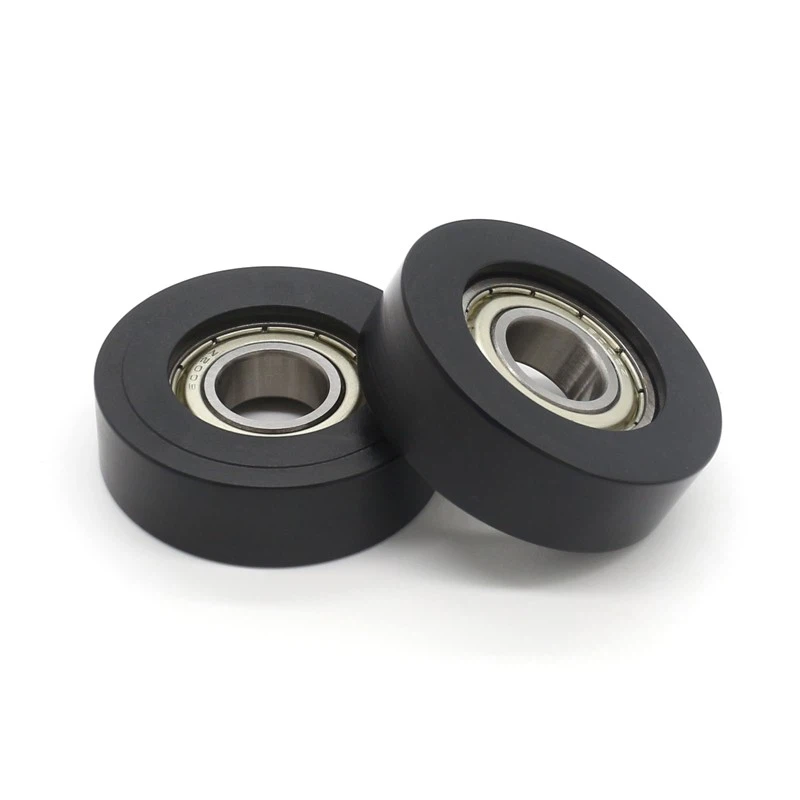
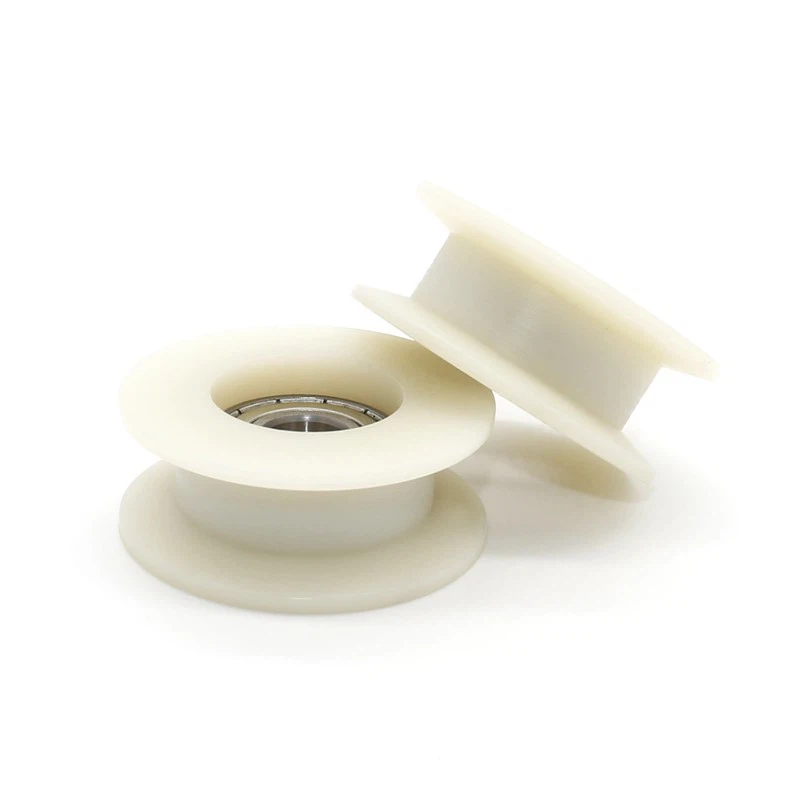
Nylon is a popular material for rollers due to its excellent combination of properties, including high strength, wear resistance, low friction, and chemical resistance. The modulus of elasticity of nylon can vary depending on the specific type of nylon used, its formulation, and any additives or reinforcements.
Typically, the modulus of elasticity of nylon ranges from approximately 1.5 to 3.5 GPa (gigapascals). For example, nylon 6/6, one of the most commonly used types of nylon, has a modulus of elasticity around 2.8 GPa. This value can be adjusted through the addition of fillers such as glass fibers or carbon fibers, which can significantly increase the stiffness of the nylon and raise its modulus of elasticity.
The modulus of elasticity of a nylon roller is crucial because it affects several key performance characteristics. A roller with a higher modulus of elasticity will be stiffer and more resistant to deformation under load. This is important in applications where precise movement and minimal deflection are required, such as in conveyor systems or sliding door mechanisms. On the other hand, a roller with a lower modulus of elasticity may be more suitable for applications where some flexibility is needed to absorb shocks or vibrations.
Impact on Application Performance
Let's explore how the modulus of elasticity of nylon rollers impacts their performance in different applications:
Conveyor Systems
In conveyor systems, nylon rollers are used to support and transport materials along the conveyor belt. The modulus of elasticity of the rollers affects their ability to withstand the weight of the conveyed materials without excessive deformation. Rollers with a higher modulus of elasticity can handle heavier loads and maintain their shape better, reducing the risk of belt misalignment and improving the overall efficiency of the conveyor system.
For example, if a conveyor is used to transport heavy packages, using nylon rollers with a high modulus of elasticity can prevent the rollers from flattening under the weight, ensuring smooth and consistent movement of the packages.
Sliding Door Mechanisms
Nylon rollers are commonly used in sliding door mechanisms to provide smooth and quiet operation. The modulus of elasticity of the rollers affects the door's ease of movement and its ability to stay in place. Rollers with a higher modulus of elasticity will provide more stability and prevent the door from sagging or wobbling.
For instance, in a residential sliding door, using Nylon Roller 6002ZZ or Nylon Roller 6001ZZ with an appropriate modulus of elasticity can ensure that the door slides smoothly and remains properly aligned, enhancing the user experience and the longevity of the door mechanism.
Industrial Machinery
In industrial machinery, nylon rollers are often used in various moving parts to reduce friction and provide support. The modulus of elasticity of the rollers can impact the precision and reliability of the machinery. Rollers with a higher modulus of elasticity can maintain their shape and position more accurately, ensuring consistent performance and reducing the risk of mechanical failures.
For example, in a printing press, nylon rollers with a high modulus of elasticity can help maintain the proper tension and alignment of the printing materials, resulting in high-quality prints.
Factors Affecting the Modulus of Elasticity of Nylon Rollers
Several factors can influence the modulus of elasticity of nylon rollers:
Nylon Type
As mentioned earlier, different types of nylon have different moduli of elasticity. Nylon 6/6 generally has a higher modulus than nylon 6, for example. The choice of nylon type depends on the specific requirements of the application.
Fillers and Reinforcements
The addition of fillers such as glass fibers, carbon fibers, or mineral fillers can significantly increase the modulus of elasticity of nylon. These fillers act as reinforcements, making the nylon stiffer and more resistant to deformation.
Temperature
The modulus of elasticity of nylon is also affected by temperature. As the temperature increases, the nylon becomes more flexible, and its modulus of elasticity decreases. This is an important consideration in applications where the rollers are exposed to high temperatures.
Selecting the Right Nylon Roller Based on Modulus of Elasticity
When selecting a nylon roller for a particular application, it is essential to consider the required modulus of elasticity. This involves understanding the load requirements, the desired level of stiffness, and the environmental conditions.
If you need a roller that can withstand heavy loads and maintain its shape, a nylon roller with a higher modulus of elasticity, perhaps one reinforced with glass fibers, would be a good choice. On the other hand, if some flexibility is needed to absorb shocks or vibrations, a roller with a lower modulus may be more suitable.
As a nylon roller supplier, we have a wide range of products with different moduli of elasticity to meet the diverse needs of our customers. Our technical team can provide expert advice and guidance to help you select the right nylon roller for your specific application.
Conclusion
The modulus of elasticity is a critical property of nylon rollers that significantly impacts their performance in various applications. Understanding this property and its implications can help you make informed decisions when selecting nylon rollers for your projects. Whether you need a stiff roller for precise movement or a flexible one for shock absorption, we have the expertise and products to meet your requirements.
If you are interested in learning more about our nylon rollers or have specific questions about the modulus of elasticity and its application in your project, please feel free to contact us. We are here to assist you in finding the best solutions for your needs.
References
- Callister, W. D., & Rethwisch, D. G. (2016). Materials Science and Engineering: An Introduction. Wiley.
- Ashby, M. F., & Jones, D. R. H. (2012). Engineering Materials 1: An Introduction to Properties, Applications, and Design. Butterworth-Heinemann.


